Governments 'misjudging' scale of CO2 emissions
Policymakers in Europe and United States are markedly underestimating the changes needed to mitigate CO2 emission required to prevent dangerous climate change because they work in 'silos,' according to pioneering research
Advertisement


Policy makers in Europe and United States are markedly underestimating the changes needed to mitigate CO2 emission required to prevent dangerous climate change because they work in 'silos', according to pioneering research. Dr Sebastian Carney, from The University of Manchester, discovered that the lack of communication between government departments, NGOs and other authorities has resulted in significant differences over who is responsible for what. He described his work at the 2010 American Association for the Advancement of Science Annual Meeting.
Using special computer software he developed at The University of Manchester, Dr Carney has worked with authorities in England, Scotland and California to troubleshoot the way they calculate emissions reductions. The 'scenario sessions' bring together national and local politicians, council officers, policy makers and NGOs – among others - to discuss their approaches to emissions.
"When it becomes evident that policy makers, and energy planners are vastly underestimating the scale of the problem, the universal reaction is one of shock.
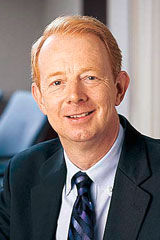
"In most cases, they have never sat down and quantified their energy futures in terms of changes in CO 2 ," said Dr Carney, who is based at University's Centre for Urban Regional Ecology.
The United Nation's International Panel on Climate Change (IPCC) and the European Commission both say a CO 2 reduction of at least 80% on 1990 emission levels by 2050 will be required to limit the average global temperature rise to 2 degrees centigrade. But according to Dr Carney, Governments do not realise the extent of the work needed to achieve the 80 per cent figure.
He said: "Because they have not played with their own numbers, policy makers just don't realise the scale of the changes needed to deliver the reductions required.
"But they for sure are taking this issue seriously - which is why we have together created the EUCO 2 project."
The software - called 'GRIP' - blends in real time, different quantities and types of energy consumed with economy size, population and general behaviour to illustrate the effects of different scenarios on CO 2 emissions.
The EUCO 2 project, to which Dr Carney is Scientific Advisor, devises low carbon urban strategies for cities in Spain, Germany, Sweden, Norway, Finland, Netherlands, France, Slovakia, Italy, Portugal and the UK.
He said: "The scenario process is for the first time identifying problems and getting them out into the open. Then it's possible to do something positive.
"They leave with either their own views reinforced — or with a whole new set of insights."
He added: "What they don't need is to be berated and criticised, we all want a solution and to do so as quickly as possible.
"But certainly joined up thinking is vital if we are going to deliver the necessary reductions in emissions."


Other news from the department business & finance














These products might interest you