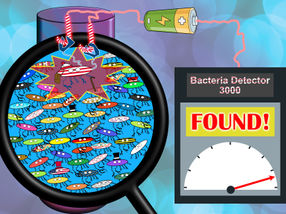
UCLA's James Liao receives Presidential Green Chemistry Challenge Award from EPA
James C. Liao, the Chancellor's Professor of Chemical and Biomolecular Engineering at the UCLA Henry Samueli School of Engineering and Applied Science, has been awarded the 2010 Presidential Green Chemistry Challenge Award from the U.S. Environmental Protection Agency. The award promotes research on and development of less-hazardous alternative technologies that reduce or eliminate waste — particularly hazardous waste — in industrial production.
Liao, the first UCLA professor to receive the award in its 15-year history, is being recognized for his groundbreaking work recycling carbon dioxide for the biosynthesis of higher alcohols. This process turns CO2 — a greenhouse gas produced by burning fossil fuels — into products that can be used in alternative transportation fuels or chemical feedstock, reducing greenhouse emissions and providing for cleaner, greener energy worldwide.
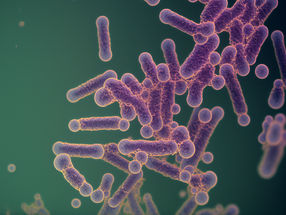
In the last few years, Liao has received widespread attention for his work in developing methods for the production of more efficient biofuels by genetically modifying E. coli bacteria, and, most recently, for modifying cyanobacterium to consume CO2 to produce the liquid fuel isobutanol. The reaction is powered directly by energy from sunlight, through photosynthesis.
"The release of CO2 from the use of petroleum as a source of fuel and chemicals has contributed significantly to climate change in the past few decades," Liao said. "To alleviate this problem, it is essential to develop a renewable source to replace petroleum as the major chemical and energy source. I am honored that our work is being recognized with this award from the EPA."
Liao continues to be at the forefront of efforts to develop new methods for producing environmentally friendly biofuels and chemicals. Sponsored by KAITEKI Institute Inc. (TKI), the strategic arm of one of Japan's largest chemical companies, he and his team are researching ways to recycle and convert CO2 into chemicals that can be used to produce a variety of industrial products, including car bumpers, packaging materials, DVDs and even diapers.
"Bio-based chemicals and fuels are potentially carbon-neutral. However, their development has been hampered by a few obstacles," Liao said. "Our technology addresses the problems effectively and increases the range of alcohols that can be produced biologically. An independent review shows that our CO2-conversion technology compares very favorably to all other existing and more mature technologies."
Other news from the department people

















Get the chemical industry in your inbox
From now on, don't miss a thing: Our newsletter for the chemical industry, analytics, lab technology and process engineering brings you up to date every Tuesday and Thursday. The latest industry news, product highlights and innovations - compact and easy to understand in your inbox. Researched by us so you don't have to.