New method to remove phosphorous from wastewater
An MSU professor is part of team developing new method of removing phosphorous from wastewater
Advertisement


A professor at Michigan State University is part of a team developing a new method of removing phosphorous from our wastewater – a problem seriously affecting lakes and streams across the country.
In addition, Steven Safferman, an associate professor of biosystems and agricultural engineering, and colleagues at Columbus, Ohio, based-MetaMateria Technologies, are devising a cost-effective way of recovering the phosphorous, which then can be reused for fertilizer products.
Although its use is regulated in many states, including Michigan, in items such as detergents and fertilizer, phosphorous is part of all food and remains a critical problem as it is always present in human and animal wastes.
Discharge from human and industrial wastewater and runoff into lakes and streams can cause what is known as eutrophication – making the water unsuitable for recreational purposes and reducing fish populations – as well as causing the growth of toxic algae.
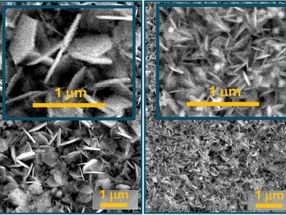
What MetaMateria Technologies and Safferman have figured out and tested over the past 10 years is how to produce a media, enhanced with nanoparticles composed of iron, that can more efficiently remove larger amounts of phosphorous from water.
"Phosphorous that is dissolved in wastewater, like sugar in water, is hard to remove," Safferman said. "We found that a nano-media made with waste iron can efficiently absorb it, making it a solid that can be easily and efficiently removed and recovered for beneficial reuse."
Safferman added there are indications that their method of phosphorous retrieval is much more cost effective than processing phosphate rock.
"Research suggests that it is significantly cheaper to recover phosphorous this way. So why would you mine phosphorous?" he asked. "And, at the same time, you're helping to solve a serious environmental problem."
The material should be commercially available for use within two years, said J. Richard Schorr, MetaMateria CEO.
"Phosphorous is a finite material," Schorr said "Analyses show that the supply of phosphorous may become limited within the next 25 to 50 years. This is an economical way to harvest and recycle phosphorous."


Other news from the department science