Cut-and-paste zeolites: new, faster method for developing custom microporous materials
zeolites are minerals with a microporous structure. This makes them attractive as catalysts in industrial applications. Unfortunately, creating synthetic zeolites is very complex. Researchers at KU Leuven, Ghent University and the University of Antwerp have discovered a way to make new zeolites quickly. “The method is faster than existing methods and contributes to the development of a more sustainable, greener chemical industry," says KU Leuven Professor Christine Kirschhock.
Zeolites are best known for their ubiquitous use as water softeners in detergents and as catalysts in industry. A catalyst is a mediator that increases the efficiency of chemical reactions, saving huge amounts of energy. Zeolites are robust and reusable – making them environmentally friendly catalysts.
There are various types of zeolites, each with their own specific structure and porous make-up. Naturally-occurring zeolites are often unsuitable for industrial applications because their pores are small. Developing synthetic zeolites, however, is very complex and often a matter of trial and error. Around 200 different synthetic zeolites currently exist, of which only 20 are actually used in industry. The desired properties of the zeolite – its composition, pore size, reusability and so on – change with each new application. Until now, designing a zeolite with predetermined characteristics was impossible.
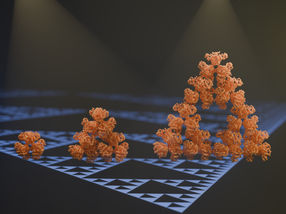
Researchers from Leuven, Ghent and Antwerp have now experimentally demonstrated that it is possible to cut zeolite building blocks and rearrange them into a new structure. Professor Christine Kirschhock of KU Leuven explains: “A zeolite can be thought of as a set of merged building blocks. We are now able to separate certain blocks of a zeolite and then reassemble them into different configurations, depending on the desired properties.”
This generic method for creating new zeolites has significant advantages: “In addition to new possibilities for applications, the method contributes to the development of a more sustainable, greener chemical industry. It is the first-ever example of customizable zeolite design.”
Original publication

Other news from the department science









Get the chemical industry in your inbox
From now on, don't miss a thing: Our newsletter for the chemical industry, analytics, lab technology and process engineering brings you up to date every Tuesday and Thursday. The latest industry news, product highlights and innovations - compact and easy to understand in your inbox. Researched by us so you don't have to.