My watch list
my.chemeurope.com  
Login  

20-02-2013: If you thought antifreeze was only something that was necessary to keep your car from freezing up in the winter, think again. Plants and animals living in cold climates have natural antifreeze proteins (AFPs) which prevent ice growth and crystallization of organic fluid matter. Without such antifreeze, living matter would suffer from frost damage and even death.

Production of such antifreeze proteins is one of the major evolutionary routes taken by a variety of organisms, including fish, insects, bacteria, plants and fungi. Understanding how this mechanism works is not only significant in itself, but also has important implications for improving the world's food and medicinal production, believe researchers from Israel, Canada and the US who investigated how the process works.

Working on unraveling the AFP enigma were scientists from the lab of Dr. Ido Braslavsky of the Hebrew University of Jerusalem and from Ohio University in the US, in collaboration with Prof. Peter L. Davies from Queens University and Prof. Alex Groisman from the University of California.
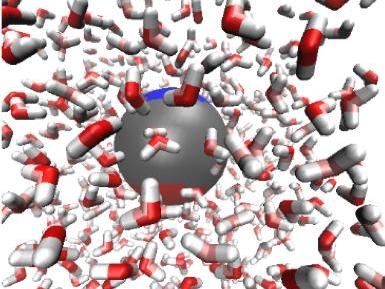
Despite half a century of research, the mechanism underlying the activity of the natural antifreeze proteins is still unclear. One of the debates in the academic community regards the chemistry and physics behind the interactions of antifreeze proteins and ice. In particular, there is an ongoing argument over whether the binding of the proteins to ice is reversible and whether continued presence of these proteins in solution is necessary for prevention of ice growth.

The challenge in unraveling these questions stems from a variety of technical problems associated with the growth and tracking of tiny ice crystals in an environment that mimics the surroundings of the antifreeze proteins in nature.

The Hebrew University researchers studied the antifreeze protein of the yellow mealworm. This protein is a hyperactive AFP with a potency to arrest ice growth that is hundreds of times greater than the potency of fish and plant AFPs.

In their study, published in the American journal PNAS, the international team of researchers biochemically created a fluorescent marker version of the AFP that allowed for direct observation under a microscope lens. They injected this protein into custom-designed microfluidic devices with minute diameter channels.

The microfluidic devices were placed in cooling units engineered with a temperature control at the level of a few thousandth of a degree, so that ice crystals of 20 to 50 micrometers could be grown and melted controllably, all under microscopic observation.

Using their specialized system, the researchers were able to show that ice grown and incubated in an antifreeze solution remains coated with protein and therefore protected. They further showed that the AFPs bind ice directly and strongly enough so as to prevent the ice from growth even after there is no longer any further presence of protein in the solution.

The significance of the findings published in this study is not only on the scientific level but also practical. For example, fish AFPs are already used in low-fat ice cream to prevent ice recrystallization, thereby maintaining a soft, creamy texture. These proteins could be used in other frozen foods for maintaining the desired texture without additional fats, say the researchers.

In medicine, AFPs can be used to improve the quality of sperm, ovules and embryos stored in a frozen state, and for cold or cyropreservation of organs (freezing at extremely low temperatures) for transplantation. They can also be used in cryosurgery and in agriculture.

Other studies on AFPs focus on preparation of recombinant plants and fish with improved survival rates under cold and dehydration conditions. Such recombinant crops may improve food dispersion over the world, the researchers believe.

Contact / Request information

Request further information free of charge:

Watchlist

This is where you can add this news to your personal favourites

Facts, background information, dossiers
  • Ohio University
  • freezing
  • Hebrew University of Je…
  • University of California
  • Uni Queens
More about Hebrew University of Jerusalem
Contact
Hebrew University of Jerusalem


Israel
  • News

    Gold nanoparticles reveal fingerprints

    Gold nanoparticles capped with mercaptocarboxylic acids, followed by silver precipitation, have been used to develop latent fingerprints on paper as high quality negative images. Scientists say that the effect stems from hydrogen bonding between the carboxylic group and the paper cellulose. ... more

    Not just cars, but living organisms need antifreeze to survive

    If you thought antifreeze was only something that was necessary to keep your car from freezing up in the winter, think again. Plants and animals living in cold climates have natural antifreeze proteins (AFPs) which prevent ice growth and crystallization of organic fluid matter. Without such ... more

    New Noble Gas Chemical Compounds Created as Result of Hebrew University Research

    Chemical compounds consisting of noble gases combined with hydrocarbon molecules have been created as the result of the work of researchers at the Hebrew University of Jerusalem. This achievement by Benny Gerber, Saerree K. and Louis P. Fiedler Professor of Chemistry, and his associates at ... more

More about Ohio University
Contact
Ohio University

45701
Phone
+17405931000
  • News

    Physicists capture first images of atomic spin

    Though scientists argue that the emerging technology of spintronics may trump conventional electronics for building the next generation of faster, smaller, more efficient computers and high-tech devices, no one has actually seen the spin—a quantum mechanical property of electrons—in individ ... more

    Scientists discover world's smallest superconductor

    Scientists have discovered the world's smallest superconductor, a sheet of four pairs of molecules less than one nanometer wide. The Ohio University-led study, published in Nature Nanotechnology, provides the first evidence that nanoscale molecular superconducting wires can be fabricated, w ... more
    Catalyst releases hydrogen from the ultimate renewable source: urine

    You do two things at motorway services: fill up one tank and empty another. US chemists have combined refuelling your car and relieving yourself by creating a new catalyst that can extract hydrogen from urine. Chemistry World reports that the catalyst could not only fuel the hydrogen-power ... more

More about Uni Queens
Contact
Queens University
99 University Avenue
K7L 3N6 Cataraqui
Canada
Phone
+16135332000
More about UCSD
Contact
University of California, San Diego
9500 Gilman Dr.
92093 La Jolla
USA
Phone
+1 858 534 2230
  • News

    Driving magnesium micromotors with seawater

    Scientists in the California have developed magnesium-based Janus micromotors that self-propel in seawater. Research shows how the micromotors can be used to capture and transport oil droplets from contaminated seawater, presenting a possible environmental application for the removal of oil ... more

    Not just cars, but living organisms need antifreeze to survive

    If you thought antifreeze was only something that was necessary to keep your car from freezing up in the winter, think again. Plants and animals living in cold climates have natural antifreeze proteins (AFPs) which prevent ice growth and crystallization of organic fluid matter. Without such ... more


    New material could improve safety for first responders to chemical hazards

    A new kind of sensor could warn emergency workers when carbon filters in the respirators they wear to avoid inhaling toxic fumes have become dangerously saturated. In a recent issue of the journal Advanced Materials, a team of researchers from the University of California, San Diego and Tyc ... more

Your browser is not current. Microsoft Internet Explorer 6.0 does not support some functions on Chemie.DE