Small particles with a bright future
Novel luminescent materials: EU funds 'LUMINET' project with 3.6 million Euros
Advertisement


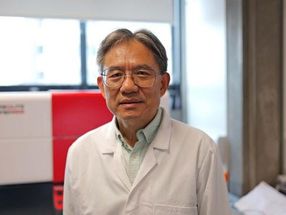
Phosphors form the basis of many applications in our daily life. Their further development is the goal of the project "LUMINET" which is funded by the EU in the 7th Framework Programme (FP7) to the tune of 3.6 million Euros over four years. For this purpose, a network of twelve research institutes and companies is training talented young people to form the next generation of leading experts in this field. Prof. Dr. Anja-Verena Mudring from the Department of Inorganic Chemistry 3.0 at the Ruhr-Universität coordinates the network.
Luminescent materials are a key technology of the next generation
The European Commission has identified luminescent materials as a key technology of the next generation. Phosphors are used, for example, in traffic lights, computer screens, smartphones and tablets, Euro banknotes, medical devices, as well as in films for X-rays and light sources. "Worldwide, lighting alone consumes a large share of electric energy - about 20 percent", says Anja-Verena Mudring. "Up to fifty nuclear power plants could be removed from the network without replacement if all the bulbs were replaced with efficient energy saving bulbs or LEDs - as already initiated in the EU, Australia and other countries." Researchers and politicians assume that the economic and social significance of luminescent materials will continue to grow. Resources management and environmental compatibility play a vital role here.
Minimising the need for rare earths
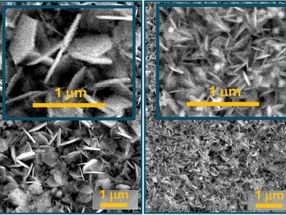
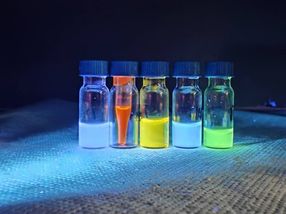
Many phosphors are based on rare earths such as europium or terbium. Since China has limited the export of rare earths, the prices of these precious commodities have risen sharply. Therefore, the search for phosphors that make do with less or even completely without rare earths is an important research topic. Prof. Mudring uses ionic liquids to produce new kinds of phosphors. Her team produces the smallest particles of luminescent materials and tests them for new properties and their application in solar cells and light sources. "Using ionic liquids, we can make targeted changes to the structure of nanoparticles and achieve a previously unattained energy efficiency", says the chemist. "There's still so much potential in the tiny particles, and we are confident that we will soon be able to present materials that are ready for application."


Other news from the department science