Nobel Laureate Hartmut Michel to join Angewandte Chemie Editorial Board
Advertisement


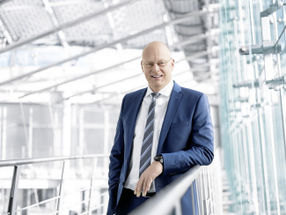
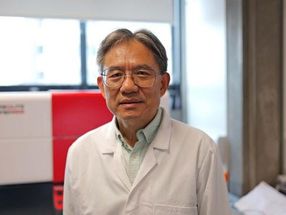
Nobel Laureate Hartmut Michel (chemistry, 1988) has accepted the invitation by the board of the German Chemical Society (GDCh) to join Angewandte's editorial board. The editorial board of Angewandte Chemie advises the editors on matters regarding the content and presentation of the journal. Its members represent the broad spectrum of chemistry in universities, research institutes, and industry. A. Kleemann (Asta Medica) and B. Wetzel (Boehringer Ingelheim) have just completed their terms, and four new members have accepted the invitation of the German Chemical Society's Board to take up a four-year term from January 1, 2004.
In 1988, Hartmut Michel received the Nobel Prize in Chemistry together with J. Deisenhofer and R. Huber for the determination of the three-dimensional structure of a photosynthetic reaction center.[1] At the Max-Planck- Institut (MPI) für Biophysik in Frankfurt, Germany he now studies membrane-protein gene expression and the mode of action of cytochrome c oxidase, which plays an essential role as the terminal enzyme in aerobic metabolism.
Michel studied biochemistry at the Universität Tübingen and in 1977 completed his PhD with D. Oesterhelt in Würzburg on proton gradients at the cell membranes of halobacteria. Shortly afterwards he began attempts to crystallize membrane proteins, in which he succeeded in 1979. He moved with Oesterhelt to the MPI für Biochemie and in 1981 succeeded in crystallizing a photosynthetic reaction center. In 1987 he became director at the MPI für Biophysik.


Other news from the department people





These products might interest you