The structure of a polymeric carbon suboxide is finally cleared up
Advertisement


In addition to the well-known compounds carbon monoxide and carbon dioxide, carbon and oxygen form other compounds of which carbon suboxide (C3O2) is one of the most stable. C3O2 was discovered in 1906; it is a linear molecule in which all five atoms are bound to each other with double bonds, assembled to the sequence OCCCO. Gas-phase C3O2 reacts spontaneously to form a solid polymer, a giant molecule made of many individual C3O2 building blocks called monomers. Just how many C3O2 units are in each polymer molecule and how they are arranged has thus far been an unsolved mystery. In the 1960s, use of the analytical processes available at the time led to the conclusion that polymeric C3O2 has a poly-alpha-pyrone structure. This means that when C3O2 polymerizes, it forms a long ribbon of connected rings. To do this, every two C3O2 units fuse together into an alpha-pyrone ring, which consists of five carbon atoms and one oxygen atom. The second oxygen atom is connected by a double bond to one of the carbon atoms directly neighboring the oxygen in the ring. The sixth carbon atom and the two remaining oxygen atoms form part of the next ring. The length of the ribbon, and thus the number of individual C3O2 monomers from which it is made, was never determined.
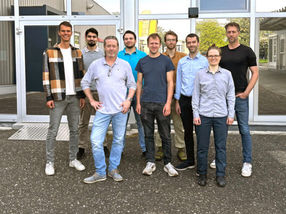
A group of scientists working with M. Ballauff in Bayreuth and J. Beck in Bonn have now finally succeeded in confirming the proposed ribbon-like structure of polymeric C3O2. Their method, measurement of the scattering of X-rays in a solution containing the polymer, also allowed them to discover that there are about 40 C3O2 building blocks in each of the giant polymer molecules. The mystery of the structure of polymeric carbon suboxide has been cleared up.


Other news from the department science