How sweet it is: 'Revolutionary' process points to sugar-fueled cars
Advertisement


Chemists are describing development of a "revolutionary" process for converting plant sugars into hydrogen, which could be used to cheaply and efficiently power vehicles equipped with hydrogen fuel cells without producing any pollutants. The process involves combining plant sugars, water, and a cocktail of powerful enzymes to produce hydrogen and carbon dioxide under mild reaction conditions. They reported on the system, described as the world's most efficient method for producing hydrogen, at the 235th national meeting of the American Chemical Society.
The new system helps solve the three major technical barriers to the so-called "hydrogen economy," researchers said. Those roadblocks involve how to produce low-cost sustainable hydrogen, how to store hydrogen, and how to distribute it efficiently, the researchers say.
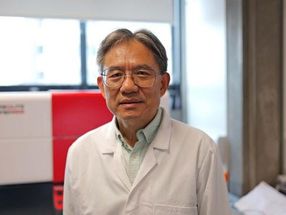
"This is revolutionary work," says lead researcher Y.-H. Percival Zhang, Ph.D., a biochemical engineer at Virginia Tech in Blacksburg, Va. "This has opened up a whole new direction in hydrogen research. With technology improvement, sugar-powered vehicles could come true eventually."
Zhang and colleagues believe they have found the most promising hydrogen-producing system to date from plant biomass. The researchers also believe they can produce hydrogen from cellulose, which has a similar chemical formula to starch but is far more difficult to break down. In laboratory studies, the scientists collected 13 different, well-known enzymes and combined them with water and starches. Inside a specially designed reactor and under mild conditions (approximately 86 degrees Fahrenheit), the resulting broth reacted to produce only carbon dioxide and hydrogen with no leftover pollutants.
The method, called "in vitro synthetic biology," produced three times more hydrogen than the theoretical yield of anaerobic fermentation methods. However, the amount of hydrogen produced was still too low for commercial use and the speed of the reactions isn't optimal, Zhang notes.
The researchers are now working on making the system faster and more efficient. One approach includes looking for enzymes that work at higher temperatures, which would speed hydrogen production rates. The researchers also hope to produce hydrogen from cellulose, which has similar chemical formula to starch, by replacing several enzymes in the enzyme cocktail.



Other news from the department science