My watch list
my.chemeurope.com  
Login  

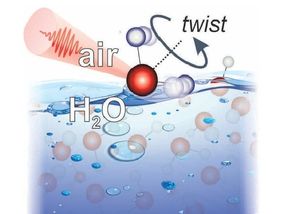
11-13-2008: Ian Williams and colleagues at the University of Bath, UK, have demonstrated that kinetic isotope effects (KIEs) for a prototypical S­N­2 methyl transfer in solution, and in an enzyme active site, show significant variations in magnitude owing to thermally-induced structural fluctuations.
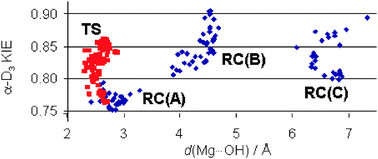
Williams’ team have shown that thermal fluctuations must be taken into account to properly reproduce experimental KIE values, as different families of reactant-state conformers yield different KIE values.

Using hybrid quantum-mechanics/molecular mechanics (QM/MM) calculations this concept discloses that an ensemble-averaging of KIE is necessary to produce data featuring quantitative experimental accuracy.

‘These results represent a proof of concept; their quantitative accuracy may be improved by more expensive simulations using higher-level quantum-chemical methodologies in the future,’ said Williams.

Original publication: Ian Williams et al., Chem. Commun., 2008.

Watchlist

This is where you can add this news to your personal favourites

Additional Information

Facts, background information, dossiers
More about Royal Society of Chemistry
Contact
Royal Society of Chemistry
Science Park, Milton Road
GROßBRITANNIEN
Phone
++44 / 1223 / 432360
Fax
++44 / 1223 / 426017
More about University of Bath
Contact
University of Bath


GROßBRITANNIEN
  • News

    Cracking a controversial solid state mystery

    Scientists can easily explain the structural order that makes steel and aluminium out of molten metal. And they have discovered the molecular changes that take place as water turns to ice. But, despite the fact that glass blowers have been plying their trade since the first century BC, we h ... more


    Mechanical calculations for methyl transfer in solution

    Ian Williams and colleagues at the University of Bath, UK, have demonstrated that kinetic isotope effects (KIEs) for a prototypical S­N­2 methyl transfer in solution, and in an enzyme active site, show significant variations in magnitude owing to thermally-induced structural fluctuations. ... more

    Introducing the next generation of chemical reactors

    Unique nanostructures which respond to stimuli, such as pH, heat and light will pave the way for safer, greener and more efficient chemical reactors. Being developed by a consortium of UK universities, the nanostructures can regulate reactions, momentum, and heat and mass transfer inside ch ... more

Most read news
Your browser is not current. Microsoft Internet Explorer 6.0 does not support some functions on Chemie.DE