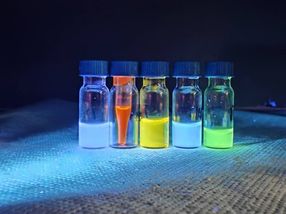
Researchers push nature beyond its limits to create higher-density biofuels
Genetic modification of bacterium results in alcohols with greater energy
Advertisement


For the first time, researchers at the UCLA Henry Samueli School of Engineering and Applied Science have successfully pushed nature beyond its limits by genetically modifying Escherichia coli , a bacterium often associated with food poisoning, to produce unusually long-chain alcohols essential in the creation of biofuels.
"Previously, we were able to synthesize long-chain alcohols containing five carbon atoms," said James Liao, UCLA professor of chemical and biomolecular engineering. "We stopped at five carbons at the time because that was what could be naturally achieved. Alcohols were never synthesized beyond five carbons. Now, we've figured out a way to engineer proteins for a whole new pathway in E. coli to produce longer-chain alcohols with up to eight carbon atoms."
The new protein and metabolic engineering method developed by Liao and his research team is detailed in Proceedings of the National Academy of Sciences .
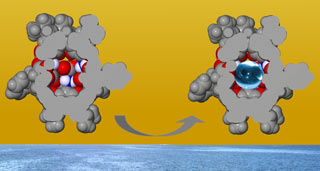
Longer-chain alcohols, with five or more carbon atoms, pack more energy into a smaller space and are easier to separate from water, making them less volatile and corrosive than the commercially available biofuel ethanol. The greater the number of carbon atoms, the higher the density of the biofuel. Ethanol, most commonly made from corn or sugarcane, contains only two carbon atoms.
Organisms typically produce a large number of amino acids, which are the building blocks of proteins. In their research, Liao's team examined the metabolism of amino acids in E. coli and changed the metabolic pathway of the bacterium by inserting two specially coded genes. One gene, from a cheese-making bacterium, and another, from a type of yeast often used in baking and brewing, were altered to enable E. coli 's amino acid precursor, keto acid, to continue the chain-elongation process that ultimately resulted in longer-chain alcohols.
"This research is significant for two reasons," said Liao, the study's lead author. "From a scientific standpoint, we wanted to show that we can expand nature's capability in making alcohol molecules. We showed we are not limited by what nature creates. From an energy standpoint, we wanted to create larger, longer-chain molecules because they contain more energy. This is significant in the production of gasoline and even jet fuel."
Though this new frontier of biofuels production from organisms has the potential to address significant issues in global warming, the scientific significance of successful genetic modification could also mean great benefits beyond the environment.
"We used E. coli because the genetic system is well known, it grows quickly and we can engineer it very easily," said co-author Kechun Zhang, a UCLA postdoctoral researcher. "But this technique can actually be used on many different organisms, opening the door to vast possibilities in the realm of polymer as well as drug manufacturing."



Other news from the department science
















These products might interest you