Process can cut the cost of making cellulosic biofuels
Advertisement


A patented Michigan State University process to pretreat corn-crop waste before conversion into ethanol means extra nutrients don't have to be added, cutting the cost of making biofuels from cellulose. The AFEX (ammonia fiber expansion) pretreatment process, developed by Bruce Dale, University Distinguished Professor of chemical engineering and materials science, uses ammonia to make the breakdown of cellulose and hemicellulose in plants 75 percent more efficient than when conventional enzymes alone are used. Cellulose in plants must be broken down into fermentable sugars before they can be turned into biofuel.
"Doctoral student Ming Lau and I have shown that it's possible to use AFEX to pretreat corn stover (cobs, stalks and leaves) and then hydrolyze and ferment it to commercially relevant levels of ethanol without adding nutrients to the stover," Dale said. "It's always been assumed that agricultural residues such as corn stover didn't have enough nutrients to support fermentation. We have shown this isn't so."
"The research also shows that the chemical compounds created when the stover goes through the AFEX process can improve the overall fermentation process," Lau added. "This is at odds with the general perception that these compounds are detrimental and should be removed."
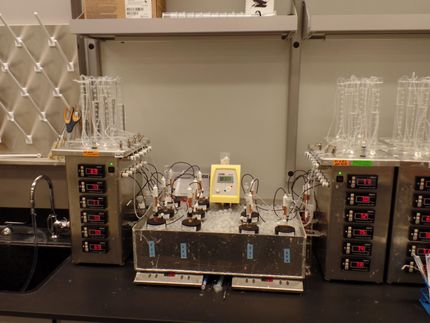
Currently, pretreating cellulose with acid is a common way to break the material down into fermentable sugars. But after acid pretreatment, the resulting material must be washed and detoxified. That removes nutrients, leading to the mistaken idea that crop waste lacks the necessary nutrients, Dale said.
Cellulosic material pretreated with the AFEX process doesn't have to be washed or detoxified, allowing ethanol to be created from cellulose without added nutrients or other steps.
"Washing, detoxifying and adding nutrients back into the pretreated cellulose are three separate steps," Dale said. "Each step is expensive and adds to the cost of the biofuel. Breaking down cellulose into fermentable sugars cost effectively has been a major issue slowing cellulosic ethanol production. Using AFEX as the pretreatment process can dramatically reduce the cost of making biofuels from cellulose."
The next step could be a pilot plant, Dale said, perhaps at MBI International. MBI, a subsidiary of the MSU Foundation, partners with universities and companies to commercialize technology.
Original publication: Proceedings of the National Academy of Sciences.


Other news from the department science













These products might interest you