My watch list
my.chemeurope.com  
Login  

29 Current news of Harvard University

rss

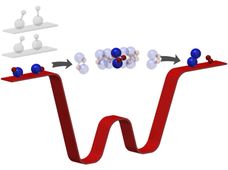
Detecting mirror molecules

New technique reliably tells left-handed from right-handed variant of a compound

24-05-2013

Harvard physicists have developed a novel technique that can detect molecular variants in chemical mixtures – greatly simplifying a process that is one of the most important, though time-consuming, processes in analytical chemistry. As described in a paper in Nature, post-doctoral researcher ...

more

HX-splitting photocatalysis for solar fuels

07-05-2013

Photochemical HX splitting reactions (X = halogen) provide a route for solar-to-fuel energy conversion and halogen photoelimination is a critical step in the process. Scientists in the US have investigated the photoreduction mechanism of a pair of valence-isomeric dirhodium phosphazane ...

more

image description
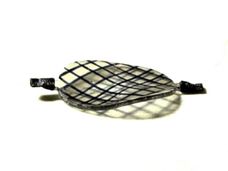
Cry me a river of possibility: Scientists design new adaptive material inspired by tears

Tunable material system designed by Harvard team is easily adaptable for diverse applications in fuel transport, textiles, optical systems, and more

09-04-2013

Imagine a tent that blocks light on a dry and sunny day, and becomes transparent and water-repellent on a dim, rainy day. Or highly precise, self-adjusting contact lenses that also clean themselves. Or pipelines that can optimize the rate of flow depending on the volume of fluid coming ...

more

Measuring the magnetism of antimatter

Researchers measure antiprotons more accurately than ever before

28-03-2013

In a breakthrough that could one day yield important clues about the nature of matter itself, a team of Harvard scientists have succeeding in measuring the magnetic charge of single particles of matter and antimatter more accurately than ever before. As described in a paper in Physical Review ...

more

BASF and American universities to research new functional materials

Focus on innovative materials for the automotive, building and construction, and energy sectors

12-03-2013

BASF SE has launched a research initiative called ”North American Center for Research on Advanced Materials” through which it is collaborating with Harvard University, the Massachusetts Institute of Technology (MIT), and the University of Massachusetts (UMass) Amherst. One goal of this ...

more

image description
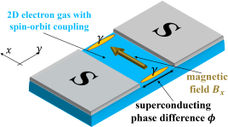
Higgs excitations near absolute zero

30-07-2012

A collaboration of physicists from MPQ, LMU, Harvard and Caltech detect Higgs-type excitations in a low-dimensional system of ultracold atoms at the transition between different phases of matter. The sudden breaking of symmetry plays a fundamental role in physics, in particular for the ...

more

Novel method to make nanomaterials discovered

28-02-2012

Researchers at the NanoScience Center of the University of Jyväskylä, Finland, and at Harvard University, US, have discovered a novel way to make nanomaterials. Using computer simulations, the researchers have been able to predict that long and narrow graphene nanoribbons can be rolled into ...

more

Intelligent catalysis allows controlled synthesis of fluorinated compounds

Professor Tobias Ritter of Harvard University receives BASF Catalysis Award 2011

26-07-2011

For his outstanding research contributions to catalytic processes in organic synthesis, Professor Dr. Tobias Ritter of Harvard University in Cambridge (USA) is receiving the BASF Catalysis Award 2011. The prize, worth €10,000, was presented by Dr. Friedrich Seitz, Head of BASF’s Technology ...

more

Microbes may consume far more oil-spill waste than earlier thought

Study near Gulf of Mexico spill site finds surprisingly high methane uptake by microbes

22-10-2010

Microbes living at the bottom of the Gulf of Mexico may consume far more of the gaseous waste from the Deepwater Horizon oil spill than previously thought, according to research carried out within 100 miles of the spill site. A paper on that research, conducted before the Deepwater Horizon ...

more

Digging deep into diamonds, applied physicists advance quantum science and technology

Diamond nanowire device could lead to new class of diamond nanomaterials suitable for quantum cryptography, quantum computing, and magnetic field imaging

18-02-2010

By creating diamond-based nanowire devices, a team at Harvard has taken another step towards making applications based on quantum science and technology possible. The new device offers a bright, stable source of single photons at room temperature, an essential element in making fast and ...

more

Page 1 From 3
Subscribe to e-mail updates relating to your search

You will receive via e-mail the latest search results matching your search criteria. This service is free of charge and can be cancelled at any time.

Your browser is not current. Microsoft Internet Explorer 6.0 does not support some functions on Chemie.DE