To use all functions of this page, please activate cookies in your browser.
my.chemeurope.com
With an accout for my.chemeurope.com you can always see everything at a glance – and you can configure your own website and individual newsletter.
- My watch list
- My saved searches
- My saved topics
- My newsletter
7 Current news of Uni Bielefeld
rssConcept is based on research at Bielefeld University
22-09-2011
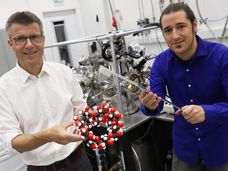
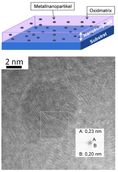
Semiconductor thin films with special electronic, magnetic or optical functions are widely demanded for technical applications in increasingly smaller and efficient devices - they are indispensable in high-efficiency solar cells, bright light-emitting diodes and magneto-electronic devices. ...
22-08-2011
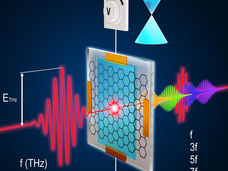
Researchers from Bielefeld, Kaiserslautern and Würzburg have developed a novel high-tech microscope: It magnifies objects a million times and shows movements with a retardation of one million billion times. The new technology allows tracking extremely fast processes in miniature objects – ...
American Humboldt Award winner Ralph G. Nuzzo will spend a several-months research period at KIT and at Bielefeld University
21-01-2011
At the beginning of the 1980s, the chemist Professor Ralph G. Nuzzo paved the way for use of the first thiol-based self-assembling monolayers (SAMs). Nanotechnology is not imaginable today without that innovation. Professor Nuzzo is now honored with the Research Award of the Alexander von ...
02-06-2009
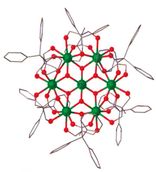
Achim Müller and co-workers from Bielefeld University and Marshall Luban with his co-workers from the Departments of Physics and Astronomy at both Francis Marion University and Iowa State University worked on synthesising a Keplerate using pentagonal tungsten-oxide based units and studied its ...
16-04-2009
Scientists in Germany and the US generate highly oxidised diiron complexes that further our understanding on metalloenzymes in nature. Oxidised diiron species are used in nature in the active sites of several metalloenzymes, such as methane monooxygenase and ribonucleotide ...
Nanocavity skeleton altered by substitution of metal ions
24-05-2007
Hollow spherical capsules composed of pentagonal molybdenum-oxide units stitched together by metal-ion linkers are a remarkable example of porous nanoscale objects, and have attracted much recent attention because of their potential applications in areas as diverse as catalysis and ...
Porous molybdenum oxide capsules serve as models for biological ion-transport processes
14-11-2005
Do cells always have to be developed from organic carbon-containing compounds? When resourceful scientists stretch their imaginations, they quickly find an answer to this question. This is demonstrated by the work of Achim Müller of Bielefeld, Germany, and his co-workers, who have constructed ...