Verified
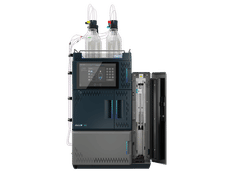
ALEXYS Neurotransmitter Analyzer
Most sensitive detection of neurotransmitters in small sample volumes
Excellent sensitivity to detect baseline levels
Superior temporal resolution in microdialysis
Fast separations
We consider each droplet of sample as a pool of information, we treat it with care
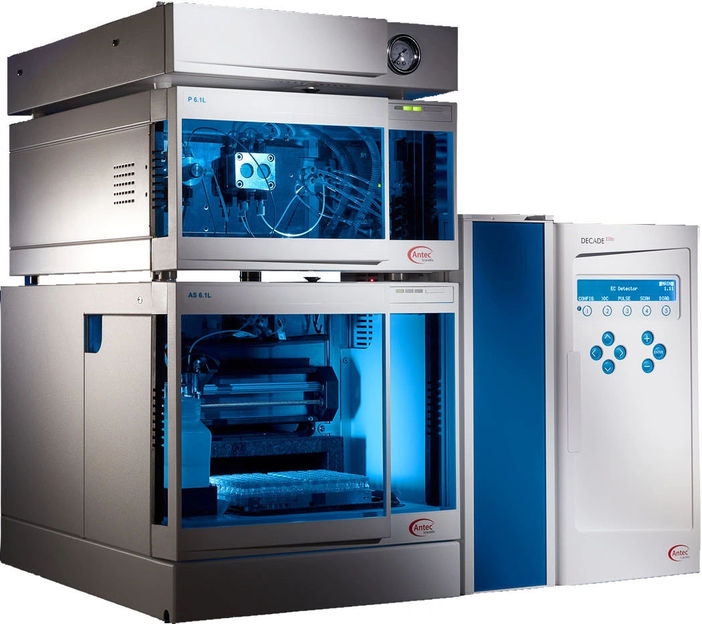
The ALEXYS™ Neurotransmitter Analyzer has been developed for analysis of brain tissue, fruit fly or microdialysis samples. Our application notes describe the challenges we faced and a proven track record of literature publications proves our point. The ALEXYS is based on UHPLC with electrochemical detection with a couple of unique features to make it suitable for research in neuroscience. The development process was an elimination of bottlenecks and improving the system performance to what it is now.
Small sample volume
First, the system must be suitable for handling small sample volume. This is especially important for microdialysis samples. In brain microdialysis extracellular fluid is sampled via a probe and fractions are collected for further analysis. Typical flow rates in microdialysis are 1 – 2 µL/min, decreasing the fraction size to a few microliters enables a temporal resolution of a few minutes. In the ALEXYS autosampler, injection procedures have been developed to pick up 5 out of a total of 7 µL sample volume. And by using on-line microdialysis, it is possible to analyze fractions of 2 µL directly from the sample probe by using only a sample valve. No need to first collecting it in vials and using an autosampler to inject. This makes a temporal resolution of only 1 min feasible.
Sensitivity
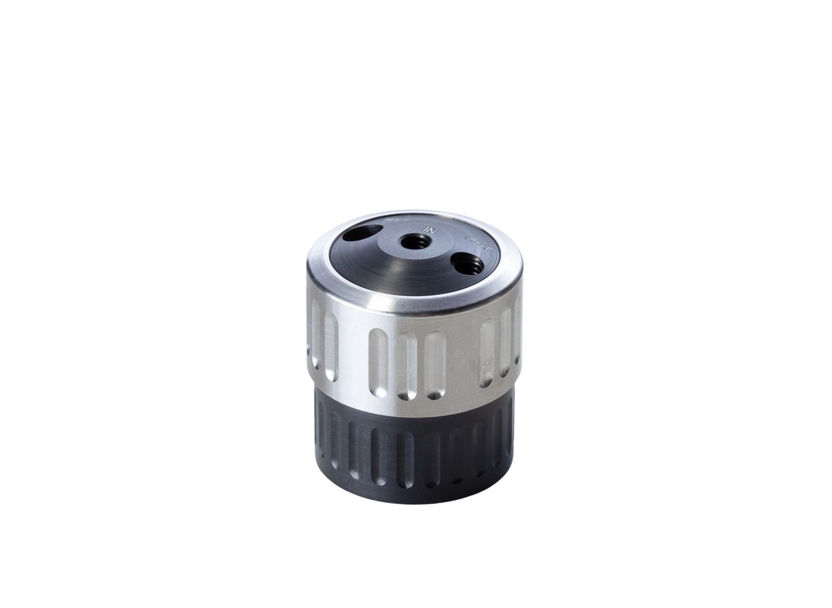
Second, the system must have an excellent sensitivity to be able to quantify extremely low concentrations of certain neurotransmitters. The ALEXYS uses a wall jet type flow cell with adjustable spacing, the SenCell™. Detection limits down to 20 pmol/L for dopamine, serotonin and noradrenaline have been reported (0.1 fmole). For acetylcholine an intermediate step with a post column enzyme reactor is involved, and a detection limit is about 1 nmol/L can be obtained.
Separation
Third, in real life samples the detection sensitivity is not the only thing that matters, when it comes to the lowest detectable concentration. The selectivity or separation of relevant neurotransmitters from other components in the sample is evenly important. Therefore, high performance UHPLC columns have been selected for separation. Separation efficiency (plate number) of 200,000 /m have been proven feasible.
Short analysis time
The fourth requirement – a wish in many cases – is a short analysis time or the speed of analysis. The introduction of UHPLC columns and instruments has been a game changer in that respect. Analysis time of less than 2 minutes for dopamine and serotonin in dialysis samples is now considered ‘normal’. The analysis of GABA and glutamate is using a fully automated derivatization step. By developing a method with a column wash to get rid of late eluting interferences, the total run time has been significantly reduced.
1
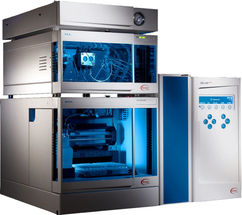
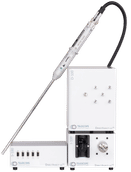
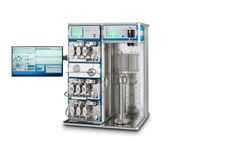
The ALEXYS Neurotransmitter Analyzer
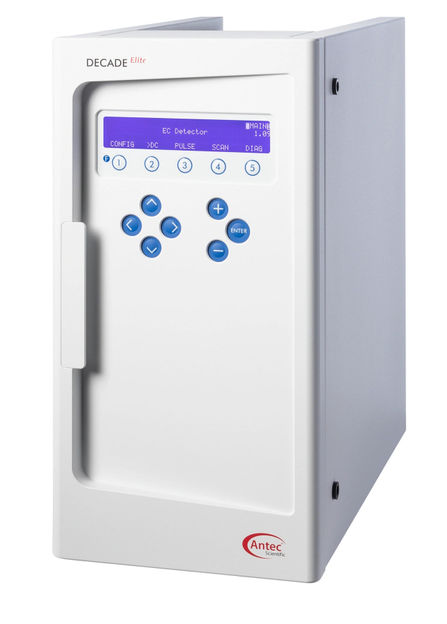
2
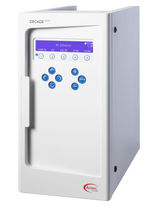
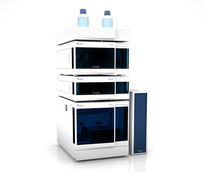
The electrochemical detector DECADE Elite
3
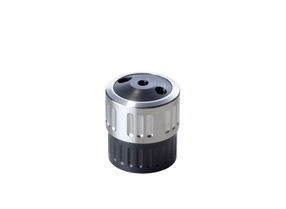
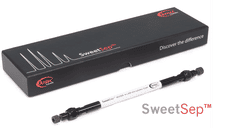
The flow cell SenCell
4
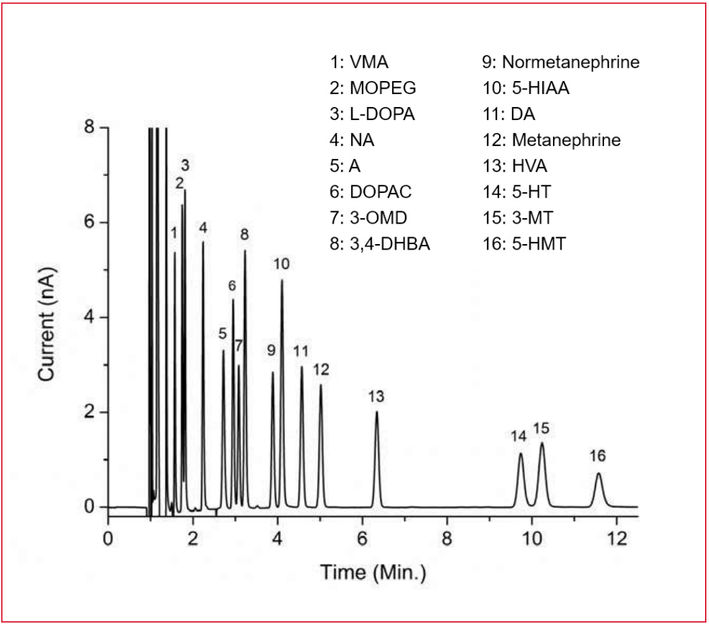
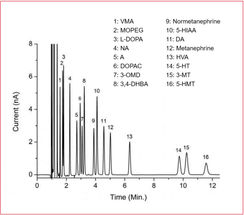
Monoamines and Acidic Metabolites
5
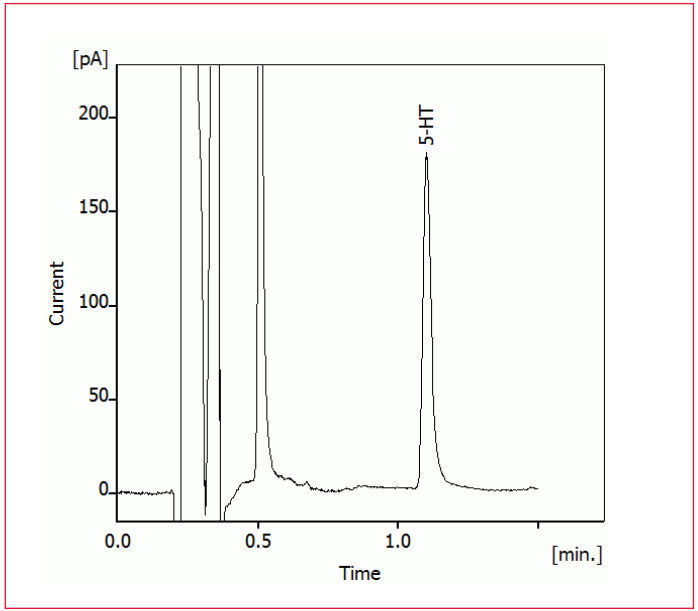
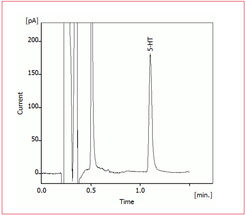
Target analysis of serotonin
Request information about ALEXYS Neurotransmitter Analyzer now
HPLC systems: ALEXYS Neurotransmitter Analyzer
Most sensitive detection of neurotransmitters in small sample volumes

Product classification ALEXYS Neurotransmitter Analyzer
Product categories
Applications
Manufacturers of similar products


Find more HPLC systems and related products
Find ALEXYS Neurotransmitter Analyzer and related products in the theme worlds
Topic world HPLC
HPLC is a key technology in modern analytical chemistry. It enables the separation, identification and quantification of components in complex mixtures with high precision and efficiency. Whether in the analysis of active pharmaceutical ingredients, the quality control of foodstuffs or the examination of biological samples - HPLC is often the method of choice for demanding separation tasks.
Topic world HPLC
HPLC is a key technology in modern analytical chemistry. It enables the separation, identification and quantification of components in complex mixtures with high precision and efficiency. Whether in the analysis of active pharmaceutical ingredients, the quality control of foodstuffs or the examination of biological samples - HPLC is often the method of choice for demanding separation tasks.
Last viewed contents
Zimmer to build two polyester plants in India

Mobile Brandschutzstation | Safety equipment | Minimax Mobile Services

Laboratorios Agrochem S.L. - Esparraguera, Spain
SARSTEDT AG & Co. KG - Nümbrecht, Germany
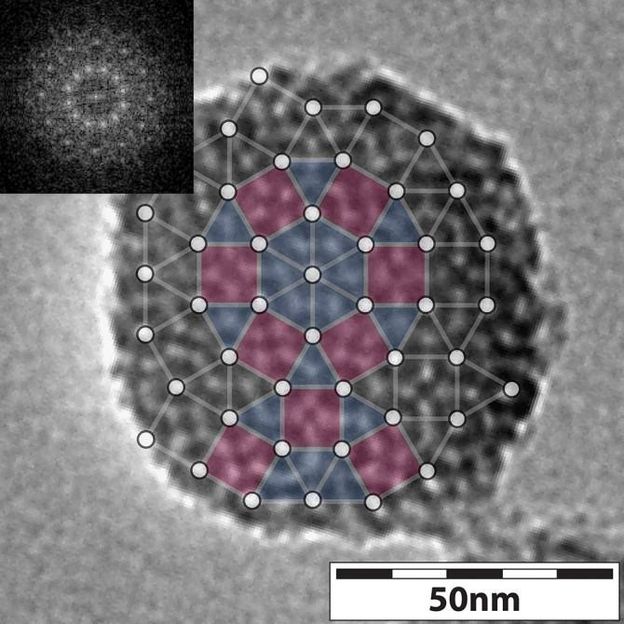
Engineering team images tiny quasicrystals as they form
Tricking the uncertainty principle - Researchers at Caltech find a way to sidestep the quantum 'noise' that limits the precision of ultrasensitive position measurements

Early Earth: Evolution in the abiotic world - Chemists have shown that organocatalysts go through an evolution and could have played an important role in the emergence of life

Continuously emitting microlasers with nanoparticle-coated beads

Quantum cocktail provides insights on memory control
Sachverständigen- und Consultingbüro - Landsberg am Lech, Germany
Building Connections: Advancing Transformative Chemistry Together - Fraunhofer, Max Planck, and Boehringer Ingelheim Continue the "Electrification of Technical Organic Syntheses" (ETOS) Future Cluster