Verified
Electrochemical reactors:
ROXY Exceed
Fast and efficient reduction of disulfide bonds in proteins/peptides
Ideal for highly disulfide bond stabilized proteins
Increased sequence coverage
Simple automation
Electrochemical reduction makes automation straightforward
The ROXY™ Exceed with an EC Reactor has been developed for fast and efficient reduction of disulfide bonds in proteins. The reduction of intra- and intermolecular disulfide bonds is a small but crucial step in the workflow for successful structure elucidation and assignment of the bonding sites by MS. The method is based on an electric potential to trigger the reduction reaction, no reductive chemicals are used.
Traditionally, reduction is performed using concentrated chemicals, e.g. dithiothreitol (DTT) that needs to be removed prior LC/MS analysis. Alternatively, thiol – free reducing agents such as TCEP (tris (2-carboxyethyl) phosphine) can be used. However, sample preparation remains laborious and difficult to combine with on-line LC/MS. Electrochemistry in an on-line setup with MS is clean, no chemicals are needed and the result can be monitored instantaneously.
Hydrogen–deuterium exchange (HDX) is used for studying the tertiary structure of proteins, or protein folding. Outer regions of the folded protein undergo easy exchange of Hydrogen (H) by Deuterium (D). In the next steps of the workflow, the proteins are unfolded and the amino acid sequence is elucidated by MS. Amino acids with deuterium are obviously from the outer region of the folded protein. For reliable results it is important that the H/D exchange reaction is stopped (quenched), and the changes are preserved, once the unfolding of proteins and the following steps take place. The controlled electrochemical reduction of the S-S bonds has been successfully applied for the unfolding of larger proteins such as antibodies, replacing the harsh chemical reduction by DTT or TCEP that is often ineffective under quenching conditions (acidic pH and low temperature).
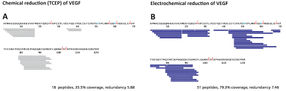
Hence, the use of ROXY Exceed with its proprietary electrodes for the gentle and controlled cleavage of the S-S bond opens new opportunities in HDX/MS workflows, resulting in significant higher sequence coverage.
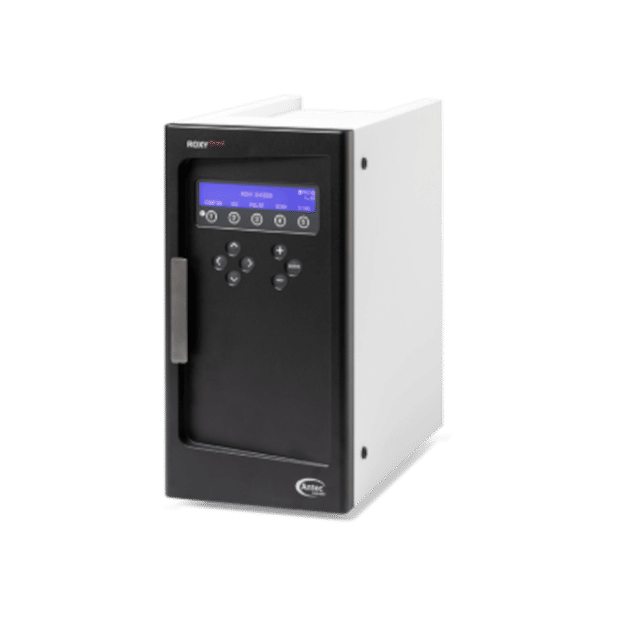
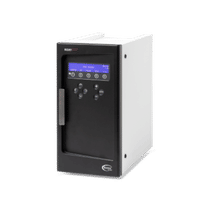
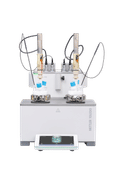
1
ROXY Exceed
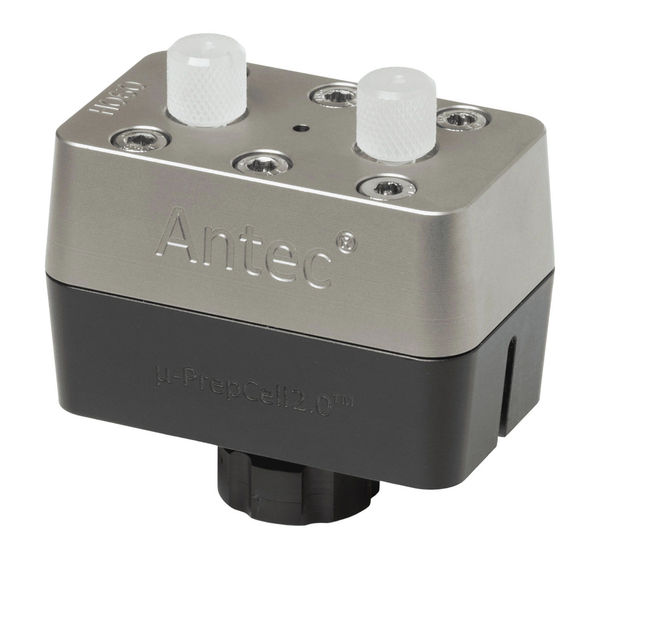
2
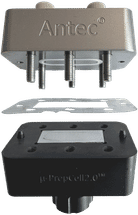
µPRepCell S-S for disulfide bond reduction
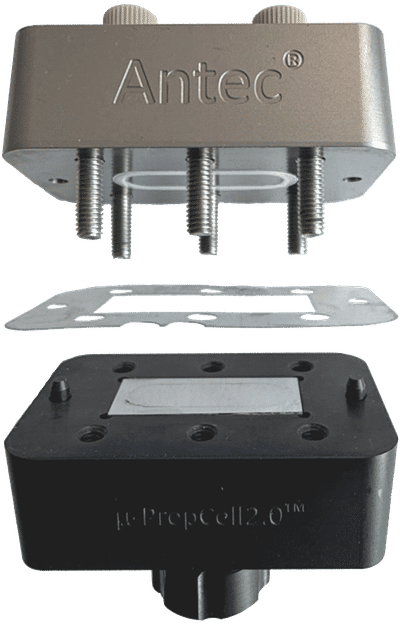
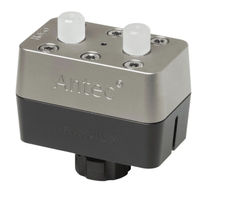
3
Exploded view of µPrepCell S-S
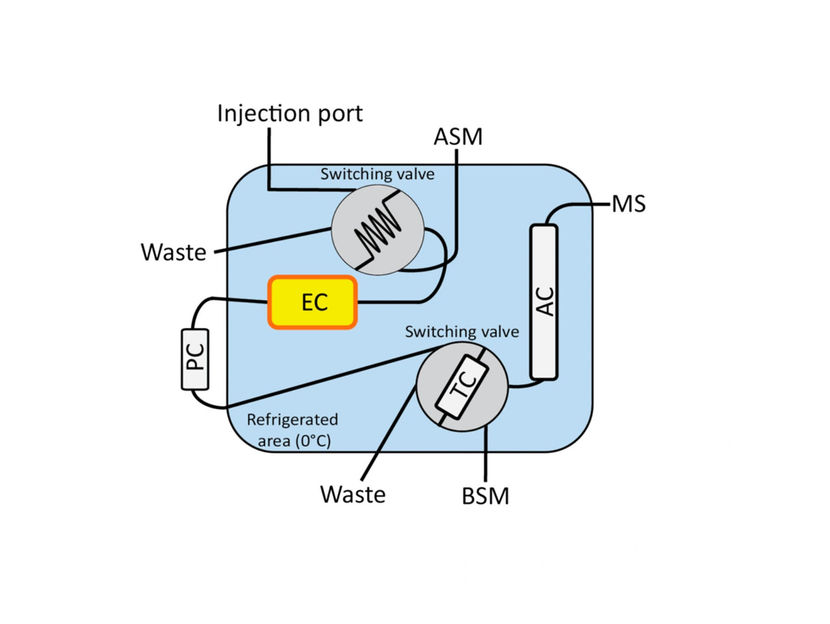
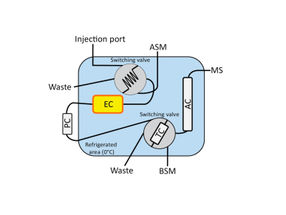
4
The µPrepCell S-S (EC) in a HDX setup
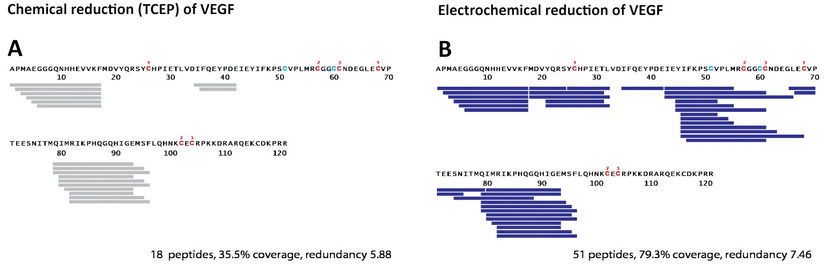
5
Sequence coverage maps of VEGF
Request information about ROXY Exceed now
Electrochemical reactors: ROXY Exceed
Fast and efficient reduction of disulfide bonds in proteins/peptides

Product classification ROXY Exceed
Applications
Manufacturers of similar products


Find more electrochemical reactors and related products



Find ROXY Exceed and related products in the theme worlds
Topic World Mass Spectrometry
Mass spectrometry enables us to detect and identify molecules and reveal their structure. Whether in chemistry, biochemistry or forensics - mass spectrometry opens up unexpected insights into the composition of our world. Immerse yourself in the fascinating world of mass spectrometry!

Topic World Mass Spectrometry
Mass spectrometry enables us to detect and identify molecules and reveal their structure. Whether in chemistry, biochemistry or forensics - mass spectrometry opens up unexpected insights into the composition of our world. Immerse yourself in the fascinating world of mass spectrometry!
Last viewed contents

Simultix 15 | X-ray fluorescence spectrometers | Rigaku
QGA 2.0 | Gas analyzers | Hiden Analytical
Engineers identify how to keep surfaces dry underwater - Research team is first to identify surface 'roughness' required to achieve amazing feat
Modified_starch

Beck GmbH - Steinenbronn, Germany

Sniffing out a dangerous vapor
Vionic | Potentiostats | Metrohm
Ethyl_oleate

ERAVISC X | Viscometers | eralytics

Tiny double accelerator recycles energy - Proof of concept for cascaded terahertz accelerator using long pulses