New bacteria-resistant materials discovered
Advertisement


Using state-of-the-art technology scientists at The University of Nottingham have discovered a new class of polymers that are resistant to bacterial attachment. These new materials could lead to a significant reduction in hospital infections and medical device failures.
Medical device associated infections can lead to systemic infections or device failure, costing the NHS £1bn a year. Affecting many commonly used devices including urinary and venous catheters — bacteria form communities known as biofilms. This 'strength in numbers approach' protects them against the bodies' natural defences and antibiotics.
Experts in the Schools of Pharmacy and Molecular Medical Sciences, have shown that when the new materials are applied to the surface of medical devices they repel bacteria and prevent them forming biofilms.
The research was led by Professor Morgan Alexander, and Professor Martyn Davies in the School of Pharmacy and Professor Paul Williams in the School of Molecular Medical Sciences. The results of the £1.3m four year research project supported by a Translation Award from the Wellcome Trust, have been published in the Nature Biotechnology.
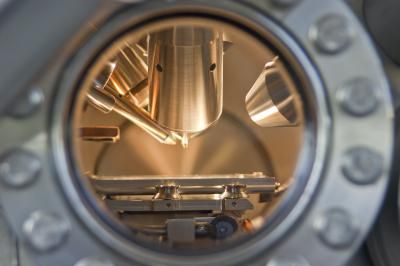
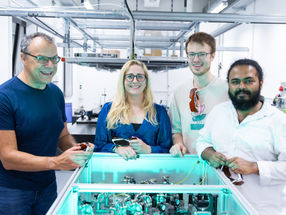
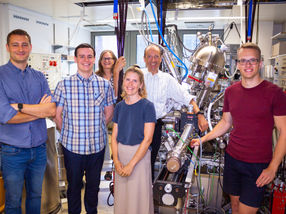
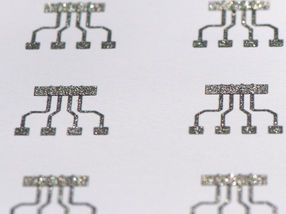
This is a close-up of samples being analyzed with Time of Flight Ion Mass Spectrometry.
The University of Nottingham
The novel materials had to be found using a new technique
Researchers believed there were new materials that could resist bacteria better but they had to find them. This meant screening thousands of different chemistries and testing their reaction to bacteria — a challenge which was beyond conventional materials development or any of our current understanding of the interaction of micro-organisms with surfaces.
The discovery has been made with the help of experts from the Massachusetts Institute of Technology (MIT) — who initially developed the process by which thousands of unique polymers can now be screened simultaneously.
Professor Alexander said: "This is a major scientific breakthrough — we have discovered a new group of structurally related materials that dramatically reduce the attachment of pathogenic bacteria (Pseudomonas aeruginosa, Staphylococcus aureus and Escherichia coli). We could not have found these materials using the current understanding of bacteria-surface interactions. The technology developed with the help of MIT means that hundreds of materials could be screened simultaneously to reveal new structure-property relationships. In total thousands of materials were investigated using this high throughput materials discovery approach leading to the identification of novel materials resisting bacterial attachment. This could not have been achieved using conventional techniques."
These new materials prevent infection by stopping biofilm formation at the earliest possible stage — when the bacteria first attempt to attach themselves to the device. In the laboratory experts were able to reduce the numbers of bacteria by up to 96.7per cent — compared with a commercially available silver containing catheter — and were effective at resisting bacterial attachment in a mouse implant infection model. By preventing bacterial attachment the body's own immune system can kill the bacteria before they have time to generate biofilms.


Other news from the department science