EWE and VERBUND Establish a Joint Venture for One of Europe's Largest Hydrogen Projects
European Partnership for Energy Security and Decarbonization
Advertisement


Through the “CHC Elektrolyse JadeWeser” project in the Wesermarsch region, EWE AG and VERBUND AG will develop one of Europe’s leading integrated hydrogen hubs, thereby making a significant contribution to the establishment of an integrated European hydrogen economy. The project will be carried out by an independent project company.
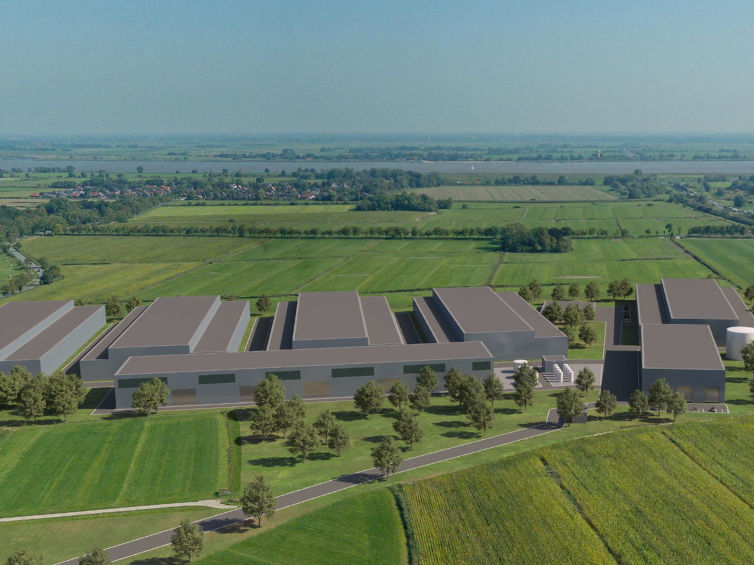
This is what the electrolysis facility in Nordenham could look like in the future: EWE and VERBUND are jointly developing the “CHC Elektrolyse JadeWeser” project there, with a capacity of up to 500 megawatts.
© EWE
At the heart of the project is an electrolyzer with a capacity of up to 500 megawatts and a planned production capacity of approximately 50,000 metric tons of green hydrogen per year. The facility is to be connected to the future core hydrogen network and is expected to begin supplying green hydrogen to industry, the mobility sector, and the energy sector starting in 2032. The combination of production, storage, and grid connection makes this a project of great strategic importance for the ramp-up of hydrogen in Germany and Europe.
The establishment of the joint venture by EWE Hydrogen GmbH and VERBUND Green Hydrogen GmbH comes at a time when the hydrogen market is increasingly consolidating. After the first few years of market ramp-up, it has become clear that projects can be successfully implemented—particularly those that, in addition to technological expertise, have robust infrastructure, secure locations, strong financing partners, and concrete marketing prospects. To this end, EWE and VERBUND are pooling their complementary expertise across the entire hydrogen value chain for this joint venture. Together, the partners already have hydrogen projects with a capacity of approximately 400 megawatts that are either under development or already in operation. “With this joint venture, we are laying the groundwork for the implementation of one of the most strategically important hydrogen projects in northern Germany. However, regulatory adjustments—such as the EU’s RFNBO requirements—are still necessary for a successful market ramp-up. Furthermore, strong partnerships are also essential. VERBUND and EWE have gained extensive experience in large-scale hydrogen projects over the past few years, which we are now combining. This will contribute significantly to the successful implementation of the project,” says Stefan Dohler, CEO of EWE AG.
European Partnership for Security of Supply and Decarbonization
The JadeWeser Electrolysis project is a central element of both companies’ joint hydrogen strategy and has a consistently European focus. Through its connection to the German core hydrogen network and its prospective integration into future European hydrogen corridors, the project makes an important contribution to security of supply, the integration of European energy markets, and the achievement of European climate goals. At the same time, the production of green hydrogen based on domestic renewable energy sources strengthens European self-sufficiency and reduces dependence on fossil fuel imports in the long term. In this way, the project supports the development of a resilient, sovereign, and competitive European energy system. “The energy transition requires strong European partnerships. Through this joint venture, we are combining the strengths of two established energy companies and laying the groundwork for a secure and competitive supply of green hydrogen. For us, JadeWeser is a key building block of a future European hydrogen economy,” explains Michael Strugl, CEO of VERBUND AG.
Location Advantages Create Ideal Conditions for Market Ramp-Up
According to the partners, the project’s particular strength lies in the quality of its location and infrastructure. Suitable sites in the southern part of Nordenham in the Wesermarsch region have been secured for the long term. In the immediate vicinity are a high-capacity 380-kV grid connection—with potential for expansion into the gigawatt range—as well as the future core hydrogen network. Added to this are a guaranteed water supply, existing industrial infrastructure, and proximity to key industrial, mobility, and import corridors, such as the future A20 highway.
Another key advantage is access to hydrogen cavern storage facilities and the immediate proximity to corresponding storage infrastructure. This will enable hydrogen to be stored flexibly and made available as needed in the future. This strengthens security of supply and creates the conditions for a market-oriented and competitive hydrogen supply.
“The JadeWeser project is creating one of the best-positioned hydrogen projects in Europe in terms of infrastructure. The site symbolizes the energy transition in Europe: next to a former nuclear power plant, an industrial hub for the production of green hydrogen is taking shape. This creates excellent conditions for an economical and secure hydrogen supply,” says Jost Ahrens, Managing Director of VERBUND Green Hydrogen GmbH.
Integrated Approach Increases Likelihood of Success
“With CHC Electrolysis JadeWeser, we can contribute to building a high-performance hydrogen economy and actively drive forward the development of a large-scale hydrogen project together. At the same time, it is clear that market ramp-up does not depend solely on technological advances,” says Tobias Moldenhauer, Managing Director of EWE HYDROGEN GmbH. For projects with long development and investment cycles, reliable regulatory, economic, and infrastructural conditions are crucial. These include, in particular, electricity procurement costs and the current additional burden resulting from RFNBO requirements, grid fees, and indirect emissions costs. At the same time, incentives are needed for the competitive use of hydrogen in industry, for example through appropriate instruments to offset the cost differential.
“Building a hydrogen economy is capital-intensive, a long-term endeavor, and involves various risks—especially during the market ramp-up phase. This makes reliable strategic partnerships all the more important. With VERBUND, we have a partner at our side who shares our conviction: green hydrogen will be a central building block for the decarbonization of industry. Together, we want to tap into this potential through a strong joint venture,” said Moldenhauer.
Note: This article has been translated using a computer system without human intervention. LUMITOS offers these automatic translations to present a wider range of current news. Since this article has been translated with automatic translation, it is possible that it contains errors in vocabulary, syntax or grammar. The original article in German can be found here.


Other news from the department business & finance












Most read news












More news from our other portals



























Last viewed contents

Sasol Chemicals supports INERATEC’s new synthetic fuel plant - Fischer-Tropsch (FT) experts Sasol Chemicals have pledged to provide start-up Ineratec with some of their latest FT catalyst
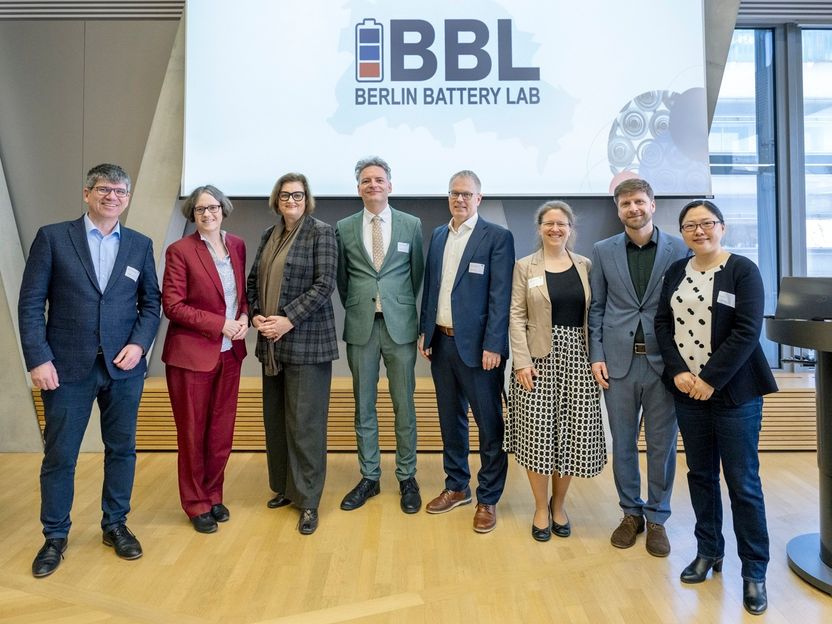
BAM, HZB and HU are conducting joint research on sodium batteries - Berlin Battery Lab develops batteries that conserve raw materials and is also open to partnerships with start-ups
Innovation paves way to make ‘clean’ chemicals, plastics and food using solar energy - Integrated solar reactor uses sunlight, water, CO2 and engineered bacteria to grow biomass in a single beaker
Chemicals and energy sectors move away from fossil raw materials - Fraunhofer and an Estonian deep-tech start-up are testing a modular biomass platform on an industrial scale
From Flue Gas to Raw Material: Extracting Carbon from CO₂ Produced by Waste Incineration - KIT and EEW Energy from Waste (EEW) plan to use CO₂ from flue gases in the NECOC process

KAIST identifies a route to faster-charging, longer-lasting EV batteries - Research team uses a 3D digital twin to reveal localized degradation mechanisms during fast charging

Matthews Engineering and start-up hs-tumbler partner on dry battery electrode manufacturing - Companies aim to enable dry electrode manufacturing through trajectory mixing

Winter-ready lithium batteries: scientists use "polarity-contras" electrolyte strategy to outsmart extreme cold - Lithium metal batteries retain 80% capacity after 150 cycles at -40 °C
The competitiveness of low-carbon fuels depends on location - New infrastructure could boost European production
Deep tech startup Reduciner introduces novel technology to turn captured carbon into sustainable fuels - Raising 3.6 million euros in its initial funding round, the Finnish startup plans to build its first industrial-scale pilot
Bruker announces strategic collaboration with Atinary Technologies to advance self-driving laboratories