Breakthrough in Silicone Recycling
Advertisement


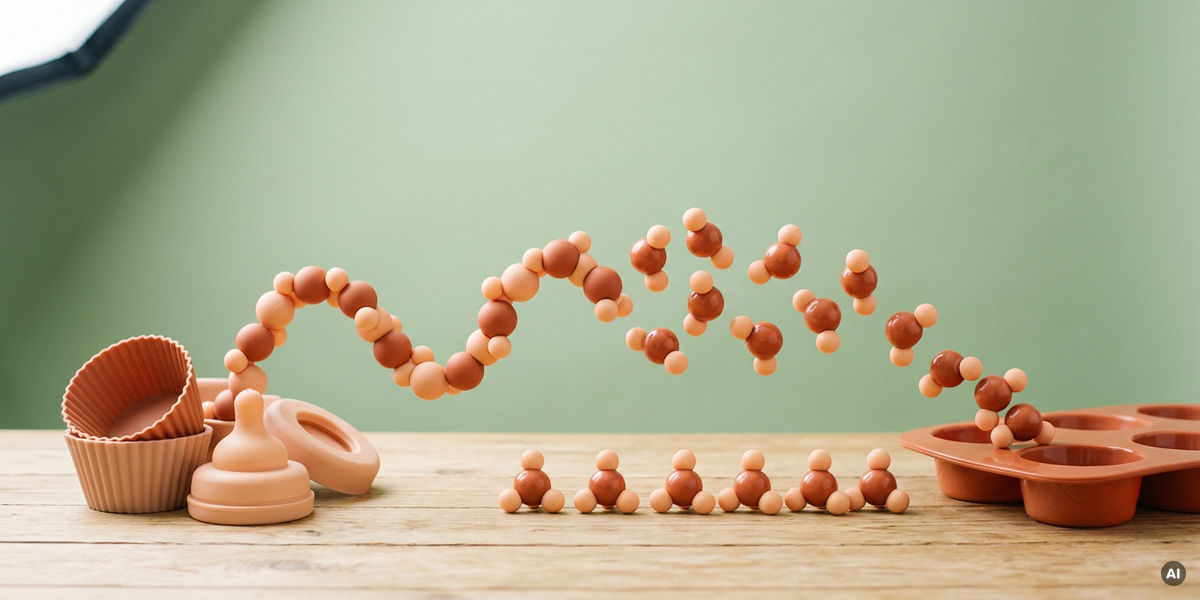
Silicones are widely used in industry, medicine, and everyday products due to their exceptional thermal and chemical stability. However, precisely because of these properties, recycling silicones has been considered extremely problematic until now. Researchers at the Institute of Chemistry at TU Berlin have now succeeded in breaking down the polymer chains of silicone molecules into their basic building blocks. The resulting dimethyldichlorosilane can then be reused as a starting material for the production of new silicone compounds.
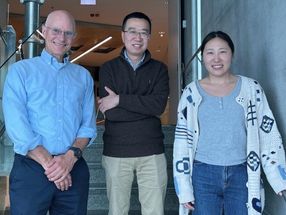
The process has already been submitted for a patent and is based on a complex interplay of several chemical reaction cycles. The research team led by Prof. Dr. Martin Oestreich has successfully tested it on various used silicone products from everyday life. Due to its great significance for green chemistry and the circular economy, the paper was selected by the renowned journal *Nature* for “Fast Track” online publication. Martin Oestreich is also a member of the UniSysCat Cluster of Excellence in Catalysis at TU Berlin.
The market for silicone products is enormous: it was worth more than 21 billion euros in 2025 and is estimated by analysts to exceed 33 billion euros by 2033. In addition to their thermal and chemical stability, silicones are also characterized by outstanding mechanical properties. Furthermore, the material reliably repels water while remaining permeable to oxygen. Silicones are found in numerous everyday products—from baking pans and baby bottle nipples to seals and medical tubing. “Due to its robust properties, recycling used silicone is very difficult,” says Prof. Dr. Martin Oestreich, Einstein Professor, head of the “Organic Chemistry/Synthesis and Catalysis” department, and a member of the UniSysCat Cluster of Excellence at TU Berlin. “Until now, waste silicone has mostly been incinerated or landfilled. In recycling, the material is often mechanically processed or chemically broken down into smaller, ring-shaped siloxanes, from which silicones can be produced again. However, these new silicones are usually of lower quality than the original ones.”
Silicone production is extremely energy-intensive—making recycling highly beneficial
Complete recycling of silicones would be desirable, on the one hand, because there is growing evidence that silicones sent to landfills can be harmful to the environment and human health. On the other hand, the production of silicones requires enormous amounts of energy. For example, the elemental silicon required for this must be extracted from quartz sand at temperatures of 2,000 degrees Celsius. Using this silicon, dimethyldichlorosilane—the basic building block of silicone chemistry—is then produced via a special process. “This molecule can be strung together into long chains, with the chlorine it contains being replaced by oxygen,” explains Oestreich. Similar to carbon chemistry, it is not carbon atoms but bonds between silicon (Si) and oxygen (O) that form the “backbone” of the resulting polymers (Si–O–Si–O–Si). To tailor the properties of various silicones, one can vary the chain length and attach various other molecules to the sides of the chains.
The key to breaking the silicone chains: the silylium ion as a catalyst and phosgene
An ideal recycling process would include the ability to produce new silicones with different properties from end-of-life silicones of a particular type. “To achieve this, the base molecule dimethyldichlorosilane must absolutely be produced at the end of the recycling process,” says Martin Oestreich. To do this, the Si–O–Si chains of the silicones must be completely broken down. “Breaking the silicon-oxygen bonds is extremely difficult. That’s precisely why silicone is such a stable material.” The researchers have now succeeded in doing this primarily through the use of two molecules: a “silylium ion” as a catalyst and the gas phosgene. A silylium ion is the term used to describe chemical compounds that contain a positively charged silicon atom. In a complex interplay of several reaction cycles, the silylium ion removes a chloride ion (Cl⁻) from phosgene (COCl₂). What remains is the compound COCl⁺. “This molecule then has the chemical power to break a silicon-oxygen bond,” says Oestreich. Another advantage of the process is that the oxygen from the broken Si–O–Si chains immediately escapes as carbon dioxide (CO₂). “The oxygen is thus bound in a stable compound and immediately removed as a gas. This means it is no longer available for other reactions.”
Phosgene is toxic but is used industrially in large quantities
Phosgene is a toxic gas—which is why the researchers did not use it directly; instead, for safety reasons, they used the more manageable solid triphosgene, which only releases phosgene during the reaction cycle. This conversion is also catalyzed by the silylium ion, which thus performs a dual function. “However, the use of phosgene is by no means uncommon in the chemical industry. For example, important starting compounds for polyurethanes—which are used to make foams and insulation materials—are produced using phosgene,” explains Martin Oestreich. Nevertheless, his research group is already working on finding alternatives to phosgene. In addition, they aim to develop methods to purify dimethyldichlorosilane recovered during the recycling process of even the smallest traces of phosgene.
Tests with Everyday Products: Very High Recycling Yield
With temperatures of 80 degrees, the reaction conditions are moderate, allowing the process to be carried out without significant energy consumption. The researchers have already tested it on silicone cupcake pans, baby bottle nipples, silicone lids, and other silicone products. The results were promising: For individual products, the yield of recovered dimethyldichlorosilane reached up to 99 percent after 24 hours. A mixture of various used silicone products yielded 86 percent.
Basic research pays off – patent application filed
“Our success is proof that basic research can eventually pay off in very concrete applications that no one had thought of before,” says Martin Oestreich. “We’ve been researching silylium ions for 15 years, and it’s only been about five years since we suddenly saw an important practical application for this research in the recycling of silicones.” The process has already been submitted for patenting.
Note: This article has been translated using a computer system without human intervention. LUMITOS offers these automatic translations to present a wider range of current news. Since this article has been translated with automatic translation, it is possible that it contains errors in vocabulary, syntax or grammar. The original article in German can be found here.
Original publication


Other news from the department science