Electrolysis for Green Hydrogen: Research and Patents Are on the Rise, but Market Ramp-Up Remains Challenging
Germany and the EU Significantly Increase Research Funding for Electrolysis Technologies

Advertisement


As part of the “H2 Companion” project, Fraunhofer ISI supports the green hydrogen Model Regions in Baden-Württemberg—H2-Wandel and H2 GeNeSiS—with scientific analyses and continuously monitors the development of electrolysis technologies. The latest evaluations show that publications, patent applications, and public funding for electrolysis technologies have increased significantly. However, the development of a global electrolyzer market remains subject to considerable uncertainty.
Currently, a large proportion of hydrogen is produced using fossil fuels. In 2022, water electrolysis still played a very minor role, accounting for only about 0.1 percent of global production. This could change with the expansion of renewable energy. The green hydrogen produced in this way can be stored, used in various economic sectors, and can thus contribute to the climate-friendly transformation of industry and the energy system.
As part of the “H2 Companion” project, Fraunhofer ISI is providing scientific support to the two model regions for green hydrogen in Baden-Württemberg—“H2-Wandel” and “H2 GeNeSiS.” For the new analysis, several data sources were combined: publicly funded research projects in Germany and Europe, scientific publications, transnational patents, international market studies, and electrolysis projects by municipal utilities and regional energy suppliers. This provides a comprehensive picture of technological developments, research activities, market trends, and key players.

Research on electrolysis technologies is growing rapidly
The analysis distinguishes three key processes: alkaline or anion-exchange membrane electrolysis (AEL/AEM), proton-exchange membrane electrolysis (PEM), and high-temperature electrolysis (HT). Alkaline electrolysis is the most widely established on an industrial scale; PEM electrolysis can respond particularly quickly to fluctuations in electricity generation from renewable energy sources; and high-temperature electrolysis promises high efficiency but places high demands on materials and service life. In addition, there are newer variants such as high-temperature PEM or co-electrolysis.
A publication analysis conducted as part of the project demonstrates just how significantly research in this field has grown in importance. Between 1827 and 2025, approximately 106,000 scientific publications on electrolysis were identified. Since 2020, their number has been growing significantly faster across all three technology areas. In a global comparison, Germany ranks third and leads the European analysis. China and the U.S. are at the top.
Germany and Europe are supporting a broad technology portfolio
Public research funding has also increased significantly in recent years. As of July 2026, the EnArgus funding database had recorded 156 major collaborative projects and 92 individual projects with a clear focus on electrolysis. Since 2020, the funding volume has risen sharply and totals more than 3.6 billion euros for the projects under review. The focus is primarily on PEM and AEL technologies, which are already closer to market readiness.
At the European level, a total of 216 EU-funded project consortia for electrolytic hydrogen production had been identified by April 2026. The European Union has allocated approximately 800 million euros for this purpose. Germany and France received the highest funding amounts, at approximately 132 million and 128 million euros, respectively. Support is provided for both the further development and scaling of market-ready processes and new technological approaches.
International Patent Activity Is Increasing
A patent analysis also reveals that technological development is gaining momentum. Approximately 4,900 transnational patent applications related to electrolysis were recorded. A steady increase has been observed over the past decade, with momentum rising significantly again starting in 2020. This trend is particularly pronounced in PEM technology: the number of applications rose from around 35 in 2017 to 136 in 2021 and has since remained at more than 100 per year. In 2023, AEM/AEL reached the highest figure among the three categories with 133 applications, while high-temperature electrolysis totaled 96 patents.
In terms of the origin of the patents, the U.S. and Japan lead the way in an international comparison. Germany ranks third in all three technology categories. China is catching up significantly and already ranked fourth in 2022 and 2023. In addition to established industrial and energy conglomerates, young, specialized companies with targeted patent portfolios are increasingly entering the scene.
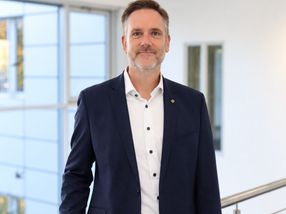
Sven Altvater, a research associate at Fraunhofer ISI, explains: “The high level of public funding and third place in patent applications show that Germany has a strong research and innovation base in electrolysis technologies. This is clearly helping to expand technological expertise across all three processes examined. However, in light of growing international competition—particularly from China—Germany should not rest on its laurels: It is crucial to consistently translate funded research and development efforts into marketable technologies, industrial applications, and competitive companies.”
Market forecasts remain subject to significant uncertainties
An analysis of 55 market studies from 2019 to 2026 provides insights into future market developments. The annual growth rates for the global electrolyzer market projected in these studies range from 5.6 to 97.7 percent; with a median of 25.7 percent. For the year 2030, the studies project global annual revenues ranging from 651 million to 226 billion U.S. dollars. The median is 14 billion U.S. dollars.
The wide range of these figures reflects both differences among the studies analyzed and significant uncertainties in a market that is still developing. How quickly it grows depends primarily on the expansion of renewable energy, policy support and regulation, investment, and the ramp-up of the global hydrogen economy.
Municipal utilities are expanding their involvement
Municipal utilities and regional energy providers can play a key role in implementing the hydrogen economy at the local level. As of early 2023, only about 4 percent of municipal utilities were involved in specific hydrogen projects. By the end of 2025, 64 electrolysis projects involving 57 municipal utilities and 17 regional energy suppliers had already been recorded. Together, they plan to achieve approximately 3.2 gigawatts of electrolysis capacity. However, many of the projects are still in their early stages; 15 percent were discontinued prematurely.
Dr. Henning Döscher, who coordinates the research at Fraunhofer ISI as part of the “H2 Companion” project, puts the new findings into perspective: “Electrolysis has gained significant momentum in research and innovation worldwide. Germany and Europe have a strong research base, broad funding, and numerous industrial players. However, the transition to an economically viable mass market is not yet complete. This requires a reliable regulatory framework, predictable funding, and concrete buyers for green hydrogen.”
Note: This article has been translated using a computer system without human intervention. LUMITOS offers these automatic translations to present a wider range of current news. Since this article has been translated with automatic translation, it is possible that it contains errors in vocabulary, syntax or grammar. The original article in German can be found here.


Other news from the department science