A New Approach to Sustainable Plastics
Hereon researchers improve the environmental footprint of polystyrene through innovative material additives
Advertisement


polystyrene is one of the most important plastics worldwide, but it is still considered far from sustainable. Its production relies on fossil resources, requires large amounts of energy, and the material is rarely recycled. A research team led by the Helmholtz-Zentrum Hereon has now developed an alternative polystyrene that contains renewable raw materials, can be produced in an energy-efficient way, and is degradable. The results were recently published in the journal Chem Circularity.
Polystyrene is used in protective packaging for televisions and electronic devices, in decorative and skirting boards for interior construction, and in Petri dishes. It is one of the world's most important plastics, with nearly 20 million tonnes produced each year. The material is predominantly derived from crude oil and is rarely recycled. Virgin polystyrene is often cheaper than recycled material, meaning that used products are typically incinerated or sent to landfills. Like many other plastics, polystyrene is highly resistant to degradation in the environment.
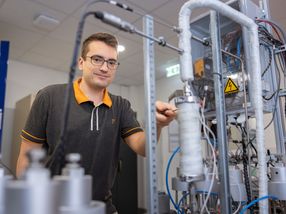
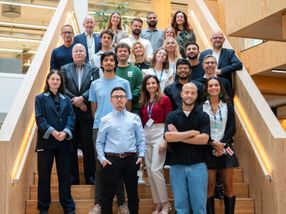
Researchers have now developed a more sustainable version of polystyrene. “The combination of renewable feedstocks, reduced energy consumption, and improved recyclability represents a major step forward,” says doctoral researcher Phannaro Nhem, who is currently pursuing his PhD under the supervision of Prof Francesca Toma, Director of Hereon’s Institute of Functional Materials for Sustainability. The project also involved researchers from BTU Cottbus-Senftenberg, Freie Universität Berlin, and Helmut Schmidt University in Hamburg.
50 Percent Renewable Raw Materials
Conventional polystyrene is produced by chemically linking styrene molecules into a plastic material. During this process, the styrene molecules form a rigid polymer, and the reaction vessel must be heated. The research team supplemented the styrene with the chemical compound itaconic anhydride, which can be produced through the fermentation of plant-based carbohydrates such as sugar. The resulting polystyrene contains around 50 percent of this bio-based raw material.
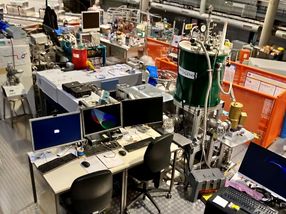
The manufacturing process was also made more energy efficient. Instead of using heated reaction vessels, the researchers employed microwave radiation as a heat source. “It is similar to a kitchen at home. Heating food on a stove takes time and consumes a lot of energy. Microwaves are much faster,” explains Phannaro Nhem. “Microwave technology has not yet been widely adopted in polymer synthesis,” says Francesca Toma. “However, our results suggest that it could become a more energy-efficient alternative for controlled polymerization processes.”
Built-In Breaking Points for Recycling
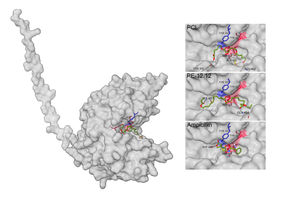
The team also incorporated the compound DOT into the material. These DOT molecules act as deliberately integrated breaking points within the polymer network, allowing the material to be chemically broken down into smaller fragments at the end of its life cycle. “Unlike conventional polystyrene, our material can be fragmented into small pieces,” says Nhem. These smaller fragments can subsequently be further processed chemically. Bacteria are also capable of metabolizing the fragments, whereas they cannot degrade the tightly cross-linked structure of conventional polystyrene.
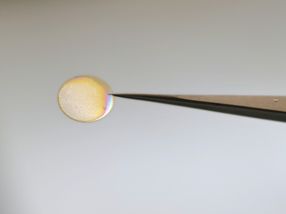
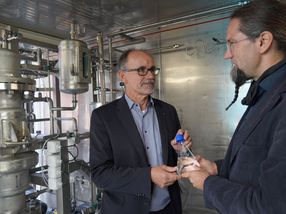
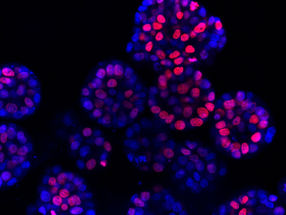
“The new polymer was developed according to the design-for-degradation principle, meaning it is engineered for controlled breakdown at the end of its service life,” adds Francesca Toma. “This opens up a pathway for polystyrene towards closed material cycles and a circular economy.” Initial tests have shown that the material can be processed using conventional injection-molding equipment. Using their current laboratory-scale setup, the researchers produced miniature Petri dishes approximately the size of a one-euro coin. In the future, however, a wide range of applications could be envisaged. Preliminary studies with human stem cells also indicate that the material is biocompatible and performs just as well as commercially available polystyrene for cell culture applications.
Original publication



Other news from the department science