Aluminum Instead of Graphite: Fraunhofer IPA Solves a Key Problem in Anode Research
PFAS-Free Battery Cell Becomes Feasible for Industrial Production
Advertisement


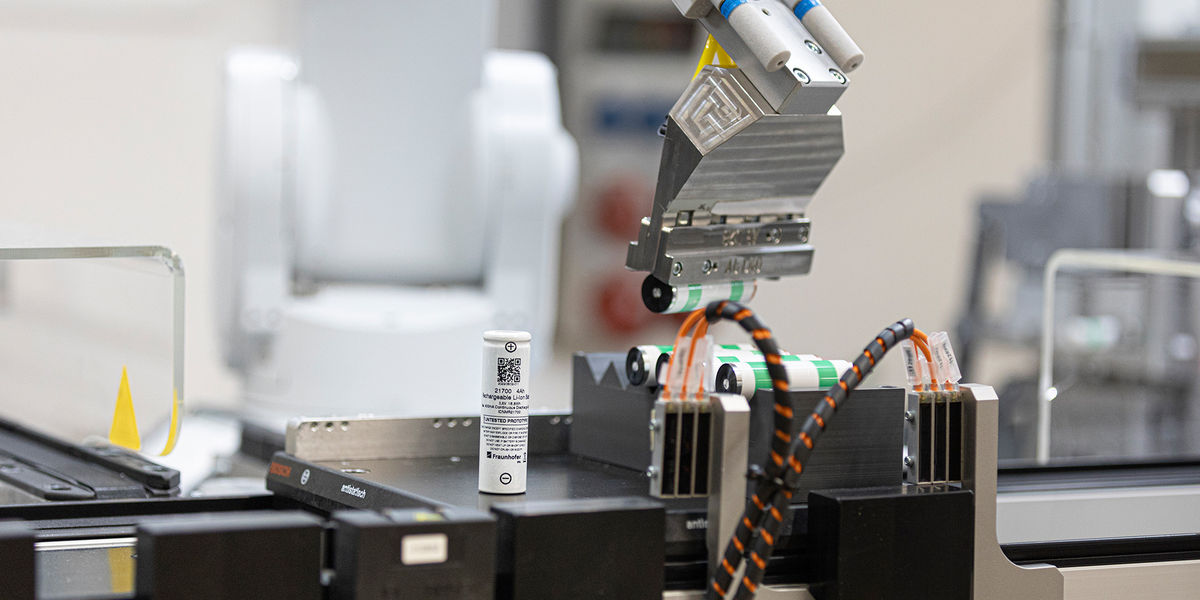
Aluminum has long been considered a promising anode material for lithium-ion batteries, but capacity losses and the structural degradation of the material have so far prevented its industrial use. The Fraunhofer IPA has now achieved a major technological breakthrough: a patented technology stabilizes the aluminum anode during repeated charge and discharge cycles. This makes a technology practically viable that combines high energy densities with a sustainable, safe, cost-effective, and robust cell architecture.
High Potential—Previously Limited by Material Degradation
Aluminum has long been considered a promising anode material for lithium-ion batteries. It is readily available, cost-effective, and enables high capacities. However, the state of the art to date presented a significant challenge: During charging and discharging, aluminum changes its volume. This creates mechanical stresses that lead to cracks, porosity, and ultimately the pulverization of the electrode material. The result is a decline in capacity and a limited cell lifespan. Until now, this material damage has prevented the industrial use of aluminum anodes.
Patented innovations stabilize the aluminum anode
The Fraunhofer Institute for Manufacturing Engineering and Automation IPA, in collaboration with the Institute for Photovoltaics at the University of Stuttgart, has developed and now patented a cell and electrode technology that prevents precisely these aging processes, thereby solving the central problem. The innovations stabilize the materials during operation and maintain electrical contact within the electrode over many charge and discharge cycles.
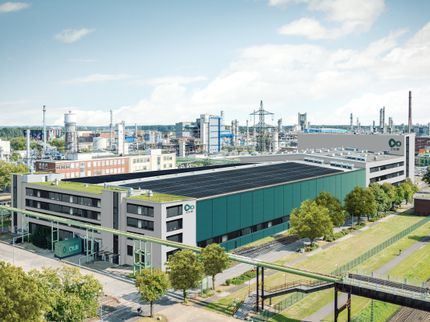
“We are making a battery technology that has been known for a long time but has been difficult to master until now practically usable,” says Professor Kai Peter Birke, Scientific Director for Battery and Hydrogen Systems and Storage at Fraunhofer IPA. “Our approach combines high energy densities with a simple, robust, and safety-oriented cell chemistry.” The technology does not require graphite or silicon in the anode. This eliminates the challenges typical of conventional high-energy anodes with a high silicon content—namely, significant volume changes and the resulting material damage during charging and discharging. In addition, the widespread use of graphite in the anode can be eliminated, which is considered a major supply risk for the European battery industry.
The starting material for the aluminum anode is a cost-effective, commercially available alloyed aluminum foil, which serves both as the current collector and the active material. This makes it possible to completely eliminate the need for copper as a carrier foil. Furthermore, the complex coating process—which is required to make the active material usable as an electrode—is no longer necessary. This significantly reduces not only process costs but also energy consumption in electrode production.
Lithium Manganese Oxide Cathode as an Alternative to the Lithium Iron Phosphate Cathode
As a cell concept, this aluminum anode can be excellently combined with a cost-effective, fluorine-free lithium manganese oxide (LMO) cathode. This enables LMO-based battery cells to achieve a competitive energy density and offers a phosphate-free and cost-effective alternative to the widely used lithium iron phosphate cell.
Furthermore, this aluminum anode can be used with alternative electrolyte solvents that have a high flash point, enabling safe operation at elevated temperatures. This combination of an alternative fluorine-free electrolyte and a fluorine-free LMO cathode would allow for a completely fluorine-free—and thus also PFAS-free—cell design. The risk of highly toxic hydrogen fluoride leaking from a lithium-ion battery would thus be completely eliminated.
Because material stability can now be controlled, new applications are opening up for the aluminum anode. This safe and robust cell chemistry allows for use in air freight—for example, for tracking shipping containers—or in specialized medical devices. These applications require energy storage systems that are compact, reliable, and safe to operate.
Production Possible on Existing Equipment
Another advantage: The cell chemistry is designed for manufacturing on existing production lines. This means it can be integrated into existing industrial processes without the need to build entirely new manufacturing infrastructure. The scientists led by Professor Birke have built several prototypes of their newly developed battery and are currently testing them in the laboratories of the Center for Digitalized Battery Cell Production (ZDB) at Fraunhofer IPA.
“Our goal is a battery technology that combines high energy density, robust cell operation, and cost-effective manufacturability,” says Kathrin Schad of the Battery Technologies research team at Fraunhofer IPA. “The breakthrough in material stability makes batteries with aluminum anodes a realistic option for the next generation of high-performance energy storage systems.”
Note: This article has been translated using a computer system without human intervention. LUMITOS offers these automatic translations to present a wider range of current news. Since this article has been translated with automatic translation, it is possible that it contains errors in vocabulary, syntax or grammar. The original article in German can be found here.



Other news from the department science
















These products might interest you

Most read news










More news from our other portals

























See the theme worlds for related content
Topic World Battery Technology
The topic world Battery Technology combines relevant knowledge in a unique way. Here you will find everything about suppliers and their products, webinars, white papers, catalogs and brochures.

Topic World Battery Technology
The topic world Battery Technology combines relevant knowledge in a unique way. Here you will find everything about suppliers and their products, webinars, white papers, catalogs and brochures.