Research team develops sustainable plastic containing 30 percent grass fibers
Instead of coming from monocultures, the grass comes from fallow meadows, thereby supporting species-rich ecosystems
Advertisement


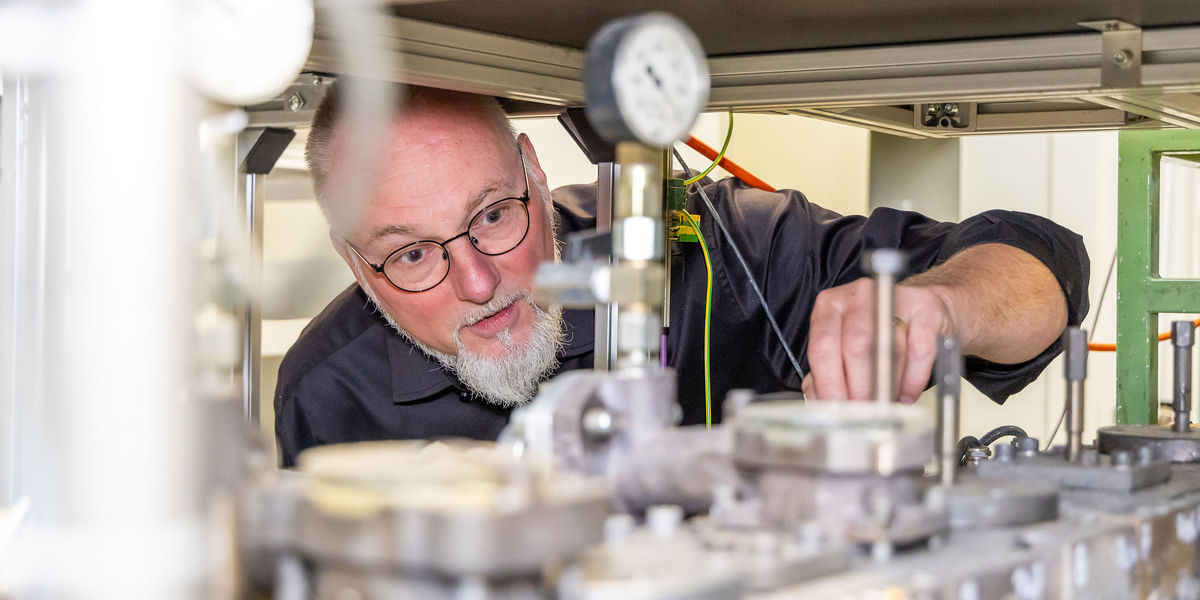
How can plastics be produced more sustainably? One possible path leads through the meadow: Grass-fiber-reinforced plastics have been on the market for about ten years. In the “Gras-to-Plast” project, Prof. Dr. Martin Moneke from Darmstadt University of Applied Sciences (hda) and his team have further developed this type of bioplastic. The result is a significantly more robust material that can be used for a wider range of products. This not only saves fossil raw materials but also reduces energy consumption during production. Furthermore, the grass used does not come from monocultures, as is usually the case, but from fallow meadows, which are thus preserved as species-rich ecosystems.
Contrary to popular belief, plastic is an expensive raw material. “When you purchase plastic in large quantities,” explains Prof. Dr. Martin Moneke from the Polymer Engineering program at hda, “it is, depending on the production method, more expensive than aluminum or steel.” And that’s how the idea with grass came about: Grass-fiber plastics have been on the market for about ten years. The higher the fiber content, the fewer petroleum-based raw materials are needed for production, and the more affordable and sustainable the product is.
The “Gras-to-Plast” project, on which plastics expert Moneke and his team worked for a year and a half, focused on further improving such bioplastics. Everyone is familiar with the raw material from clothing stores or drugstores: a plastic that the Hessian company Cortec uses to produce clothes hangers. According to the company, it ships more than 60 million of these worldwide every year. Moneke’s team set out to solve various problems related to the plastic used in clothes hangers: The material needed to be more durable so that it could be used to manufacture more sophisticated items. At the same time, the goal was to improve sustainability: achieving the highest possible grass fiber content, saving energy during production, and ensuring the grass came from responsible sources.
The grass used up to that point came from monocultures—meaning it was grown specifically for plastic production. The hda team wanted to change that and therefore experimented with grasses from fallow meadows. These are becoming increasingly common as the dairy industry in Germany shrinks. However, the species-rich flowering meadows should still be preserved, including as a source of income for farmers. But when nature meets science, things can sometimes get a bit chaotic: A natural meadow is home to around 20 different grasses, herbs, and flowers. Depending on the season and weather, their composition and properties change. Despite this “chaos factor,” Moneke’s team has succeeded in developing a robust formula for a material that exhibits stable, reproducible properties.
The new formulation consists of 30 percent grass fibers and 60 percent polypropylene; the remaining 10 percent are additives that improve the material’s properties and make it easier to process. This material can now be used to manufacture other products made of bioplastic, such as small stackable boxes and large transport crates. These products have to withstand quite a bit when they’re stacked on top of each other or moved with a forklift. “That means you can hit them hard—and still, nothing should break,” says Prof. Dr. Martin Moneke, summarizing the principle.
Things got pretty rough in the lab at times: The objects, manufactured using injection molding, were subjected to numerous stress tests. “We dropped the stacking boxes from a height of five meters and conducted puncture tests.” In the end, the material passed all the tests, and its “impact strength” was increased by about 20 percent. The new plastic blend is therefore particularly sturdy, and cracks form less quickly. Processing is also easier and more efficient: “In the previous version, many fibers were exposed on the surface and could therefore absorb water,” explains Moneke. “This led to buildup, increased maintenance and cleaning efforts—and a lot of scrap.”
The new formulation integrates the grass more effectively into the plastic, can be processed at lower temperatures and pressures, and flows more stably through the injection molding process. Once the project is complete, items such as coat hangers and stacking boxes can now go into production using the new material blend. “We’ve reached a Technology Readiness Level of 8 or 9 in this project,” the researcher says with satisfaction. On the nine-point scale, this means the product is ready for use.
Note: This article has been translated using a computer system without human intervention. LUMITOS offers these automatic translations to present a wider range of current news. Since this article has been translated with automatic translation, it is possible that it contains errors in vocabulary, syntax or grammar. The original article in German can be found here.


Other news from the department science