New Processes for Recovering Rare Earth Elements from Magnets
The EU’s NEO-CYCLE project aims to reduce Europe’s dependence on Chinese rare earths
Advertisement


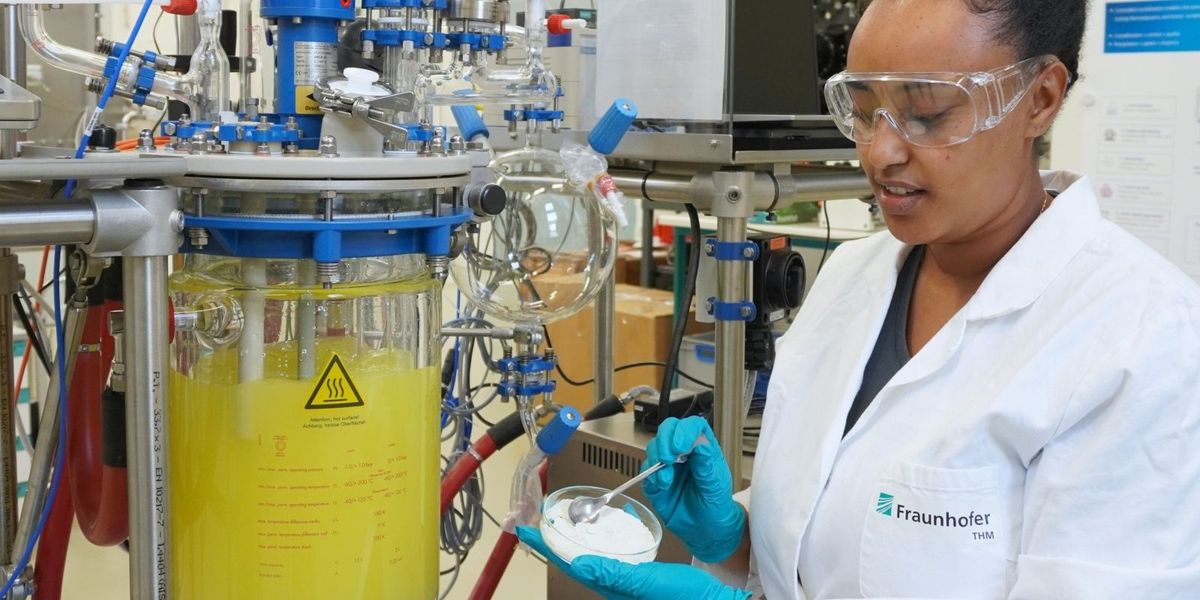
magnets are essential components in electric vehicles, wind turbines and electronics. However, their production depends on rare earth elements such as neodymium, about 90 percent of which is imported from China. Researchers at the Fraunhofer Institute for Ceramic Technologies and Systems IKTS are working with project partner TU Bergakademie Freiberg to develop a technology to recover these valuable raw materials in Germany for use in new products.
Neodymium magnets are among the world’s strongest permanent magnets. Made from neodymium, iron and boron, they are used in electric vehicles, wind turbines and electronic products such as speakers, smartphones and hard drives. Global demand for permanent magnets is rising, with estimated annual growth rates of up to 8.3 percent. This makes it essential to recycle scarce rare earth elements such as neodymium, although the process is highly complex.
Closing the materials loop, securing raw material supplies
Neodymium must be extremely pure before it can be reused in new magnets. Developing an economically viable process that meets this requirement is challenging. As a result, very few magnets are recycled in Europe. Instead, most are collected and shipped to China for reprocessing. About 90 percent of materials such as neodymium are subsequently reimported.

Together with partners in the EU project NEO-CYCLE, Sandra Pavón is developing a process for extracting valuable raw materials in Europe. »We aim to recover rare earth elements from electronic waste and use them in high-value products such as green fertilizers and in the production of pharmaceuticals, « says Pavón, who heads the Hydrometallurgical Recycling and Raw Materials Chemistry group at Fraunhofer IKTS in Freiberg. »This will close the materials loop, protect the environment and help reduce global dependence on strategic resources.«
Sustainable recovery of high-quality materials
A range of magnets can be upcycled in this way. The NEO-CYCLE project focuses on hard disk drives (HDDs) from discarded computers and laptops, which contain neodymium magnets. »We are testing two methods for processing the magnets – solid-state chlorination and electrochemical processes—to determine the most suitable technology,« explains Sandra Pavón.
In the solid-state chlorination process, project partner TU Bergakademie Freiberg adds ammonium chloride, rather than conventional hydrochloric acid, to the neodymium-boron-iron mixture recovered from HDD waste. Heat converts the mixture directly into metal chlorides and a high-purity ammonia solution. The patented procedure is already used for fluorescent lamps. Researchers are now testing whether it is also suitable for the upcycling of magnets. Results show that metal chlorides can be separated from the magnet material far more efficiently, enabling nearly all the metals to be extracted using comparatively small amounts of chemicals.
In the second procedure tested, the researchers place powdered magnet waste in an electrochemical cell. An electrolyte such as diluted sulfuric acid provides the reaction medium for the electrochemical processes. This first extracts a boron solution from the magnets, which is then concentrated for use in the chemical and pharmaceutical industries.
Researchers at Fraunhofer IKTS subsequently separate the products generated by the two procedures, drawing on their expertise in metal separation and process water treatment. Sandra Pavón and her team use a selective hydrometallurgical procedure to extract neodymium and iron. The metal salts can then be recovered in their pure form. Once separated, the materials are further refined by the project partners and supplied not only to the chemical and pharmaceutical industries but also to the hydrogen and fertilizer sectors.
The goal: zero waste
The NEO-CYCLE project is funded by the European Union through its Horizon Europe program. The project will run for four years; planning for a pilot plant is already underway. Sandra Pavón is enthusiastic: »The procedure starts with products that have reached the end of their life cycle. At its end, we can supply four different industries with valuable recycled raw materials.«


Other news from the department science










Most read news






More news from our other portals














See the theme worlds for related content
Topic World Battery Technology
The topic world Battery Technology combines relevant knowledge in a unique way. Here you will find everything about suppliers and their products, webinars, white papers, catalogs and brochures.

Topic World Battery Technology
The topic world Battery Technology combines relevant knowledge in a unique way. Here you will find everything about suppliers and their products, webinars, white papers, catalogs and brochures.