Rapeseed oil instead of crude oil: Verbio starts industrial production of renewable chemicals
Nearly EUR 100 million invested
Advertisement


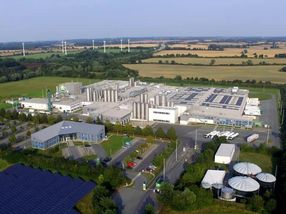
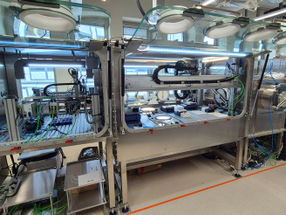
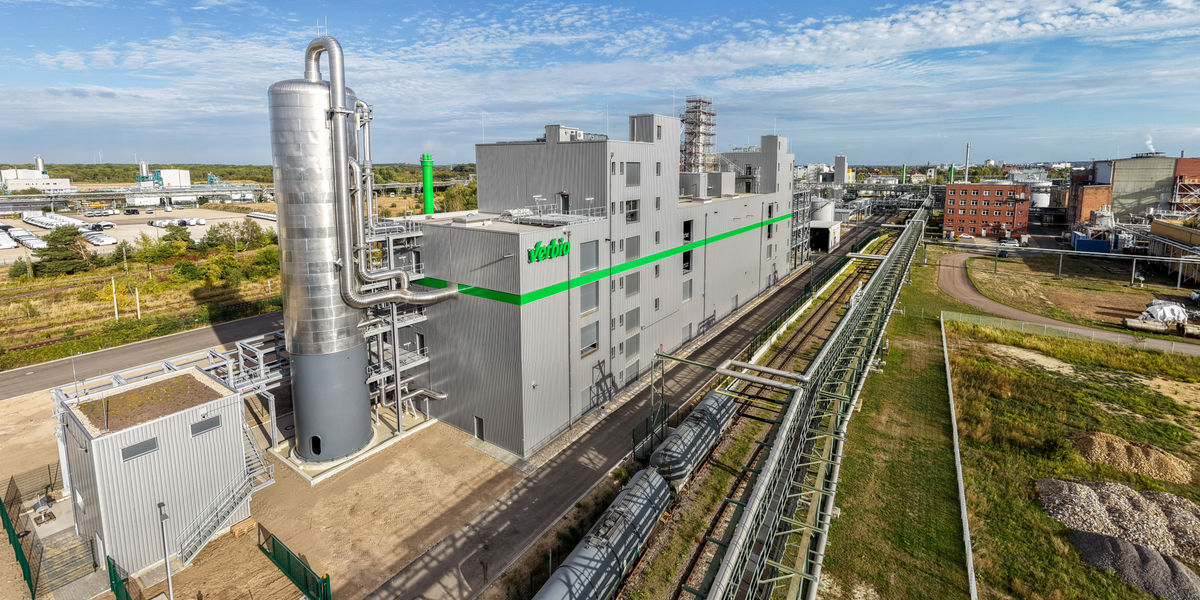
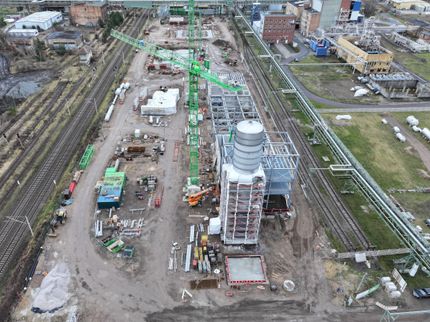
Verbio is entering the large-scale production of bio-based chemicals with an investment of nearly EUR 100 million. The Company is officially commissioning the world’s first large-scale ethenolysis plant based on rapeseed methyl ester at its Bitterfeld site. The new plant is capable of producing up to 60,000 tonnes of bio-based chemicals annually – high-quality renewable carbon compounds that can replace fossil-based raw materials in lubricants, detergents and cleaning products, as well as plastics.
With this investment, Verbio is expanding its business model beyond the biofuels market. In the future, the rapeseed methyl ester produced at the Bitterfeld site will be used not only as a source of energy in the form of biodiesel, but also as a raw material for the production of higher-value chemicals. This enables Verbio to tap into an additional sales market for a raw material that the Company already produces in large quantities.
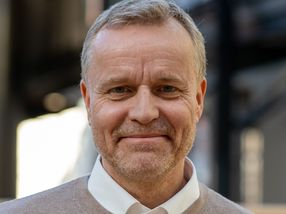
“With this new production plant we are supplementing our biorefinery with a further stage in the value chain, building on an established raw material base,” says Verbio CEO Claus Sauter. “By processing European rapeseed oil, we are strengthening regional agriculture and reducing our reliance on global supply chains that are prone to disruption. In addition to sustainability considerations, this is of key importance for Germany as a business location.”
This investment comes at a time of far-reaching changes in the European chemical industry. Increasing international competition, high production costs and the need to shift to a new raw materials base are intensifying the pressure on the sector to transform.
Dorothee Bär, German Federal Minister for Research, Technology and Space, sees the new plant as an important sign of the future viability of the German and European chemical industries: "To know what is not yet known by anyone else. And then to do what no one else is doing. Verbio demonstrates how this is done; you are demonstrating this with your new production plant for bio-based speciality chemicals. Your lubricants, plastics and detergents are not manufactured from crude oil, but from biomass such as rapeseed. Wow, what a sensation! […] With the commissioning of the new production plant, you are sending out a very strong message at a time when the price of crude oil is on everyone’s lips and we are realising just how dependent we actually are. You have a solution for that. In doing so, you are also ushering in a new era at the Bitterfeld site, with its long industrial heritage.”
Rapeseed oil instead of crude oil for the chemical industry
Carbon remains an indispensable raw material for the chemical industry. The industry needs alternative, bio-based carbon sources that are available at industrial scale, scalable and economically viable in order to reduce its dependence on fossil raw materials. With its new bio-based speciality chemicals, 1-decene and 9-DAME, Verbio has the right solution to this challenge.
“In the long run, Europe will not be able to compete with other regions of the world on the basis of cheap fossil raw materials. Our opportunity lies in creating new value here based on renewable carbon. It is crucial that such solutions do not remain at pilot scale, but are scaled up for industrial production. The plant in Bitterfeld demonstrates the potential of bio-based raw materials for competitive and more resilient chemical production in Europe,” says Michael Carus, Senior Advisor and shareholder of the nova-Institute, at the press conference.
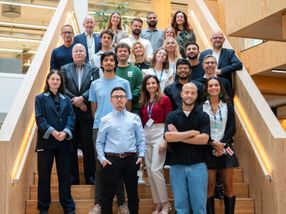
At the commissioning ceremony, Harald Dialer, Chief Technology Officer and Executive Vice President of UPM Next Generation Renewables at UPM, and Dr. Edgar Endlein, Management Research & Development at Werner & Mertz, known for its Frosch consumer brand in the detergents and cleaning products sector, join Claus Sauter and Michael Carus to discuss the role that renewable carbon sources will play in the European chemical industry in the future.
Market ramp-up takes place in line with customer applications
Following commissioning, the market ramp-up will now begin in stages. The chemical building blocks that are produced in Bitterfeld must be qualified by customers for their respective applications. Production volumes are therefore expected to grow gradually in line with the development of customer applications.
“We have made an upfront investment of just under EUR 100 million to provide the renewable molecules needed for the transformation. It is now up to the chemical industry to make use of this new option. But consumers can also make a contribution to helping locally manufactured bio-based products gain a foothold in the market through their purchasing decisions,” explains Claus Sauter.
Around 200 guests from politics and business are expected to attend the official commissioning ceremony, including 60 customers and partners from the international chemical industry. There is high interest in bio-based speciality chemicals; Verbio has already received enquiries from across Europe, as well as from North and South America and Asia. As demand continues to rise, technology, the raw materials base and production capacity all offer potential to scale up further.
Nobel Prize-winning research put to industrial use
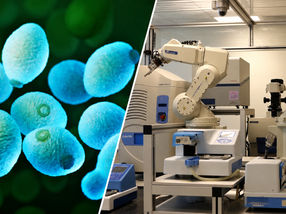
The technological basis of the new production process is ethenolysis, a specific form of olefin metathesis. Special catalysts from Verbio’s Hungarian subsidiary, XiMo, play a key role in this process. They enable a targeted conversion of the carbon compounds in rapeseed methyl ester into new molecules for chemical applications.
In 2005 Yves Chauvin, Robert H. Grubbs and Richard R. Schrock were awarded the Nobel Prize in Chemistry for their ground-breaking work on olefin metathesis. For Schrock, the commissioning also had personal significance: “It is truly special to see today how our research is being put into industrial practice. The fact that olefin metathesis is now being used on this scale is a moving moment for me."
With this new production plant, Verbio is contributing to key targets set out in the High-Tech Agenda Germany and the Chemicals Agenda 2045. “We are turning innovations into applications, strengthening biomass as a raw material base for a chemical industry fit for the future, and creating additional value at an existing German chemical-industry site,” says Claus Sauter.
Commitment to Bitterfeld-Wolfen as an industrial centre
The new production plant adds a further stage in the value chain at the Verbio production location at the Bitterfeld-Wolfen Chemical Park, which has been established for 25 years. Approximately 50 new jobs will be created. This means that Verbio will employ around 130 staff at the site in future.
The project received funding under the “Improvement of the Regional Economic Structure” (GRW) of the joint German Federal Government/Länder scheme for particularly environmentally friendly and innovative technologies.
The chemical and pharmaceutical industries, as well as the refining sector, account for around two-fifths of total industrial revenues generated in Saxony-Anhalt and thus play a key role in the state’s industrial value creation. The East German Chemicals and Refining Pact, signed in April 2026 with the participation of Saxony-Anhalt, aims, among other things, to safeguard industrial value creation and employment, as well as facilitating competitive pathways to transformation. Verbio’s new plant contributes to these objectives.
Verbio SE, a publicly listed company headquartered in Saxony-Anhalt, is one of the state’s largest companies by revenue, and is firmly rooted here with two production sites and several hundred jobs.
“Our sites in Zörbig and Bitterfeld are established for the long term. Here, we want to further promote the bioeconomy and regional value creation. The proximity to local farms, which supply us with raw materials, and the existing industrial infrastructure are key location advantages for us,” emphasises Sauter.


Other news from the department business & finance









These products might interest you