A New Method for Upcycling Polyethylene
Suitable for Mass Production as a Raw Material for Nylon
Advertisement


It would greatly benefit the environment and climate if nylon—chemically known as polyamide—could be produced on a large scale from plastic waste in the future, rather than from petroleum, as has been the norm until now. At LIKAT in Rostock, chemists are pursuing this approach. They have succeeded in selectively converting polyethylene—the main component of all plastic waste—into dicarboxylic acids, which can serve as chemical precursors for nylon. The reaction proceeds under mild conditions and does not even require a catalyst. The goal is to develop a process on a pilot plant scale. To this end, the team aims to increase selectivity and elucidate the reaction mechanisms.
Pyrolysis Is No Longer Sustainable
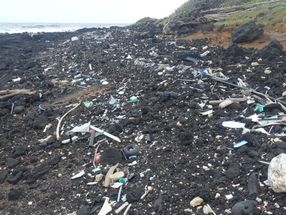
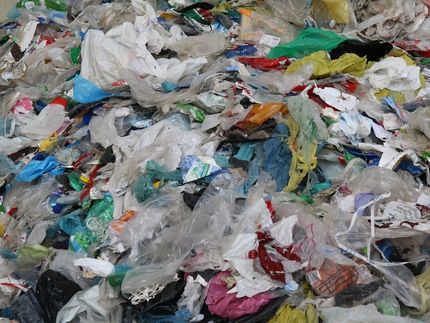
Polyethylene, the material used in ubiquitous plastic bags, together with polypropylene, accounts for four-fifths of plastic waste—an estimated 400 million metric tons annually worldwide. Pyrolysis has become the established method for chemically recycling these polyolefins, as Dr. Esteban Mejía, group leader at the Leibniz Institute for Catalysis, LIKAT, explains: “The plastic is burned in a controlled manner at temperatures of up to 600 degrees Celsius.”
While the result is indeed “high-quality oil” and the process does not emit any CO2, the enormous amount of energy consumed means that pyrolysis leaves such a large CO2footprint that environmental authorities are sounding the alarm. In the U.S., pyrolysis plants are already being shut down.
Reactive Oxygen Species as a Tool
This raises the question of alternatives. Researchers are aware of a number of catalytic processes that work oxidatively, just like pyrolysis, says Esteban Mejía. “In these processes, a reactive oxygen species—which we call ROS—forms on the polyethylene surface.” As chemists now know, it is precisely these species that matter. Dr. Mejía: “ROS chemically break down the polyethylene. They essentially eat away at the material.”
However, this reaction requires high pressure, which makes the process explosive. “It cannot easily be scaled up to a practical scale.” Furthermore, the catalysts are based on precious metals, which makes the whole process expensive and also dependent on the volatile raw materials market.
During their literature review, Dr. Mejía’s group found reports from colleagues who produced polyethylene dicarboxylic acid with nonspecific chain lengths, including using highly concentrated nitric acid at 180 degrees Celsius and in a microwave. “These are quite harsh processes,” says Esteban Mejía, “but we were intrigued by the idea of pursuing the nitric acid route further and simplifying the process.”
Simpler means: diluted and using H₂O₂
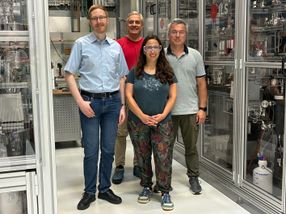
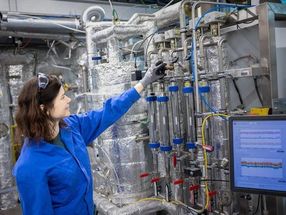
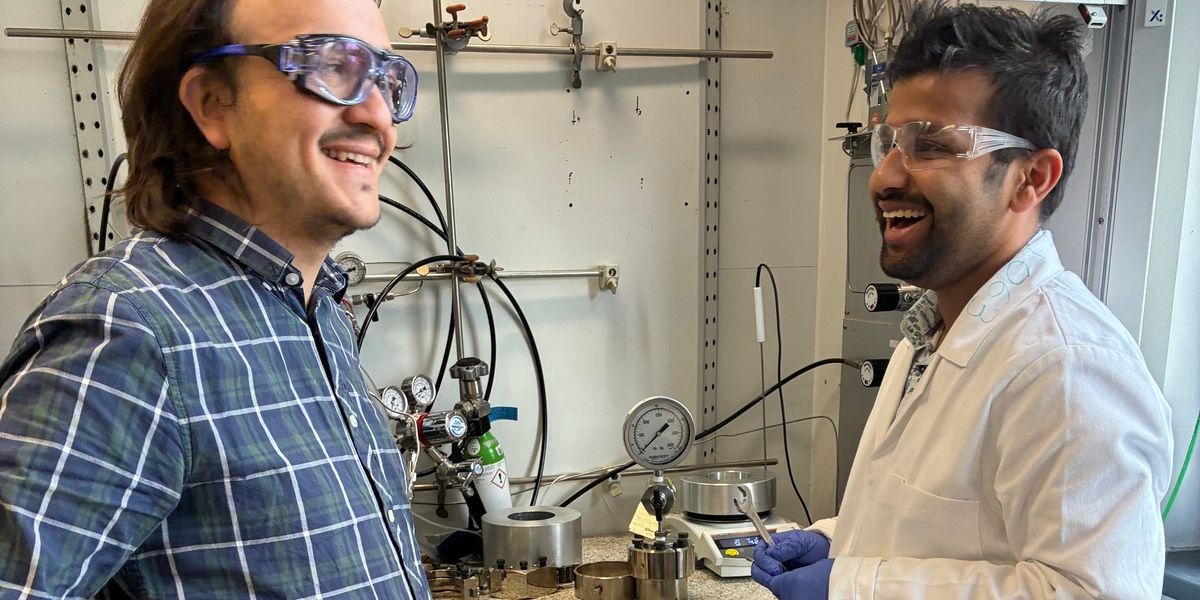
Since April 2026, a postdoctoral researcher, Dr. Satyajit Panda, has been working on the topic, temporarily assisted by a master’s student from the University of Rostock. Through further research and trial and error, as Dr. Mejía puts it, the group ultimately arrived at a simple reaction. The effect was fascinating: “You put pieces of a plastic bag into a test tube containing highly diluted nitric acid and hydrogen peroxide, heat the mixture to a maximum of 120 degrees, and watch as the polyethylene dissolves.”
Controlling the reaction, however, is less straightforward. “It’s important to maintain a specific heat input regime,” explains Esteban Mejía. This is because the conversion of polyethylene into dicarboxylic acid involves several stages. If the intermediate products are allowed too much time, the reaction proceeds suboptimally and ultimately yields a complex mixture.
Selectivity and Reaction Mechanism
Dicarboxylic acid consists of chains of carbon atoms of varying lengths. The previous publications report on reaction results with chain lengths ranging from two to over 40 C- atoms . “The authors used it as a surfactant for soap production,” says Esteban Mejía. The target product of the Rostock chemists, however, is a viable starting material for polyamide, better known as nylon. Dicarboxylic acid with a chain length of exactly six carbon atoms is suitable for this purpose. And that places higher demands on the selectivity of the reaction and on any separation processes.
In their experiments, the LIKAT chemists have already been able to narrow down the chain length of their product to between four and ten carbon atoms. They hope to further improve this in collaboration with Prof. Dr. Udo Kragl from the Department of Chemical Engineering at the University of Rostock. Among other things, they have applied for project funding from the DFG for this purpose.
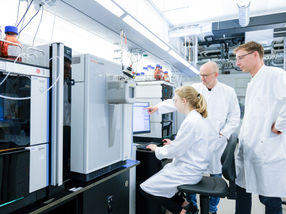
In this project, they also intend to work with analysts at LIKAT to elucidate the reaction mechanism: The primary goal, as Esteban Mejía explains, is to determine “which intermediates form during the reaction process, when they form, and how quickly.” They are also collaborating with a colleague from the University of Guayaquil in Ecuador, who is investigating the influence of light on the function of ROS (reactive oxygen species) in photochemical experiments.
Trash as a Raw Material for a Mass-Produced Product
An estimated eight million metric tons of polyamide are produced worldwide, with petroleum serving as the primary raw material. With the possibility of chemically upcycling polyethylene, a large portion of plastic waste could serve as an alternative raw material. Dr. Esteban Mejía: “Large-scale processing for nylon production would reduce the environmental impact and make the industry independent of fossil raw materials in this area.”
Dr. Mejía’s group is currently preparing a paper for publication in THE JOURNAL OF THE AMERICAN CHEMICAL SOCIETY. They have also received an invitation from Singapore to present their research findings at the Southeast Asia Catalysis Conference in December.


Other news from the department science