Recyclable batteries to reduce CO₂ emissions
Research award winners from Paderborn University present their findings
Advertisement


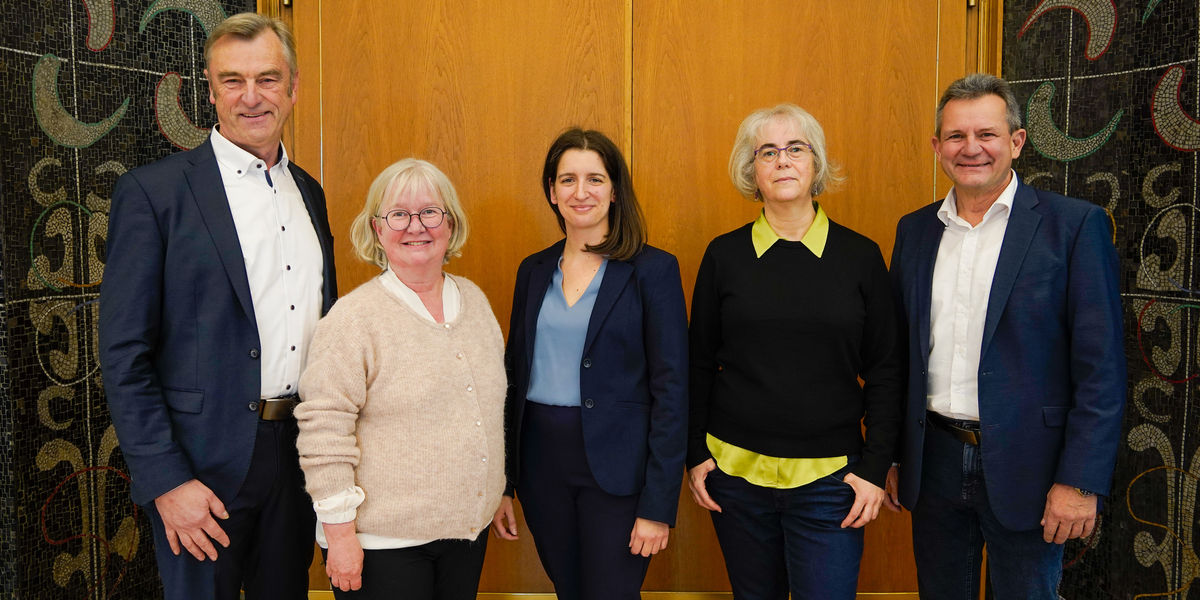
climate protection and a reliable energy supply are among the major challenges of our time. Whilst energy demand is rising, carbon dioxide (CO₂) emissions must fall and valuable resources must be used more efficiently. This is why there is a need for technologies that tackle several of these challenges simultaneously. So what if CO₂ were used to drive climate protection forward? Assistant Professor Dr María Nieves López Salas and Postdoctoral Research Fellow Dr Teresa de los Arcos de Pedro, both from the Department of Chemistry at Paderborn University, are exploring precisely this question in their research project. They are investigating whether CO₂ can beused to store energy in batteries. For their project, they were awarded the Paderborn University Research Prize in 2024 and have now presented their initial findings to the public at Paderborn Town Hall.
Industrial applications
“Renewable energy sources such as wind or solar power are not always available. That is why we need large batteries that can reliably store this electricity without themselves being harmful to the environment,” explains Dr de los Arcos de Pedro. The Paderborn CO₂ batteries are therefore intended for large, energy-intensive industrial plants such as steelworks. There, they could be used in future to ensure an uninterrupted power supply, grid compensation or self-sufficient emergency systems. This would be possible, amongst other things, if the batteries were connected directly to industrial CO₂ sources. “The CO₂ would be captured and converted within the battery, for example, into carbon monoxide, which could then be used as a feedstock for further chemical processes,” says Jun.-Prof. López Salas. The fact that this conversion takes place at an electrode is one of the chemists’ key findings. Whilst carbon monoxide can be harmful in everyday life, it can be reused in industry, for example as a key raw material for the production of chemicals.
Innovative catalysts for sustainable batteries
From mobile phones to large-scale industrial plants: lithium-ion batteries are currently used almost everywhere. “However, despite their good performance, these batteries have problems: raw materials such as lithium and cobalt come from just a few countries and are sometimes mined under poor working conditions. They are also associated with environmental impacts and high water consumption. Furthermore, recycling is technically complex and expensive,” says Dr de los Arcos de Pedro. That is why the two scientists have launched the “CO2BATT” research project, with the aim of developing batteries that use sustainable materials whilst simultaneously utilising and reducing CO₂.
The so-called‘transition metal CO₂ batteries (TMBCs)’ consist of two electrodes. On one side there is a metal, the anode, and on the other side carbon, the cathode. Between them is a liquid electrolyte that conducts ions through a membrane from the anode to the cathode. “What makes this special is that the battery uses CO₂ from the air to generate electricity. One problem, however, is that CO₂ isa very stable molecule and does not react easily with other substances. This is precisely where our research comes in: we are testing which materials are best suited and developing catalysts that help CO₂ to reactmore easily and quickly,” explains Assistant Professor López Salas, whose research focuses on sustainable materials chemistry. For example, the research team has developed a catalyst made from chitin, a natural substance found, for instance, in the shells of crabs. With success: the CO₂ battery was able to be repeatedly charged and discharged for over 50 hours.
Research with great potential
Assistant Professor López Salas is confident about the next steps: “We now have materials that work and are delivering good results. At the same time, we are working on carrying out real-time surface analysis of the catalyst under actual reaction conditions. This will enable us, amongst other things, to gain insights into the chemical state of the atoms. This method is particularly exciting, as it would make us one of the few research groups worldwide capable of carrying out such investigations.”
“This project embodies exactly what we aim to support with the University’s Research Prize: bold ideas with great potential. Here we see a principle that transforms CO₂ from a problem into a building block. The potential that is becoming apparent here is enormous: a single approach simultaneously addresses climate protection and a reliable energy supply,” says Prof. Dr Thomas Tröster, Vice-President for Research and Academic Careers.
This text was translated automatically.


Other news from the department science












Most read news









More news from our other portals
















See the theme worlds for related content
Topic World Battery Technology
The topic world Battery Technology combines relevant knowledge in a unique way. Here you will find everything about suppliers and their products, webinars, white papers, catalogs and brochures.

Topic World Battery Technology
The topic world Battery Technology combines relevant knowledge in a unique way. Here you will find everything about suppliers and their products, webinars, white papers, catalogs and brochures.