Catalytic Water Splitting: Researchers in Ulm Debunk Misleading Signals
Nickel Catalyst Has a Different Surface Than Previously Assumed for Decades
Advertisement


nickel is a promising, cost-effective, and robust catalyst for alkaline water electrolysis—a key technology for the climate-neutral production of hydrogen. However, the actual appearance of the active surface of such nickel electrodes under reaction conditions had not yet been conclusively determined. A research team at the University of Ulm has now refuted a decades-old assumption: The catalytically active surface does not consist of nickel oxohydroxide (NiOOH), as was widely assumed, but rather of nickel dioxide (NiO₂). The findings were published in the journal *Nature Catalysis*.
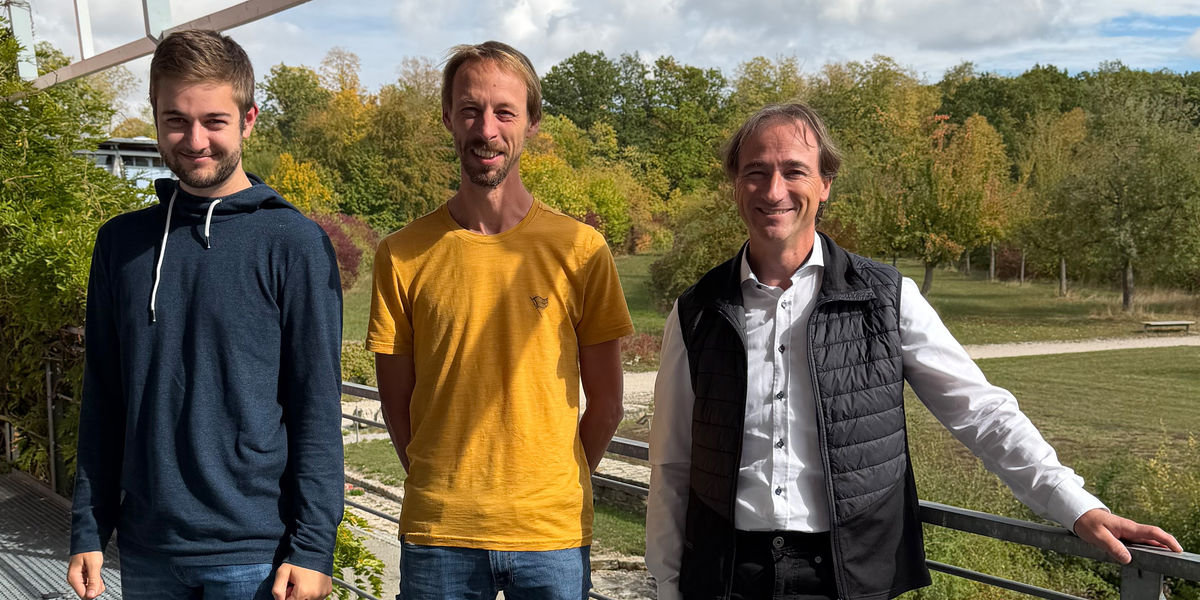
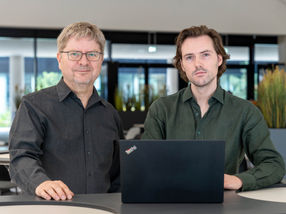
During the electrochemical splitting of water, hydrogen is produced at the cathode and oxygen at the anode. “Although hydrogen is usually the focus as a climate-neutral energy carrier, the greatest energy losses often occur at the oxygen electrode—that is, where the oxygen is generated,” explains PD Dr. Albert Engstfeld, who coordinated this study together with Professor Timo Jacob at the Institute of Electrochemistry at the University of Ulm.
This oxygen evolution reaction therefore requires efficient catalysts: this is where nickel comes into play. This transition metal is particularly interesting for this application because it exhibits high catalytic activity under alkaline conditions. Under reaction conditions, nickel forms oxidized surface structures, the nature of which is decisive for how oxygen evolution proceeds in detail.

How can the molecular structure of the catalyst surface be analytically characterized? “To obtain a valid result, it is crucial to observe the material during the chemical reaction—that is, in situ,” emphasizes first author Justus Leist, a doctoral student at the Institute of Electrochemistry. Surface-enhanced Raman spectroscopy (SERS) was used for this purpose. For this specialized analytical measurement technique, a thin layer of the material under investigation is applied to a rough gold surface. This enhances the interaction of the material with an incident laser, and valuable insights into the material’s structure can be gained from the reflected light.
NiO₂ Instead of NiOOH: Surprising Discovery Requires a Correction
For decades, it was assumed that the active surface of nickel catalysts during oxygen evolution consisted of nickel oxohydroxide, chemically NiOOH. The Ulm researchers tested this assumption using isotope labeling. To do so, they performed Raman measurements in both ordinary water (H₂O) and deuterated, or “heavy,” water (D₂O). When hydrogen is replaced by deuterium, the vibrational properties of OH and OD groups typically change. “If the nickel surface were indeed composed of NiOOH, the replacement of the hydrogen isotope would have to result in characteristic changes in the Raman spectra,” says Justus Leist. However, that was not the case!
Supplementary electrochemical investigations using cyclic voltammetry (CV), which were further correlated with density functional theory (DFT) calculations, allowed conclusions to be drawn about the actual chemical composition of the surface. Ultimately, the experimentally observed spectra could be convincingly reconstructed. The scientists finally succeeded in reconciling the theoretically postulated and experimentally measured results. The conclusion: Under reaction conditions, the surface corresponds to nickel dioxide, i.e., NiO₂, and not NiOOH. “This difference is fundamentally important from a chemical standpoint. NiOOH contains hydrogen atoms, whereas NiO₂ does not. This means that the previously assumed adsorption sites and reaction pathways on the surface must also be reevaluated,” emphasizes Professor Timo Jacob.
Overtones were misinterpreted for years
In addition to reevaluating the nickel surface, the study also provides important fundamental insights into the interpretation of Raman spectra of catalytic materials. Certain bands in the spectra were previously often attributed to so-called reaction intermediates—that is, short-lived intermediate stages of the chemical process. However, the Ulm research team was able to demonstrate experimentally that the signals are attributable to a physical phenomenon rarely observed in this class of materials: harmonics. “Based on simplified theoretical models, such bands are usually physically forbidden and become accessible only through extended models,” said Justus Leist. Based on further measurements of cobalt- and manganese-based oxides, the team posits that these harmonics occur primarily in materials composed of two-dimensional layers.
The research project was carried out as part of the Collaborative Research Center 1316 “Transient Atmospheric Pressure Plasmas—From Plasma to Liquids to Solids” (led by Ruhr University Bochum). In their subproject, the Ulm chemists are conducting research on plasma electrocatalysis, which allows for significantly higher current densities and voltages than in classical electrocatalysis. This can be used, on the one hand, for the production of catalytic materials or, on the other hand, directly for catalytic measurements.
Note: This article has been translated using a computer system without human intervention. LUMITOS offers these automatic translations to present a wider range of current news. Since this article has been translated with automatic translation, it is possible that it contains errors in vocabulary, syntax or grammar. The original article in German can be found here.
Original publication


Other news from the department science







Most read news









More news from our other portals























See the theme worlds for related content
Topic World Spectroscopy
Investigation with spectroscopy gives us unique insights into the composition and structure of materials. From UV-Vis spectroscopy to infrared and Raman spectroscopy to fluorescence and atomic absorption spectroscopy, spectroscopy offers us a wide range of analytical techniques to precisely characterize substances. Immerse yourself in the fascinating world of spectroscopy!

Topic World Spectroscopy
Investigation with spectroscopy gives us unique insights into the composition and structure of materials. From UV-Vis spectroscopy to infrared and Raman spectroscopy to fluorescence and atomic absorption spectroscopy, spectroscopy offers us a wide range of analytical techniques to precisely characterize substances. Immerse yourself in the fascinating world of spectroscopy!