How to Make Molecules Move
Chemists Develop an Artificial Molecular System That Moves on Its Own
Advertisement


A team at the University of Ulm has succeeded in developing a tiny molecular system that moves autonomously along a predetermined path—powered by chemical fuel and without external control of the individual steps. This work fills a research gap in the field of artificial molecular machines. In the future, this principle could help produce molecules that are difficult to synthesize using conventional methods. The journal *Nature Chemistry* has now published the results.
In nature, small molecular machines operate within every cell: so-called motor proteins, such as kinesin or myosin, transport substances, enable muscle movements, and play a role in cell division. These proteins move along protein filaments—as if they were walking on two legs. They are powered by energy supplied by a molecule produced naturally by the body. Chemists have long been trying to replicate such movements using artificial molecular machines. “However, all known ‘runners’ to date had to be controlled from the outside, for example by adding chemicals, light, or an electric field,” explains Max von Delius. The professor at the Institute of Organic Chemistry I at the University of Ulm had already succeeded in 2010, during his doctoral studies in Edinburgh, in making the world’s first molecules “run” along a short molecular track. In the current study he coordinated, the researchers have now achieved autonomy: “Our runner moves all on its own as long as it’s supplied with fuel.”
How does the runner get moving?
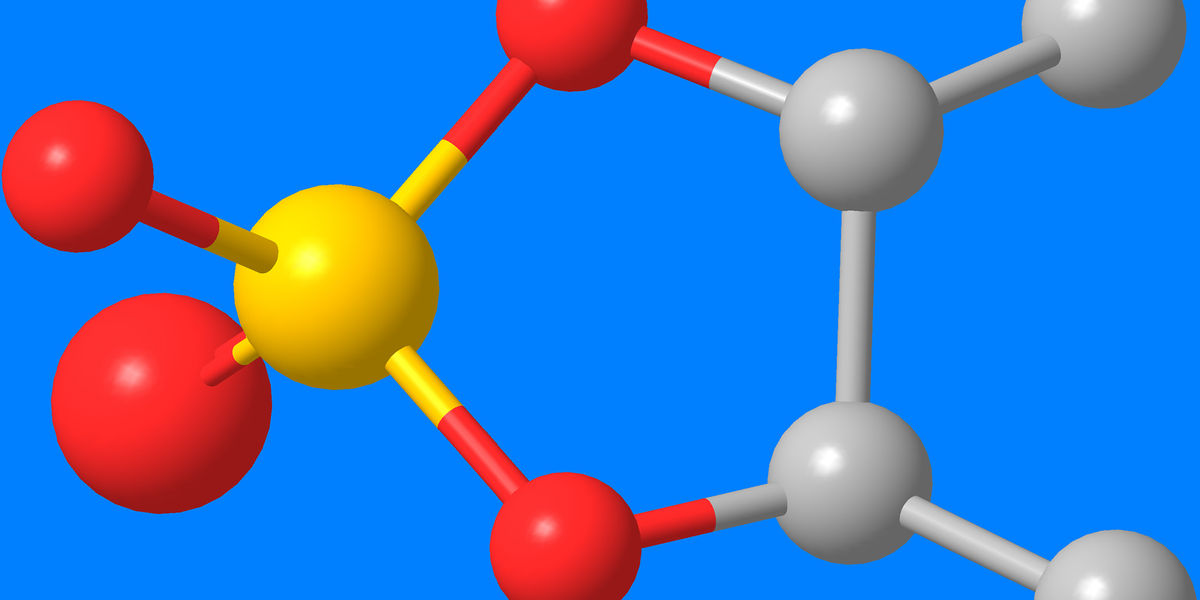
The researchers use a phosphate group consisting of one phosphorus atom and four oxygen atoms as their runner. This group is an important biological building block and is involved in nearly every metabolic process. The two running tracks in the Ulm researchers’ experimental setup also consist of natural substances: the fatty component glycerol, which has three possible binding sites for the phosphate group, and inositol, a sugar derivative that offers five docking sites.
“For our phosphate group to take a step along these pathways, it must break a bond with the molecular pathway—essentially lifting one foot—and form a new bond at the next step,” says von Delius. “The challenge is that such bonds are extremely stable. They normally break only extremely slowly. Theoretically, it takes about 140,000 years for half of them to break down. This inertia is good for our genetic material. But for a runner who is supposed to take several steps per hour, it’s a disaster.”
The researchers found a way to overcome this hurdle in a reaction principle also known from RNA: When the phosphate group bonds with two adjacent groups, each consisting of one oxygen and one hydrogen atom (OH groups), a ring-shaped structure forms that is under tension, “like a cocked crossbow,” as von Delius puts it—and within this structure, one of the two bonds breaks within minutes.
Step by step—without veering off course
Thus, one of the runner’s steps proceeds as follows: Figuratively speaking, the phosphate group initially stands quite relaxed with one foot on its path. When the researchers then add a “fuel”—water-soluble carbodiimide (EDC)—it activates the phosphate group to “dock” with a second foot at the next position. This creates the aforementioned taut ring-shaped compound, in which the phosphate group is bound simultaneously at two adjacent positions for a short time—until water allows one bond to break. “The rear ‘foot’ lifts off, the front one stays put, and the phosphate group moves forward one position without ever completely falling off the track. The next step follows with the next reaction cycle,” von Delius explains.
“Our study clearly demonstrates the effect of the fuel,” says first author Patrick Alexander Hoffmann from the Institute of Organic Chemistry I. “Without fuel, 90 percent of the phosphate molecules accumulate over the course of weeks at the outer edge of the glycerol track, in the position that is most energetically favorable for them. With fuel, however, after about two hours, 64 percent are located at the less stable middle position. The fuel drives the system into a state it would hardly ever reach on its own—uphill, so to speak.” The effect was even more pronounced on the longer inositol backbone: without fuel, the phosphate group did not move at all, even after eight weeks. With fuel, it moved through all five possible positions—a total of four steps.
If fuel is continuously added, this state is maintained for hours. The runners then move forward constantly—just like in a biological motor. “We’ve estimated that the amount of substance of one mole of runners—about 200 grams—collectively covers a net distance of around 8.3 million kilometers per second,” said von Delius. “The fuel is remarkably efficient in this process: Up to 19 out of every 100 fuel molecules consumed result in a successful step.”
Study Fills Research Gap
“For the first time, the system combines three crucial properties: processivity, autonomy, and kinetic asymmetry,” explains von Delius. This means that the runner remains connected to its path, moves autonomously as long as fuel is available, and is driven out of its natural resting distribution by the energy input. With this demonstration, the study closes a gap that has existed for many years in the field of molecular machines. “The reaction cycle we developed could help produce hard-to-access active ingredients by using fuel to move a phosphate group to a position that would otherwise be unfavorable—essentially making it move ‘uphill,’” explains von Delius. In the long term, the researchers also aim to move their runners in a single, specific direction and have them transport molecular substances. The work was funded by the European Research Council (ERC) and the German Research Foundation (DFG).
Note: This article has been translated using a computer system without human intervention. LUMITOS offers these automatic translations to present a wider range of current news. Since this article has been translated with automatic translation, it is possible that it contains errors in vocabulary, syntax or grammar. The original article in German can be found here.
Original publication


Other news from the department science