Sustainable Energy from the Landfill
Purification Instead of Flaring: A New Process for Treating Landfill Gas
Advertisement


In the era of climate change, converting waste into energy is an increasingly important approach to making energy supply more sustainable. A team at Frankfurt University of Applied Sciences (Frankfurt UAS) is now collaborating with the French company Prodeval to research a novel process that allows landfill gas to be processed so that it can be fed into the natural gas grid or made available as bio-LNG (so-called bio-LNG). Prodeval GmbH specializes in biogas processing and is funding the two-year research project.
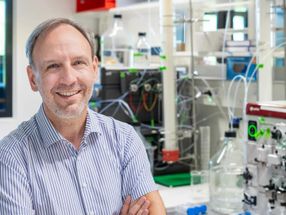
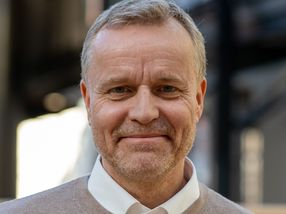
“Not only for environmental reasons, but also for economic ones, it makes sense for companies to purify methane-rich landfill gases rather than flaring them—as is often the case,” explains Prof. Dr.-Ing. Niklas Döring, head of the Energy and Resource Efficiency in the Process Industry (ERPI) research group at the Institute for Interdisciplinary Technology (iit) at Frankfurt UAS.
“However, purification is complicated because landfill gases form a complex matrix of gas components and contain large volumes of air,” explains the scientist, who is also the program director of the bachelor’s program in Bioprocess Engineering.
Adsorption Technology Combined with Membrane Filtration
In the innovative process developed by his research group, the gas mixtures are not only filtered through membranes but also separated using adsorption technology. This means that the gases are passed through a solid—the adsorbent—to which individual components of the mixture, so to speak, “stick.” “Our process promises a significantly higher yield of methane—a valuable resource—than previously established methods,” says Döring.
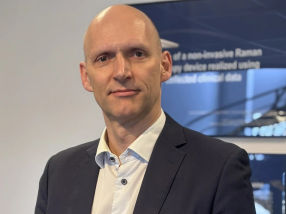
“As a leading manufacturer of biogas processing systems, we are constantly working to further develop our technologies and adapt them to new fields of application,” says Sébastien Paolozzi, President of Prodeval. “We have been involved in the processing and utilization of landfill gas since Prodeval was founded. Further developing the process—with the goal, in particular, of making the challenging separation of nitrogen more efficient and cost-effective—is therefore a logical next step. The collaboration with Frankfurt University of Applied Sciences offers us the opportunity to scientifically investigate new approaches for this purpose and to further develop the technology in a targeted manner.”
In-House-Built Facility
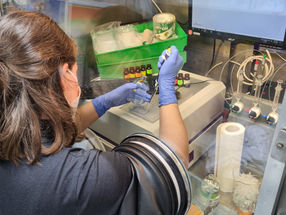
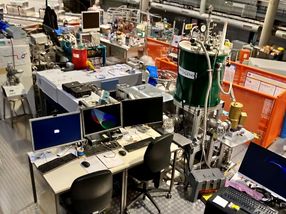
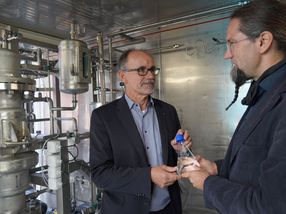
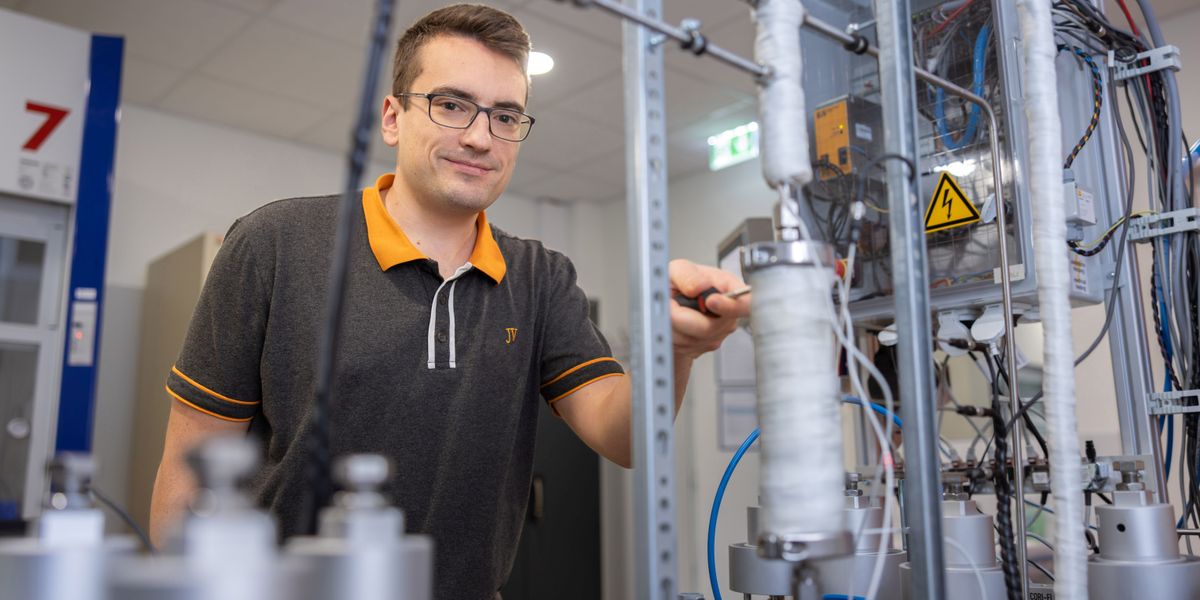
Much of the research is conducted using a system that the team built itself under the leadership of Thomas Welter, a full-time research associate and laboratory engineer: The research group has designed an analytical instrument for adsorption measurement—a so-called breakthrough analyzer—that gives them greater flexibility in their experiments than commercially available models. For example, equilibrium and kinetic data for complex gas mixtures and a wide variety of process variants can be recorded with high accuracy across a broad range of pressures and temperatures.
The system has already been used in past projects by the research group, such as a research project funded by an industry partner on the production of high-purity biogas from biomass fermentation and a project funded by the State of Hesse on the concentration of solvents from printing processes.
Note: This article has been translated using a computer system without human intervention. LUMITOS offers these automatic translations to present a wider range of current news. Since this article has been translated with automatic translation, it is possible that it contains errors in vocabulary, syntax or grammar. The original article in German can be found here.


Other news from the department science