
Faster Fat Analysis: Microwave Extraction Meets Food Labeling Standards
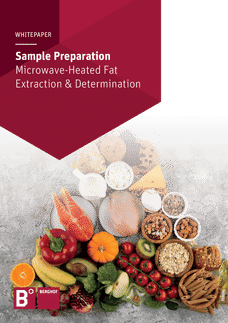
Single-Vessel Method Cuts Analysis Time to 2 Hours with 25 mL Solvent
Total fat content is a mandatory declaration under EU Regulation No. 1169/2011 – and laboratories are under increasing pressure to deliver reliable results faster, more efficiently and with consistently high accuracy.
Yet many labs still rely on Soxhlet extraction, a method developed in 1879. While well established and widely accepted, it comes with significant limitations: long analysis times of up to 24 hours, high solvent consumption and complex, multi-step workflows that limit throughput and increase the risk of handling errors in routine operations.
This white paper presents a validated alternative based on microwave-heated extraction (MHE). The method significantly reduces analysis time and solvent usage while maintaining the analytical performance required for nutritional labeling. Instead of multiple sequential steps, the process integrates key stages into a streamlined workflow, enabling faster turnaround times and improved reproducibility.
To evaluate its performance under realistic conditions, the method was tested across a range of certified reference materials, including dairy, meat and high-fat cocoa matrices. The results demonstrate excellent recovery, high precision and reliable applicability across diverse sample types typically encountered in food laboratories.
At the same time, the study highlights an important practical consideration: not all matrices behave identically. Certain samples require optimized preparation, underlining the importance of matrix-specific validation when implementing new analytical workflows.
Download the white paper to explore the full methodology, validation data and detailed comparison with traditional Soxhlet extraction — and assess its potential for your laboratory.
Download white paper now
Faster Fat Analysis: Microwave Extraction Meets Food Labeling Standards
Single-Vessel Method Cuts Analysis Time to 2 Hours with 25 mL Solvent



White Paper classification
White papers on related topics
Products on related topics
Manufacturers of similar products
You may also be interested in these white papers


See the theme worlds for related content
Topic world Extraction
Extraction is a fundamental process in the chemical laboratory that enables specific components to be isolated and concentrated from a mixture. Whether it's extracting active ingredients from natural products, removing impurities from synthesis products, or preparing analytical samples, extraction is a key step in achieving precise and efficient results in chemical research and analysis.
Topic world Extraction
Extraction is a fundamental process in the chemical laboratory that enables specific components to be isolated and concentrated from a mixture. Whether it's extracting active ingredients from natural products, removing impurities from synthesis products, or preparing analytical samples, extraction is a key step in achieving precise and efficient results in chemical research and analysis.
Topic world Pipetting
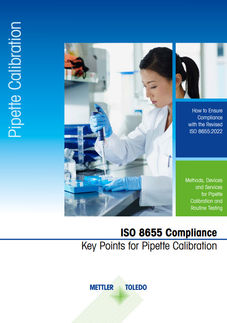
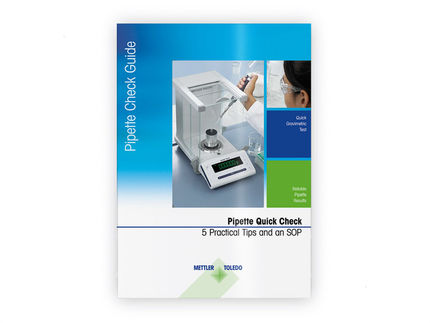
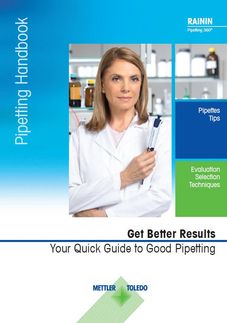
Pipetting is one of the most basic yet critical techniques in the laboratory. It enables the precise and controlled transfer of liquids, which is essential for accurate measurements and reliable results. Whether in DNA analysis, cell culture or biochemical assays, correct pipetting significantly influences the quality of the results.

Topic world Pipetting
Pipetting is one of the most basic yet critical techniques in the laboratory. It enables the precise and controlled transfer of liquids, which is essential for accurate measurements and reliable results. Whether in DNA analysis, cell culture or biochemical assays, correct pipetting significantly influences the quality of the results.