Using AI to Recall Forgotten Chemistry Knowledge
New data on substances and reactions from before 1800 help us better understand the development of chemistry

Advertisement


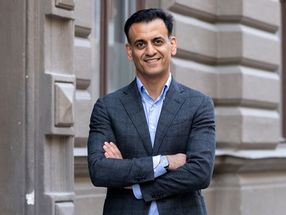
How much chemical knowledge is contained in centuries-old alchemical recipes? A research team led by Dr. Guillermo Restrepo, a scientist at the Institute for Studies of Science (ISoS) at Bielefeld University, is using artificial intelligence to decipher historical texts and test forgotten chemical insights in the lab. With this project, the team has secured a three-year grant from the nonprofit scientific organization Schmidt Sciences in the U.S.
Alchemists once sought out new substances and reactions, leaving behind a valuable historical legacy. But what do their often enigmatic recipes reveal about the beginnings of chemistry? This is the question addressed by the research project “(Al-)Chemical Space In Silico” (AXIS), which is funded by Schmidt Sciences with 400,000 euros over three years. Guillermo Restrepo leads the project together with Dr. Sarah Lang from the Max Planck Institute for the History of Science.
“We believe that the combination of digitized historical information, artificial intelligence, quantum chemistry, and laboratory experiments will make a decisive contribution to a better understanding of alchemical knowledge,” says Restrepo.

AI Decodes Historical Texts
Many chemical databases only record information from around 1800 onward. However, older knowledge is contained in alchemical recipes, which are now available in digitized form. Their language is often cryptic, allegorical, or esoteric.
The AXIS team uses Large Language Models (LLMs) to distinguish potential chemical content from symbolic descriptions. The researchers then use quantum chemistry—computer-aided methods for investigating chemical properties—to determine which recipes show scientific promise.
From Recipe to Lab
The most promising recipes are recreated in the lab and tested with chemical compounds. This generates new data on substances and reactions from the period before 1800, which helps us better understand the development of chemistry.
The project combines history, computer science, and chemistry and aims to demonstrate how AI can make historical sources accessible for research. The tools and data developed will be made openly available so that other researchers can use and further develop them.
There were more than 500 submissions in total from 42 countries. Dr. Guillermo Restrepo’s research project is one of 19 projects selected for this year’s “Humanities and AI Virtual Institute” (HAVI) awards, including projects from universities in Oxford, Boston, Berkeley, and New York. Schmidt Sciences is an initiative of Eric and Wendy Schmidt, a married couple who fund a range of philanthropic projects. Eric Schmidt is the former CEO of Google.
Note: This article has been translated using a computer system without human intervention. LUMITOS offers these automatic translations to present a wider range of current news. Since this article has been translated with automatic translation, it is possible that it contains errors in vocabulary, syntax or grammar. The original article in German can be found here.


Other news from the department science