thyssenkrupp nucera Establishes Its First Company-Operated Electrolyzer Cell Assembly Hub in Europe
“For us, the Assembly Hub is a milestone in automation and assembly efficiency”
Advertisement


thyssenkrupp nucera is establishing its first company-operated central Assembly Hub for electrolyzer cells in VGP Park Vila Nova de Gaia, Portugal, south of Porto. With the Assembly Hub, thyssenkrupp nucera is strengthening its European value chain while at the same time significantly advancing the automation of cell assembly. The Assembly Hub will enable faster and more efficient cell assembly while significantly increasing capacity. Initially, cells for alkaline water electrolysis will be assembled. thyssenkrupp nucera has now signed the lease agreement for the more than 7,500-square-meter building.
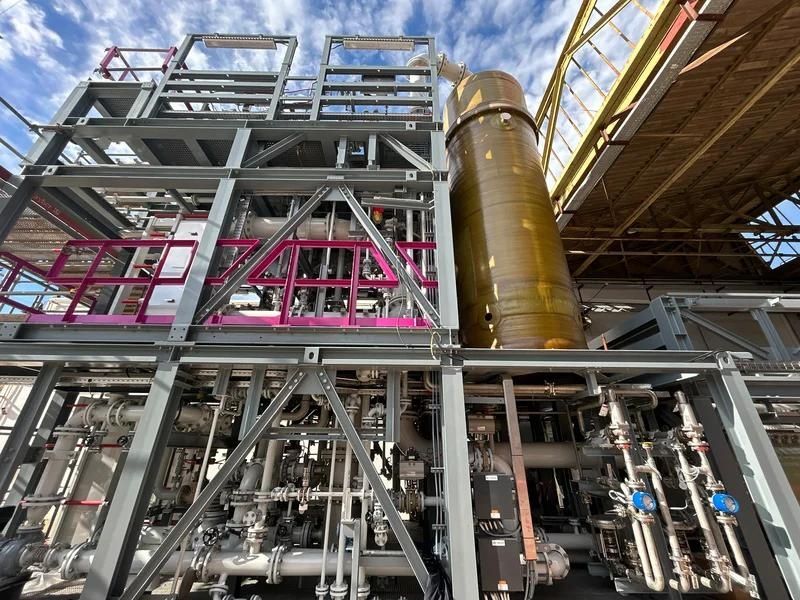
With the Assembly Hub in Portugal, thyssenkrupp nucera strengthens its European value chain and consolidates electrolyzer cell assembly at a central company-operated location
thyssenkrupp nucera
“For us, the Assembly Hub is a milestone in automation and assembly efficiency,” said Dr. Werner Ponikwar, CEO of thyssenkrupp nucera. “By centralizing and semi-automating cell assembly, we are increasing our capacity and closely integrating assembly and service. The investment in the Assembly Hub is also a clear commitment to Europe as an industrial location and a further contribution to strengthening the European hydrogen economy.”
Construction of the building begins in winter 2026. Upon completion, thyssenkrupp nucera will install an assembly line. Cell assembly at the Assembly Hub will start in 2028. The Assembly Hub will serve electrolysis projects across Europe and neighboring regions. Starting in 2028, cells for Moeve's Onuba project will initially be assembled there. thyssenkrupp nucera is investing between EUR 10 million and EUR 14 million in the Assembly Hub. The project is supported by approximately EUR 3.7 million in funding from the Portuguese government under the COMPETE2030 program.
The Assembly Hub also simplifies cell assembly for customers. Customers no longer require their own assembly infrastructure. This reduces their planning, personnel and resource requirements. Ready-to-install cell packages also reduce complexity at the project site while providing greater flexibility and higher operational readiness. Customers also benefit from the advantages of the Assembly Hub when it comes to service. This applies both to ongoing operations and to cell replacement.
To date, the individual cell elements for scalum®, the standardized 20-megawatt unit for alkaline water electrolysis, are assembled in decentralized customer-operated workshops and subsequently installed at the respective project site. Manual and decentralized assembly can result in long assembly times per cell and thus limits available capacity. With the Assembly Hub, thyssenkrupp nucera will in future consolidate these assembly steps at its own central location. Thanks to its production-line structure and automation, multiple cells can be processed in parallel and throughput times reduced.



Other news from the department business & finance










Most read news












More news from our other portals



























Last viewed contents
Enerkem adds two new executive roles to growing North American presence
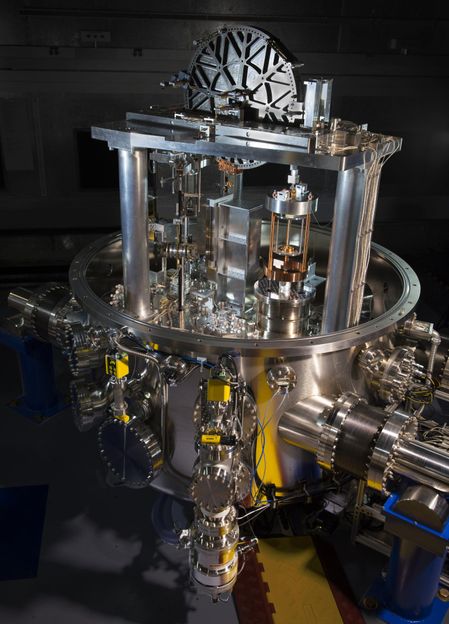
Measuring Planck's constant, watt balance brings world closer to new kilogram
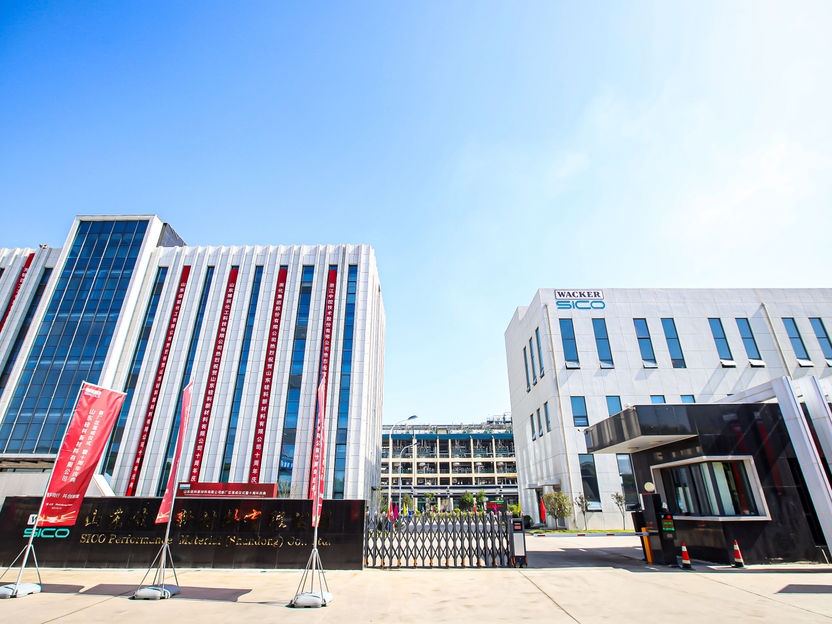
WACKER strengthens silicone business in China with new technology center for specialty silanes - 2,300-square-meter center consolidates Group expertise in the field of organofunctional silanes
Inspired by the chemistry of the eye: Research team develops innovative catalytic chemistry process
Pitt researchers harness carbon nanomaterials for drug delivery systems, oxygen sensors - Researchers describe carbon nanocapsules for drug and energy storage in Advanced Materials, creation of highly sensitive oxygen sensors in Nature Chemistry
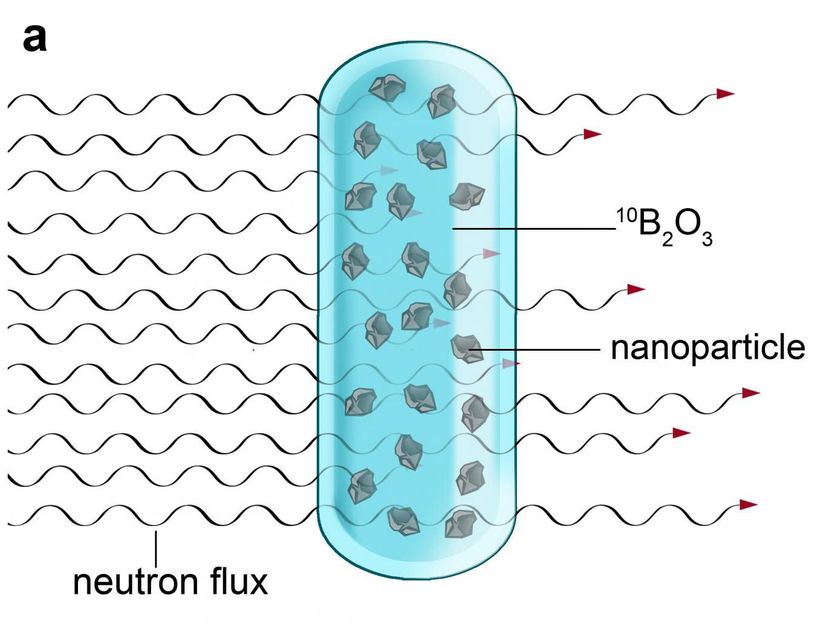
How to produce fluorescent nanoparticles for medical applications in a nuclear reactor
Water, Clay and Carbon: A New Route to Sustainable Energy Storage - Researchers demonstrate an all-water supercapacitor stable over 60,000 charging cycles
Don't Give the Slightest Chance to Toxic Elements in Medicinal Products - New high-accuracy reference solutions for the SI-traceable measurement
Bodo Möller Chemie Group enters exclusive acquisition talks with Rocktin - Strengthen adhesives distribution in Asia
Researchers develop procedure to interpret x-ray emission spectra of liquid water - Study helping to advance the understanding of the structure of water
How can life emerge in a world of minerals? - The European Research Council (ERC) has awarded an ERC Synergy Grant to the project “The role of silica at the dawn of life on our planet” (PROTOS)