From Flue Gas to Raw Material: Extracting Carbon from CO₂ Produced by Waste Incineration
KIT and EEW Energy from Waste (EEW) plan to use CO₂ from flue gases in the NECOC process
Advertisement


In the future, CO₂ from waste incineration could serve as a raw material for industrial products instead of being released into the atmosphere. To this end, researchers at the Karlsruhe Institute of Technology (KIT), together with partners, are preparing to implement the NECOC process, which converts CO₂ from exhaust gases into industrially usable products. The Federal Ministry for Economic Affairs and Energy (BMWE) is funding the work with more than five million euros.
Despite continuous process optimization and efficiency improvements, both fossil and biogenic CO₂ emissions are generated at the EEW Group’s thermal waste treatment facilities. In the NECOC 2.0 research project (which stands for: No Emissions through converting Carbon diOxide to Carbon), KIT is now working with EEW and other partners to investigate how they can instead capture CO₂ directly from the purified flue gases and subsequently utilize it as a raw material. The findings are intended to form the basis for planning a large-scale implementation.
“Dealing with unavoidable emissions is a crucial issue both for successful climate protection and for the region as a business hub,” says Professor Thomas Hirth, KIT’s Vice President for Technology Transfer and International Affairs. “With NECOC 2.0, we are bringing a solution developed at KIT a decisive step closer to practical implementation.”

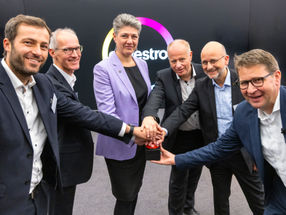
“For us, CO₂ capture is an essential building block for the future of thermal waste-to-energy. That is why we are making targeted investments in research and development. As the consortium coordinator, we are contributing our industrial experience to the NECOC 2.0 project and, together with our partners, investigating how CO₂ can be captured from flue gases and used as a raw material,” explains Timo Poppe, CEO of EEW Energy from Waste.
CO₂ Is Turned Into a Valuable Product
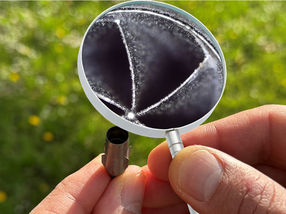
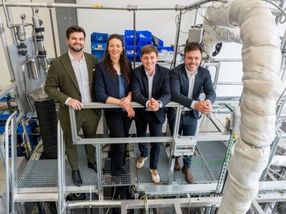
In the NECOC process developed at KIT, the captured CO₂ first reacts with hydrogen to form methane. This methane then flows through a reactor containing liquid tin, where it breaks down into its components—carbon and hydrogen. The hydrogen flows back into the methanation process, while the carbon is produced as a fine powder that can replace fossil carbon in industrial applications. “We want to capture the CO₂ and convert it directly into a usable raw material,” says Dr. Benjamin Dietrich of KIT’s Institute for Thermal Process Engineering (TVT), who played a key role in developing the NECOC process. “The process opens up the possibility of reducing CO₂ emissions from thermal waste treatment while simultaneously providing carbon for industrial applications.”
From Research to Pilot Plant
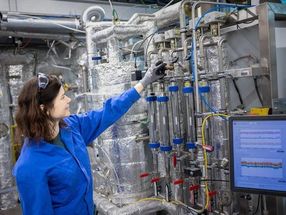
The individual process steps have already been researched on various scales. In previous projects, KIT had demonstrated the technical feasibility of converting CO₂ into solid carbon using the NECOC process. A combined plant built in 2020 at the Institute for Thermal Energy Technology and Safety (ITES) in the Karlsruhe Liquid Metal Laboratory (KALLA) integrated methanation and methane pyrolysis to produce microgranular carbon from CO₂. Since 2026, the transfer projects NECOC-BW (funded by the State of Baden-Württemberg) and CO₂DCC (funded by the State of North Rhine-Westphalia) have also been underway, in which application concepts for the NECOC process are being developed for large cast iron foundries, each under highly site-specific conditions.
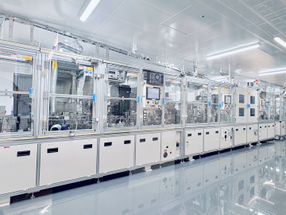
With NECOC 2.0, the project partners are now taking the next step: They aim to test the process chain using CO₂ directly from a real industrial flue gas stream and integrate it with a capture system to form a fully integrated plant. To this end, they are developing a concept for the construction of the entire process. In addition, the project participants are investigating whether the captured carbon is suitable, for example, for the manufacture of industrial products such as battery electrodes or building materials.
About NECOC 2.0
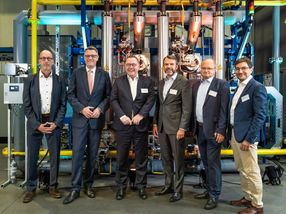
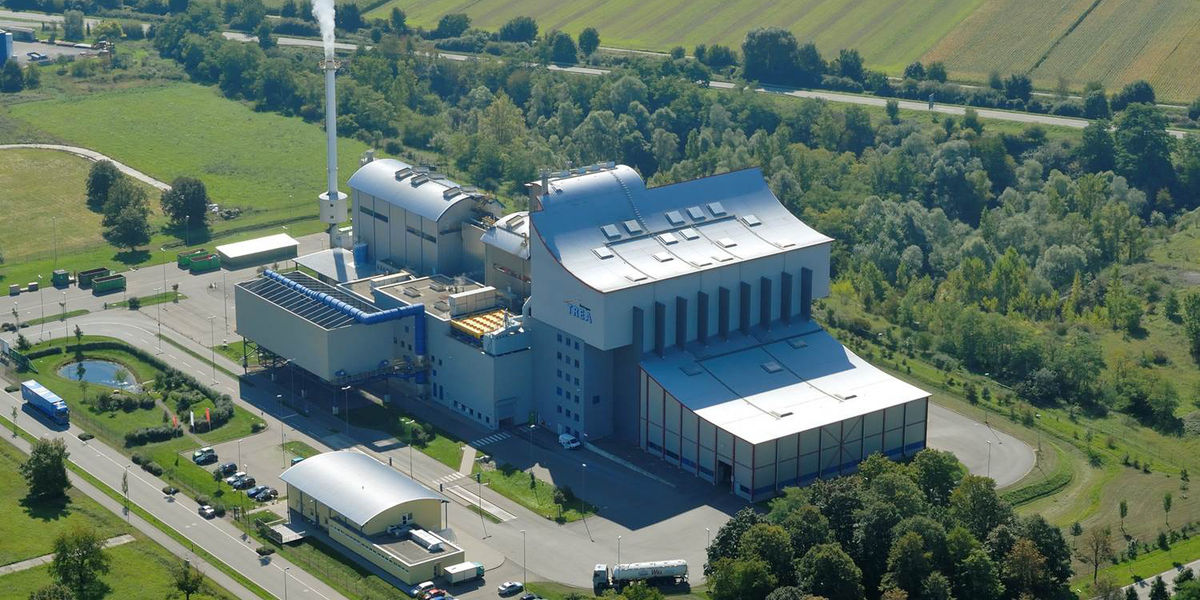
The NECOC 2.0 research project involves KIT—with its Institute of Thermal Process Engineering and Institute of Thermal Energy Technology and Safety (EEW)—as well as the Fraunhofer Institute for Ceramic Technologies and Systems (IKTS). EEW is investigating and testing CO₂ capture at its Eschbach site; KIT is working on methanation and methane pyrolysis for the production of solid carbon. Researchers from KIT’s IKTS are investigating the electrochemical binding of CO₂ in the form of calcium and magnesium carbonates. The Federal Ministry for Economic Affairs and Energy is funding the collaborative project with a total of more than five million euros.
Note: This article has been translated using a computer system without human intervention. LUMITOS offers these automatic translations to present a wider range of current news. Since this article has been translated with automatic translation, it is possible that it contains errors in vocabulary, syntax or grammar. The original article in German can be found here.


Other news from the department research and development