Technology Developed at Ben-Gurion University of the Negev Receives NATO Grant to Build Desalination Plant in Jordan
Advertisement


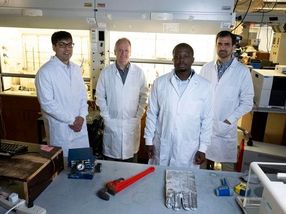
Researchers at the Ben-Gurion University of the Negev have recently been awarded grants from the NATO Science for Peace program and the Middle East desalination Research Center (MEDRC) to scale up a novel method for achieving very high recoveries in desalination by reverse osmosis. The team, lead by Dr. Jack Gilron of the Zuckerberg Institute for water Research (ZIWR) and Prof. Eli Korin of the Department of chemical engineering, has developed a method of exploiting the finite kinetics of membrane fouling processes by periodically changing the conditions leading to membrane fouling before it can occur.
Working in collaboration with colleagues from University of Colorado and the Hashemite University of Jordan, the group will be developing technology and setting up pilot facilities to produce ~120 m3/day each at desalination sites in Israel and in Jordan. Dr. Gilron explains that “the process will be tuned to reduce brine volumes to 50%-33% of those generated in conventional RO. This greatly reduces the environmental burden and improves the economics of the inland desalination process.”
Related to the above development, BGN Technologies – the University’s technology transfer company and the ATI (Ashkelon Technology Incubator) Cleantech Group have established a new startup company, ROTEC (Reverse Osmosis Technologies) to commercialize the technology and bring it to the market. Israel’s national water company, Mekorot, has chosen ROTEC as one of a handful of promising companies in which it invests R&D funding to help promote novel water treatment technologies for Israel and the rest of an increasingly thirsty world. The cooperation of ROTEC with Mekorot and its promising technology have already brought a first investor in the company.



Other news from the department research and development