INL nuclear materials detection technology wins national security award
New technology under development at Idaho National Laboratory has been proven to safely detect hidden nuclear materials smuggled into ports and across borders. Now, the research being conducted by a team of INL and Idaho Accelerator Center engineers has earned the 2008 $25,000 Homeland Security Award sponsored by the Christopher Columbus Fellowship Foundation and AgustaWestland North America, Inc.
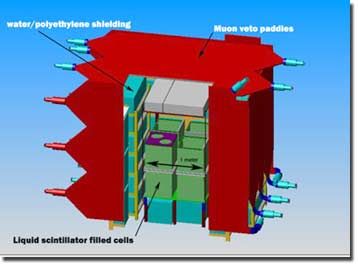
This summer, the researchers, led by INL's Dr. James Jones, developed a prototype long-range, nonintrusive nuclear materials detection technology called the Photonuclear Inspection and Threat Assessment System (PITAS). PITAS is a linear accelerator-based device that uses high-energy photons to induce fission and identify delayed neutron and gamma rays consistent with illicit nuclear materials. These rays are analyzed by a series of detectors, which alert operators to the presence of the materials. The technology performs this process within minutes, while leaving no residual environmental impact.
In announcing the award, Kimberly Owens, the chair of the Foundation said, "Thousands of tons of cargo move through U.S. ports daily with little or no inspection. The Christopher Columbus Foundation and AgustaWestland are pleased to recognize Dr. Jones and his team for their work on the development of a nuclear materials detection system to facilitate the inspection of cargo containers for illicit nuclear material."
Other news from the department research and development











Get the chemical industry in your inbox
From now on, don't miss a thing: Our newsletter for the chemical industry, analytics, lab technology and process engineering brings you up to date every Tuesday and Thursday. The latest industry news, product highlights and innovations - compact and easy to understand in your inbox. Researched by us so you don't have to.