Building blocks of the future for photovoltaics
Research team observes formation of "dark" moiré interlayer excitons for the first time
Advertisement


An international research team led by the University of Göttingen has, for the first time, observed the build-up of a physical phenomenon that plays a role in the conversion of sunlight into electrical energy in 2D materials. The scientists succeeded in making quasiparticles – known as dark Moiré interlayer excitons – visible and explaining their formation using quantum mechanics. The researchers show how an experimental technique newly developed in Göttingen, femtosecond photoemission momentum microscopy, provides profound insights at a microscopic level, which will be relevant to the development of future technology. The results were published in Nature.

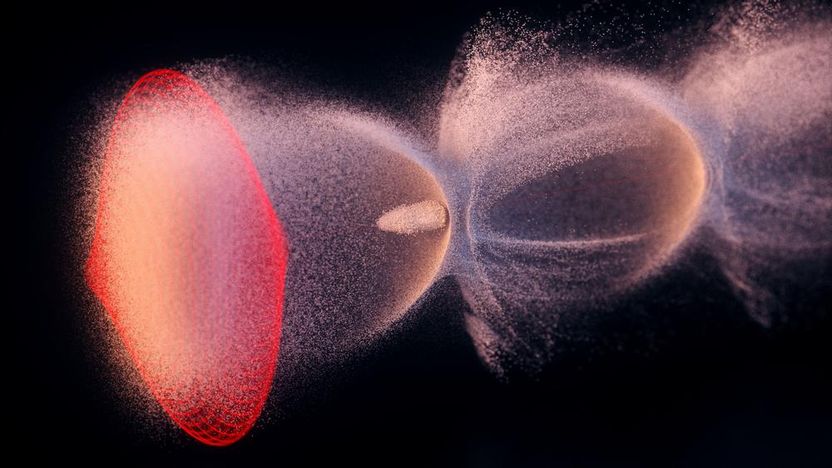
Artistic representation showing the twisted layers of tungsten diselenide (top) and molybdenum disulphide (bottom). Following excitation using light, a multitude of optically “dark” excitons form between the layers. These “dark” excitons are electron-hole pairs bound by Coulomb interaction (light and dark spheres connected by field lines), which cannot be directly observed using visible light. One of the most interesting quasiparticles is the "moiré interlayer exciton" – shown in the middle of the image - in which the hole is located in one layer and the electron in the other. The formation of these excitons on the femtosecond time scale and the influence of the Moiré potential (illustrated by peaks and troughs in the layers) were investigated in the current study using femtosecond photoemission momentum microscopy and quantum mechanical theory.
Brad Baxley, Part to Whole, LLC
Atomically thin structures made of two-dimensional semiconductor materials are promising candidates for future components in electronics, optoelectronics and photovoltaics. Interestingly, the properties of these semiconductors can be controlled in an unusual way: like Lego bricks, the atomically thin layers can be stacked on top of each other. However, there is another important trick: while Lego bricks can only be stacked on top – whether directly or twisted at an angle of 90 degrees – the angle of rotation in the structure of the semiconductors can be varied. It is precisely this angle of rotation that is interesting for the production of new types of solar cells. However, although changing this angle can reveal breakthroughs for new technologies, it also leads to experimental challenges. In fact, typical experimental approaches have only indirect access to the moiré interlayer excitons, therefore, these excitons are commonly termed “dark” excitons. "With the help of femtosecond photoemission momentum microscopy, we actually managed to make these dark excitons visible," explains Dr. Marcel Reutzel, junior research group leader at the Faculty of Physics at Göttingen University. "This allows us to measure how the excitons are formed at a time scale of a millionth of a millionth of a millisecond. We can describe the dynamics of the formation of these excitons using quantum mechanical theory developed by Professor Ermin Malic’s research group at Marburg."
"These results not only give us a fundamental insight into the formation of dark Moiré interlayer excitons, but also open up a completely new perspective to enable scientists to study the optoelectronic properties of new and fascinating materials," says Professor Stefan Mathias, head of the study at Göttingen University's Faculty of Physics. "This experiment is ground-breaking because, for the first time, we have detected the signature of the Moiré potential imprinted on the exciton, that is, the impact of the combined properties of the two twisted semiconductor layers. In the future, we will study this specific effect further to learn more about the properties of the resulting materials."
Original publication


Other news from the department science




















Most read news












More news from our other portals


























Last viewed contents
Metso introduces an advanced lithium carbonate process to support battery materials production - At the core of the process is soda pressure leaching, which selectively extracts lithium with fewer soluble impurities in one pass

Longer-lasting and more sustainable green hydrogen production - The findings impact the ability to achieve a lasting and sustainable hydrogen-based energy economy
Merck and Mulliken Center for Theoretical Chemistry Collaborate in Machine Learning Project - The three-year collaboration will focus on the development of new tools for computational chemistry modelling as well as new molecular representations
Self-assembled superlattices create molecular machines with 'hinges' and 'gears'

On the way to sustainable chemistry? Iron makes it possible - Hydroformylation of olefins using iron catalysis and light
3M to sell pressurized polyurethane foam adhesives business
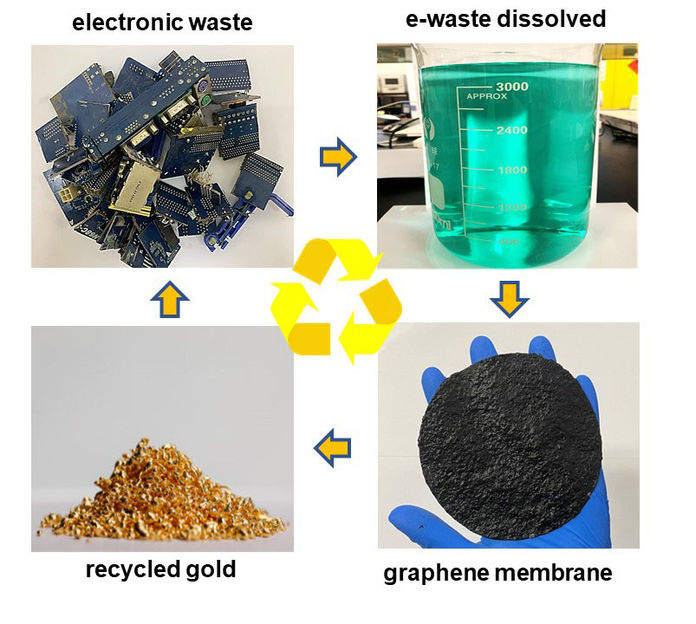
Graphene as 'the philosopher’s stone’: turning waste into gold - "This apparent magic is essentially a simple electrochemical process"

Cleaner air as a result of coronavirus lockdown - Lockdowns in early summer 2020 meant that the amount of soot in the atmosphere, which is harmful to the climate and to health, almost halved
DSM and Chemtrix sign collaboration agreement in Continuous Flow Chemistry
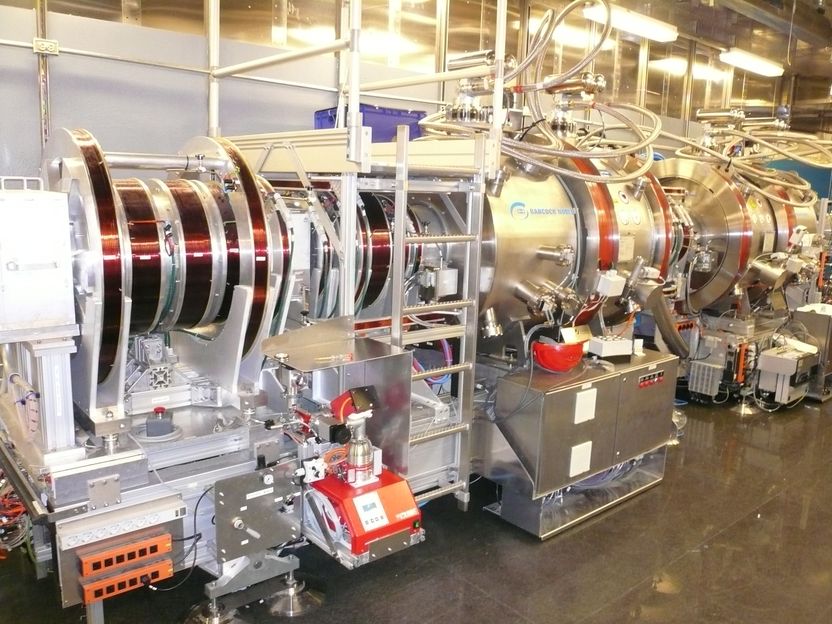
Jülich Neutron Scientists Inaugurate Unique Device in the USA - European researchers obtain access to world’s strongest neutron source
LANXESS strengthens commitment to renewable raw materials with investment in BioAmber - Companies have developed phthalate-free plasticizers from bio-based succinic acid