WACKER Expands HCl Production for the Semiconductor Industry in Burghausen

Advertisement


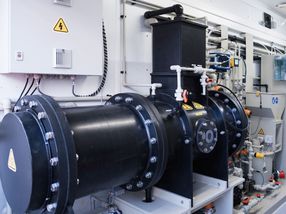
Wacker Chemie AG has recently finished expanding its production of hyperpure hydrogen chloride at its Burghausen site in Germany. The facility which was commissioned in mid-July significantly increased overall production. Buyers for the newly added production volumes come from the semiconductor industry, which uses ultrapure hydrogen chloride as an etching and cleaning agent. Investment costs for the new plant are in the low double digit million euros range. The increase in capacity will strengthen the company’s specialty chemicals portfolio for the semiconductor industry.)
Hydrogen chloride (HCl) has many different applications in the chemical industry. Use of this reaction gas allows manufacturers to turn low-energy raw materials into reactive intermediates for down-stream production steps. WACKER, for instance, uses HCl for manufacturing silicones, pyrogenic silica and polysilicon for the solar and semiconductor industries.
The colorless, water-soluble gas is also an important processing aid for the semiconductor industry. Hydrogen chloride is used for etching hyperpure silicon wafers and for cleaning plant components. However, the media used must be extremely pure to prevent contamination. “A lot of our competitors have dropped out of hydrogen chloride production in recent years for reasons of cost and quality. That, along with growing demand for semiconductor components, has made ultrapure HCl difficult to come by right now,” says WACKER Executive Board member Christian Kirsten.
WACKER is currently one of the very few companies in Europe that is able to deliver HCl in the quality and quantities needed. The company initiated investments in the low tens of millions of euros to cover the recently completed expansion work and associated infrastructure at its Burghausen site. “We’ve been very pleased with the development of our electronic chemicals business, which has outstanding prospects for growth,” Kirsten emphasizes. “A lot of megatrends are going to be based on semiconductor elements, which, besides increasing demand for chips, will also create more demand for processing aids such as ultrapure hydrogen chloride. Expanding our capacities will allow us to meet that demand going forward.”


Other news from the department business & finance










These products might interest you


Most read news












More news from our other portals




























Last viewed contents

Chemists create eco-friendly method to make chlorine-based materials for drugs and chemicals - “Our method uses sustainable, low-cost catalysts and operates at room temperature with gentle blue light”
Researchers produce polymers from ballbot-type carbenes for the first time - Researchers have produced long-chain mobile polymers on metallic surfaces, doing so by means of ballbot-type molecules which glide over the surface
Fujitsu Develops World's Fastest Method of Quantum Chemical Calculations for Drug Discovery - Succeeds in validating its feasibility together with Tokai University

The Secret Contamination of Polar Bears - Hundreds of unrecognized halogenated contaminants discovered in polar bear serum

A more complete picture of the nano world
BASF increases prices for methylamines and derivatives in Europe

Unilever appoints Hein Schumacher as new CEO

New clues help explain why PFAS chemicals resist remediation - Work suggests new avenues for cleaning up these 'forever chemicals'