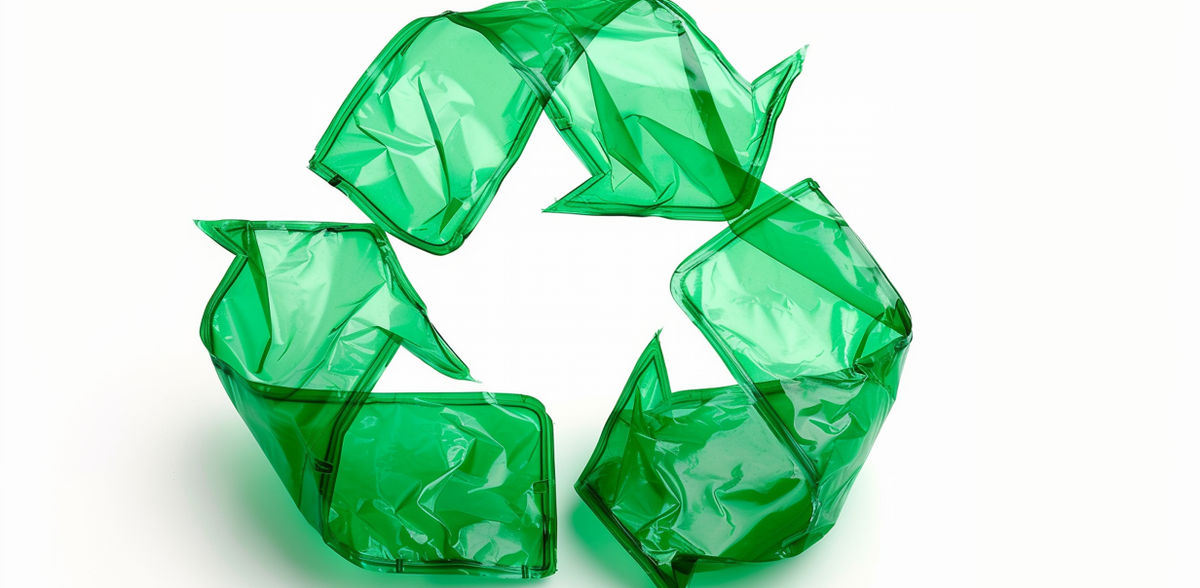
Scientists find a close-loop recycling process for one of the most widely used plastics
"We have introduced a new chemically recyclable, highly branched polyolefin material"
Advertisement


A pioneering development enables the targeted replication of the chemical structure of low-density polyethylene (LDPE), a plastic that has been difficult to imitate until now, and shows great potential for sustainable alternatives in the plastics industry. Prof. Dr Rhett Kempe, Chair of Inorganic Chemistry II - Catalyst Design, Sustainable Chemistry Centre, at the University of Bayreuth, and his interdisciplinary research team have presented this material in a recent publication in the journal "Advanced Science".
"We have introduced a new chemically recyclable, highly branched polyolefin material," explains Prof Dr Rhett Kempe. His team has incorporated so-called "recycling points" into the new plastic, at which the polymer can be chemically broken down into smaller fragments that are soluble in organic solvents at moderate temperatures and can therefore be recycled. The components can then be recombined, allowing them to be reused in a closed cycle.
LDPE is produced in a high-pressure process under extreme reaction conditions (at 250 °C with 2,500 to 4,000 bar) via the free radical polymerisation of ethylene. This energy-intensive process is crucial for the highly branched and complex chemical structure and the associated material properties. Until now, it has been very difficult to imitate this unique structure. The scientists from the team of Prof. Dr Rhett Kempe, Dr Winfried P. Kretschmer, Head of Polymerisation Catalysis at the Chair, doctoral student Christoph Unger, Master's student Jannis Lipp and Dr Holger Schmalz, Senior Academic Advisor at the Chair of Macromolecular Chemistry II at the University of Bayreuth, have now published an article on this alternative plastic in the journal "Advanced Science".
The new material, known as LDPE-mimic, is close to commercial LDPE in its chemical structure. "The key to success is the use of our new catalysts, which produce defined building blocks of a certain size under correspondingly mild reaction conditions, around 70 degrees Celsius and two bar pressure. These can then be combined to form the final plastic material," says Kempe.
"The new material consists of two different macromonomers, a backbone and potential long-chain branches. The branches can be reversibly attached to the backbone and cleaved under acidic and basic conditions." A macromonomer is a compound that has the structure of a monomer (i.e. it can combine to form a larger molecule) but is already larger and has some macromolecular properties. This means that it already has a considerable size or complexity, but still has the ability to cross-link or polymerise further.
Overall, the innovations of the Bayreuth work therefore lie in the combination of production under very mild or sustainable conditions, the chemical recyclability of the plastic and the targeted imitation of the chemical structure of LDPE.
Original publication


Other news from the department science




















Most read news












More news from our other portals


























Last viewed contents

A recipe for zero-emissions fuel: Soda cans, seawater, and caffeine - MIT engineers have developed a fast and sustainable method for producing hydrogen fuel using aluminum, saltwater, and coffee grounds
Masked ball in the realm of milk proteins - Food chemists are researching how to reduce the allergic reaction to milk protein by using phenolic compounds from apple pomace

New Executive Vice President Global Marketing & Sales at Oxea
Growth in visitor numbers, full halls, clear future topics: analytica 2026 sets standards - AI and automation as innovation drivers for the industry
A milestone on the pathway to Lab 4.0: A new standard for the smart lab - SPECTARIS presents the first industrial communication standard for laboratory and analytical devices
Schering sells Jenapharm's therapeutics business to Dermapharm AG
Hydrogen expert Prof. Wasserscheid receives the Archimedes Science Award - He has laid the essential foundations for the safe and cost-effective handling of hydrogen in the existing fuel infrastructure
Thousands of potentially harmful natural gas leaks found in Washington
PolyOne Suzhou Achieves ISO 13485 Certification for Healthcare Quality Management
3M to sell its temporary protective films business to Pregis LLC

Thyssenkrupp receives major order for new chemical complex in Hungary