Children and adolescents contaminated with banned plasticizer
Almost all samples contaminated
Advertisement


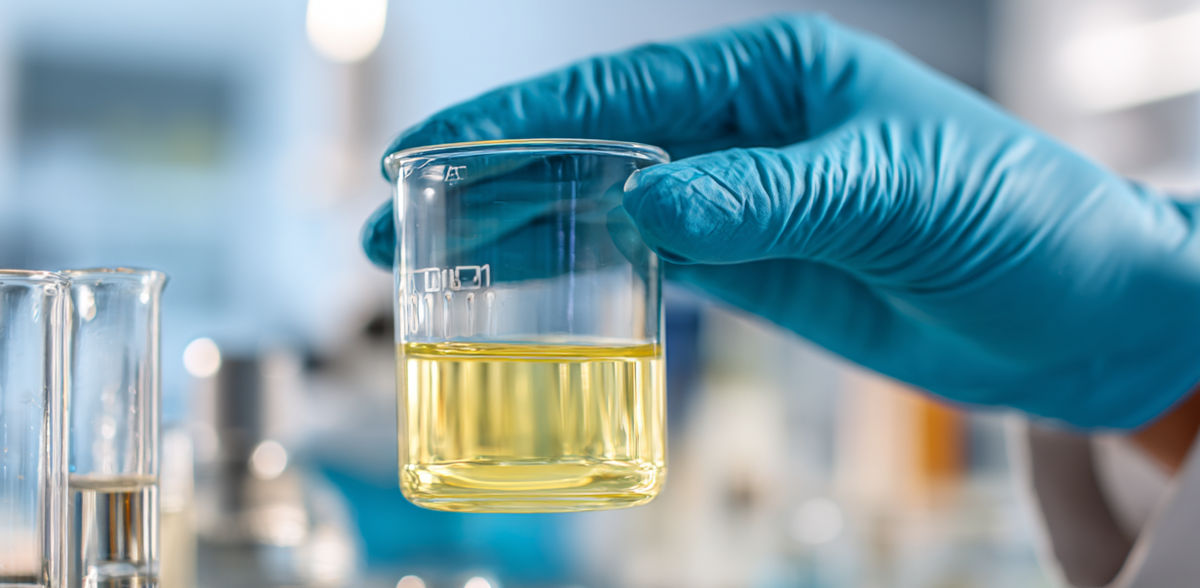
Two years ago, the Federal Environment Agency (UBA) detected mono-n-hexyl phthalate (MnHexP) in the urine of adults. MnHexP is a degradation product of the plasticizer di-n-hexyl phthalate (DnHexP), which is considered harmful to reproduction and is therefore not permitted in the EU. The findings could be traced back to contamination of a UV filter in sun creams. The UBA is currently investigating urine samples from children and adolescents. Result: MnHexP was detected in 92 percent of the samples collected in spring and summer 2025. One percent of the urine samples exceeded the assessment value derived two years ago by the Human Biomonitoring Commission. In addition to MnHexP, humans are exposed to other plasticizers that are harmful to reproduction, so any avoidable source should be eliminated.
Dirk Messner, President of the Federal Environment Agency, said: "Based on the results of previous years, we were not surprised to find MnHexP in the urine samples of children and adolescents. What did surprise us, however, was the large proportion of contaminated samples and the very high concentrations in some cases."
Almost all samples contaminated
Based on the findings at the beginning of 2024, the Human Biomonitoring Commission (HBM Commission) at the UBA derived an assessment value (HBM I value) for MnHexP in urine. Up to this value of 60 micrograms per liter (µg/L) of urine, no adverse health effects are to be expected. The Federal Institute for Risk Assessment has specified the tolerable daily intake for DnHexP as 63 micrograms per kilogram of body weight per day (µg/kg bw/d).
In the current ALISE ("Aligned Study for Environmental Health") study of children and adolescents, 259 urine samples from children and adolescents aged 6 to 17 from the months of April to July 2025 have been examined to date. MnHexP was found in 238 of the samples (92 percent). Two study participants exceeded the HBM-I value of 60 µg/L with 83 and 107 µg/L.
UV filters in sun cream as the culprit
At the beginning of 2024, MnHexP was detected in urine samples from kindergarten children in studies conducted by the State Agency for Nature, Environment and Climate (LANUK) in North Rhine-Westphalia and at the same time in samples from adults examined by the UBA for its German Environmental Health Study (GerES). Based on the information on lifestyle habits and product use, sunscreen was quickly identified as a possible source of exposure at the time. This correlation is also evident in the current data.
The product tests of sun creams immediately initiated at the time confirmed the suspicion and a patent for the production of the UV filter diethylaminohydroxybenzoylhexylbenzoate (DHHB) clearly shows that the plasticizer DnHexP can arise during the production of the UV filter. At the same time, it became clear during the product tests that the concentration of the plasticizer in DHHB fluctuates and that sun creams with the UV filter, but without contamination, also exist on the market.
The EU's Scientific Committee on Consumer Safety (SCCS) re-evaluated DHHB 2025 and came to the conclusion that a maximum contamination of 0.1 mg/kg in sun cream is technically feasible. This compares with concentrations of 1.5 to 44 mg/kg measured in 2024. A legal anchoring of this assessment was decided at the end of 2025 and will come into force in 2027. From January 1, 2027, only sunscreens with a maximum content of 1 milligram of DnHexP per kilogram of sunscreen may be placed on the market.
Multiple exposure possible
Di-n-hexyl phthalate is not the only reprotoxic substance to which humans are exposed. For example, in the last UBA study on children and adolescents (GerES V, 2014-2017), the total exposure to plasticizers that are harmful to reproduction was above the intake level defined as tolerable by the EFSA (European Food Safety Authority) for a large proportion of children, especially younger children. It is therefore important to eliminate avoidable sources of reprotoxic substances and to keep important products such as sun cream free from contamination.
Messner says: "Children and young people have particularly sensitive skin. The use of sunscreen is and will therefore remain essential to minimize the risk of skin cancer."
Note: This article has been translated using a computer system without human intervention. LUMITOS offers these automatic translations to present a wider range of current news. Since this article has been translated with automatic translation, it is possible that it contains errors in vocabulary, syntax or grammar. The original article in German can be found here.


Other news from the department science




















Most read news












More news from our other portals


























Last viewed contents

Wonder material? - Novel nanotube structure strengthens thin films for flexible electronics
Evonik commissions production plant of PVC plasticizers

How the age of plastic is affecting our hormones - Influence of the chemical substances bisphenol A, F and S on hormone synthesis and the hormone balance of the adrenal gland
LLC SIBUR selects INEOS Technologies as a licensor for 1.5 million tonnes of polyethylene capacity.
Neutrons for the quantum technologies of the future: breakthrough results on layered perovskites
Nuclear detector: New materials hold promise for better detection of nuclear weapons
Artificial intelligence evaluates chemical spectra in minutes - Researchers from the University of Jena, Helmholtz-Zentrum Berlin, and Zakodium develop AI system for chemical structure analysis

Claus Rettig to serve as interim CEO of Evonik - Christian Kullmann on the road to recovery

Scientists discover molecular ‘reshuffle’ and crack an 80-year-old conundrum - “Our findings open the door to new asymmetric transformations based on mechanistic pathways that chemists previously dismissed as inaccessible”

Rigaku opens Rigaku Technology Center Taiwan - Advancing regional growth through engineering and collaboration in Taiwan and beyond
Surface analysis of catalyst particles in aqueous solutions - The results are relevant for the development of efficient photoelectrodes for the production of green hydrogen
