Deep brines in northern Germany could be among Europe's largest lithium resources
Project RoLiXX aims to develop extraction methods that work even under high-salinity conditions
Advertisement


In the joint project RoLiXX ("The Rotliegend as a lithium resource in the North German Basin - from EXploration to EXtraction"), researchers are investigating whether lithium can be extracted sustainably and economically from very saline deep waters in deep geological layers of the North German Basin. The Department of Applied geochemistry at TU Berlin is taking the scientific lead for the geological exploration and resource assessment and is providing the data basis for a reliable prediction of lithium-rich rock horizons with high-resolution mineralogical and geochemical analysis.
RoLiXX focuses on the so-called Rotliegend, an approximately 300-million-year-old rock sequence of sandstones and volcanites that underlies large parts of the North German Basin at depths of several thousand meters. Extremely salty thermal waters, known as brines, circulate in these rocks. Analyses show that they contain exceptionally high concentrations of lithium in certain areas - possibly one of the largest resources in Europe, but so far hardly tapped.
"Lithium is a key strategic raw material for batteries and therefore for the energy transition, electromobility and future energy storage in Europe," says Prof. Dr. Thomas Neumann, Head of the Applied Geochemistry department. "If we want to make lithium more reliably and sustainably available in Germany and Europe, we need to understand the underground resource much better and at the same time develop extraction processes that are efficient and environmentally friendly, even under high-salinity conditions."
Understanding geology, enabling extraction
The project addresses two key challenges: One is to clarify the geological and geochemical conditions under which high lithium contents are concentrated in deep waters. Secondly, suitable extraction processes must be developed for extremely saline waters, which do not yet exist for these chemically demanding conditions. This is because the brines contain numerous other dissolved elements in addition to lithium. Changes in pressure or temperature during brine extraction can lead to the formation of solid deposits - known as mineral precipitates - and impair the performance of the extraction and extraction systems during operation. The aim is to develop lithium extraction from the brine that is as free of solids as possible. However, the precipitates also raise environmental and disposal issues: What is their chemical and mineralogical composition and how should it be assessed? If environmentally relevant precipitates occur: which disposal and recycling methods are particularly environmentally friendly and sustainable?
High-tech analysis in the drill core
"For us, the main question is why such high levels of lithium were able to form there," explains Dr. Ferry Schiperski, project manager at TU Berlin. "Where is the lithium bound in the rock, how is it mobilized and under what conditions do the precipitates form that make extraction technically and ecologically challenging?"
To answer these questions, the Department of Applied Geochemistry at TU Berlin is systematically analyzing existing drill cores from the Rotliegend and adjacent rock units. The aim is to clearly identify lithium-bearing minerals, quantify their spatial distribution and reconstruct their formation history.
The department's MAGMA Lab (Mineralogical & Geochemical Laboratory for Microanalytics) uses polarization microscopy, X-ray diffraction to determine crystal structures and laser ICP mass spectrometry, which can be used to precisely quantify even the lowest lithium concentrations in individual minerals.
Laboratory experiments on lithium release and process optimization
The researchers are also conducting laboratory experiments under formation-specific pressure and temperature conditions. They are investigating how lithium is released from the rock into solution and under what conditions secondary enrichment or undesirable precipitation occurs. "Through high-resolution analytics, targeted experimental studies and the systematic consolidation of literature and inventory data, we are creating a reliable basis for predicting lithium-rich layers in the subsurface of the North German Basin more reliably and optimizing extraction processes for this valuable resource in a targeted manner," explains Schiperski.
From research to application
RoLiXX, funded by the German Federal Ministry of Research, Technology and Space, combines basic geoscientific research with process engineering development. The approaches, which are currently still at a low level of technological maturity, are to be further developed through scaled pilot trials and field tests towards validation under realistic conditions.
The project thus also contributes to the implementation of the Critical Raw Materials Act, with which the European Union aims to secure its supply of important raw materials in the long term.
The project partners are the GFZ Helmholtz Center for Geosciences, the Fraunhofer-Gesellschaft zur Förderung der angewandten Forschung e.V., the Fraunhofer Research Institution for Energy Infrastructures and Geotechnologies, the Institute for Ecological Economy Research (IÖW) GmbH (non-profit) and Neptune Energy Innovations GmbH. Associated partners are the Federal Institute for Materials Research and the Federal Institute for Geosciences and Natural Resources.
Note: This article has been translated using a computer system without human intervention. LUMITOS offers these automatic translations to present a wider range of current news. Since this article has been translated with automatic translation, it is possible that it contains errors in vocabulary, syntax or grammar. The original article in German can be found here.


Other news from the department science




















Most read news












More news from our other portals


























See the theme worlds for related content
Topic World Mass Spectrometry
Mass spectrometry enables us to detect and identify molecules and reveal their structure. Whether in chemistry, biochemistry or forensics - mass spectrometry opens up unexpected insights into the composition of our world. Immerse yourself in the fascinating world of mass spectrometry!
Topic World Mass Spectrometry
Mass spectrometry enables us to detect and identify molecules and reveal their structure. Whether in chemistry, biochemistry or forensics - mass spectrometry opens up unexpected insights into the composition of our world. Immerse yourself in the fascinating world of mass spectrometry!
Last viewed contents
Metso introduces an advanced lithium carbonate process to support battery materials production - At the core of the process is soda pressure leaching, which selectively extracts lithium with fewer soluble impurities in one pass
Longer-lasting and more sustainable green hydrogen production - The findings impact the ability to achieve a lasting and sustainable hydrogen-based energy economy
Merck and Mulliken Center for Theoretical Chemistry Collaborate in Machine Learning Project - The three-year collaboration will focus on the development of new tools for computational chemistry modelling as well as new molecular representations
Self-assembled superlattices create molecular machines with 'hinges' and 'gears'

On the way to sustainable chemistry? Iron makes it possible - Hydroformylation of olefins using iron catalysis and light
3M to sell pressurized polyurethane foam adhesives business
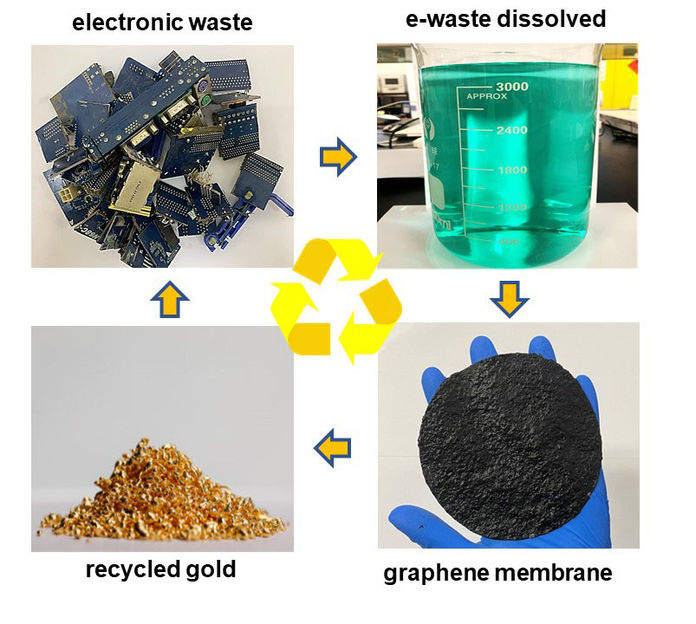
Graphene as 'the philosopher’s stone’: turning waste into gold - "This apparent magic is essentially a simple electrochemical process"

Cleaner air as a result of coronavirus lockdown - Lockdowns in early summer 2020 meant that the amount of soot in the atmosphere, which is harmful to the climate and to health, almost halved
DSM and Chemtrix sign collaboration agreement in Continuous Flow Chemistry
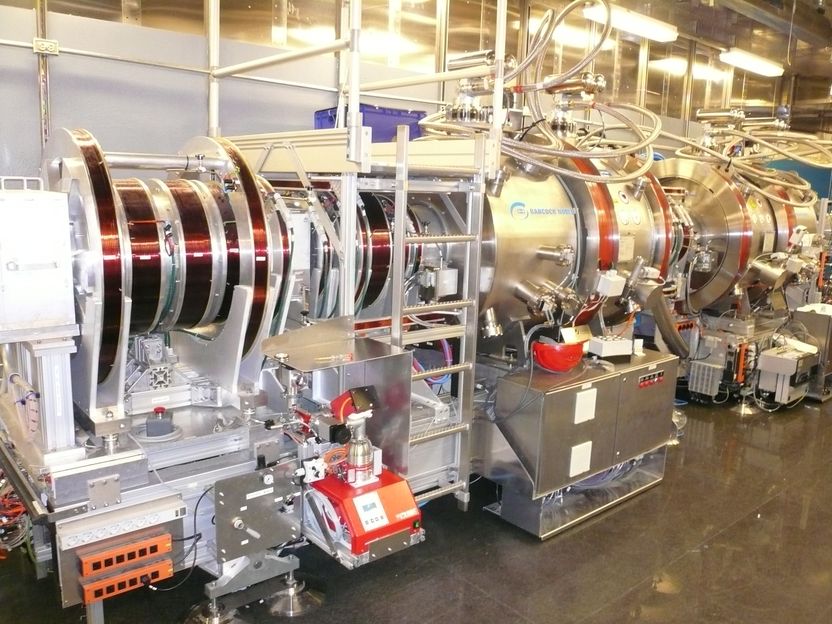
Jülich Neutron Scientists Inaugurate Unique Device in the USA - European researchers obtain access to world’s strongest neutron source
LANXESS strengthens commitment to renewable raw materials with investment in BioAmber - Companies have developed phthalate-free plasticizers from bio-based succinic acid