My watch list
my.chemeurope.com  
Login  

03-10-2010: A team of materials scientists and chemists have taken inspiration from sea shells found on the beach to create a composite material from dissimilar 'ingredients'.

Their technique could be used to make ceramics with high resistance to cracking – which could in turn be used in crack-resistant building materials and bone replacements.

Writing in the journal Advanced Materials, scientists from The University of Manchester and The University of Leeds report that they have successfully reinforced calcium carbonate, or chalk, with polystyrene particles that are used to make drinks cups.
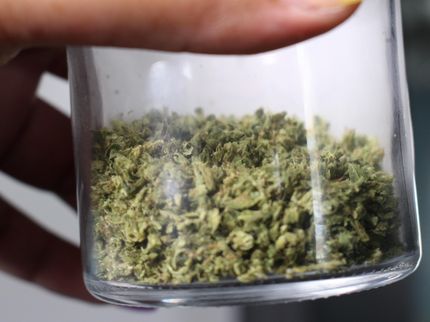
They have developed an effective method of combining calcite crystals with polystyrene particles – and have found this makes the material more ductile compared to its original brittle form.

They report that the polystyrene also acts as a toughening agent, assisting the prevention of the growth of cracks.

Scientists also observed that when the reinforced material cracked, the polymer lengthened within the cracks – a well-known mechanism for absorbing energy and enhancing toughness.

Researchers say their method allows the properties of the new material to be tweaked by selecting particles of different shapes, sizes and composition.

Dr Stephen Eichhorn from The School of Materials at The University of Manchester, said: "The mechanical properties of shells can rival those of man-made ceramics, which are engineered at high temperatures and pressures. Their construction helps to distribute stress over the structure and control the spread of cracks.

"Calcium carbonate is the main ingredient of chalk, which is very brittle and breaks easily when force is applied. But shells are strong and resistant to fracturing, and this is because the calcium carbonate is combined with proteins which bind the crystals together, like bricks in a wall, to make the material stronger and sometimes tougher.

"We have replicated nature's addition of proteins using polystyrene, to create a strong shell-like structure with similar properties to those seen in nature.

"Further research and testing is still needed but our research potentially offers a straightforward method of engineering new and tough chalk-based composite materials with a wide range of useful applications."
Watchlist

This is where you can add this news to your personal favourites

Facts, background information, dossiers
More about University of Manchester
Contact
University of Manchester
Oxford Road
M13 9PL Manchester
GROßBRITANNIEN
Phone
+44 161 306 6000
  • News

    Researchers discover particle which could 'cool the planet'

    In a breakthrough paper published in Science, researchers from The University of Manchester, The University of Bristol and Sandia National Laboratories report the potentially revolutionary effects of Criegee biradicals. These invisible chemical intermediates are powerful oxidisers of pollut ... more

    Graphene reveals its magnetic personality

    In a report published in Nature Physics, they used graphene, the world's thinnest and strongest material, and made it magnetic. Graphene is a sheet of carbon atoms arranged in a chicken wire structure. In its pristine state, it exhibits no signs of the conventional magnetism usually associa ... more

    Graphene's 'quantum leap' takes electronics a step closer

    Writing in the journal Nature Physics, the academics, who discovered the world's thinnest material at The University of Manchester in 2004, have revealed more about its electronic properties.Research institutes and universities around the world are already looking at ways to build devices s ... more

More about University of Leeds
Contact
University of Leeds

LS2 9JT Leeds
GROßBRITANNIEN
Phone
+441132431751
Fax
+441132443923-
  • News

    Waste chip fat fuels hydrogen economy

    Don't pour that dirty fat from the frier down the sink – it could be used to make the fuel of the future. Hydrogen has been tipped as a cleaner, greener alternative to fossil fuels. But scientists have struggled to find a way to make it that doesn't consume vast amounts of energy, use up s ... more

    Strength is shore thing for sea shell scientists

    A team of materials scientists and chemists have taken inspiration from sea shells found on the beach to create a composite material from dissimilar 'ingredients'. Their technique could be used to make ceramics with high resistance to cracking – which could in turn be used in crack-resista ... more


    Right first time: Pioneering new methods of drug manufacture

    Engineers at the University of Leeds have developed a simple technology which can be used in existing chemical reactors to ensure "right first time" drug crystal formation. Ensuring drug crystals are formed correctly is crucial to their efficacy and the efficiency of pharmaceutical manufact ... more

Most read news
Your browser is not current. Microsoft Internet Explorer 6.0 does not support some functions on Chemie.DE