Compound removes radioactive material from power plant waste
Layered sulfides bond to strontium 90, other radioactive ions
Advertisement


strontium 90 is a common radioactive by-product of fission in nuclear power plants. When extracted from the reactor along with other isotopes, a mixture is created made up of the radioactive material and inert ions like sodium and calcium.
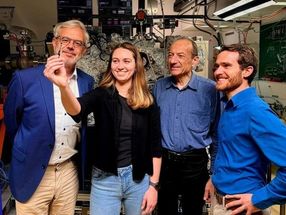
Scientists at U.S. Department of Energy's Argonne National Laboratory and Northwestern University have developed a compound that captures the radioactive ions so they can be siphoned off and separated from inert material.
"The layered sulfides used work quite well,' scientist Mercouri Kanatzidis said. "We even surprised ourselves."
This mixture is often incredibly acidic or alkaline, making it difficult to find a compound that can survive long enough to extract the strontium and be able to not react with the sodium, which is harmless. Kanatzidis and colleague Manolis Manos created a synthetic compound made up of sulfides that can survive in the harsh acidic or alkaline climate of the mixture and strips away 99 percent of the strontium 90.
"The material is remarkably simple and can be created in large quantities at a relatively low cost," Kanatzidis said.
The synthetic compound trades its own potassium ions for strontium and can almost completely replace the radioactive element within a few hours. The next step is to experiment with the compound's ability to siphon away other common radioactive elements like cesium and uranium.


Other news from the department science