Two become one
Advertisement


Susumu Kitagawa and colleagues at Kyoto University and Osami Sakata from the Japan synchrotron radiation Research Institute in Hyogo, have demonstrated that face selective growth of a second porous coordination polymer (PCP) crystal onto a core PCP crystal can be achieved by using matching lattices on the specific surfaces. This creates a sandwich-type block PCP, where only two surfaces of the rectangular prism are used as substrates for growth of the second crystal. They have named them 'block PCPs' because, similarly to block copolymers, each individual crystal acts as a chemically distinct component, in which different framework structures are hybridized at the single crystal level.

Formation of hybridized block PCP crystal
'To improve the performance of PCPs, the functionalization of the inner pore surfaces has been widely developed, for instance, by post synthetic modification,' explains Kitagawa. 'Since it would be rather difficult to integrate several functions into one crystal only by pore surface functionalization to create multifunctional PCPs in the homogeneous crystal system, the idea of using the outer crystal surface for the second crystal growth was realised.'
PCPs are already widely used for gas storage, separation and catalysis and now they are being recognized for promising use on an industrial scale. However, Kitagawa and his colleagues are looking to direct research towards non-conventional usage for porous materials. 'The concept to use the outer crystal surfaces is quite significant to hybridize with other materials,' reveals Kitagawa, 'especially to harmonize with electrodes to fabricate PCP based sensors.
The Kitagawa group are now developing a specialised instrument to measure the sorption properties of this type of material, as conventional sorption machines prove to be unsuitable.
Original publication: Shuhei Furukawa, Kenji Hirai, Yohei Takashima, Keiji Nakagawa, Mio Kondo, Takaaki Tsuruoka, Osami Sakata and Susumu Kitagawa; Chem. Commun. 2009.


Other news from the department science



















These products might interest you



Most read news












More news from our other portals


























See the theme worlds for related content
Topic world Sensor technology
Sensor technology has revolutionized the chemical industry by providing accurate, timely and reliable data across a wide range of processes. From monitoring critical parameters in production lines to early detection of potential malfunctions or hazards, sensors are the silent sentinels that ensure quality, efficiency and safety.

Topic world Sensor technology
Sensor technology has revolutionized the chemical industry by providing accurate, timely and reliable data across a wide range of processes. From monitoring critical parameters in production lines to early detection of potential malfunctions or hazards, sensors are the silent sentinels that ensure quality, efficiency and safety.
Last viewed contents
Controlling chemical reactions more efficiently and sustainably - New synthesis method enables targeted modifications to hard-to-reach sites on molecules
WACKER Presents Innovation Award for Novel Manufacturing Process for Polymer Dispersions
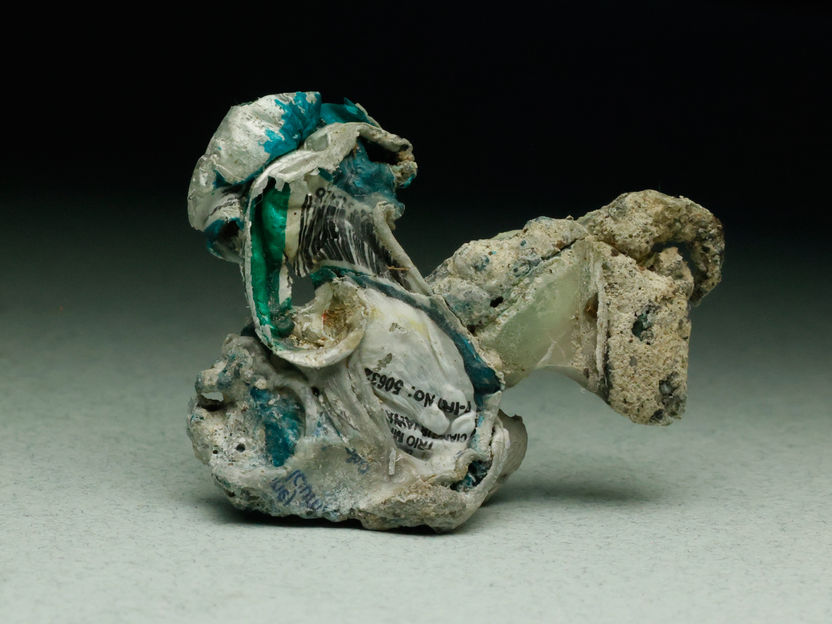
Artificial rocks from macroplastics threaten ocean health - German-Indonesian research team identifies new rock-like compounds from plastic waste and coral rubble for the first time
RCT Reichelt Chemietechnik | Flow indicators | Reichelt Chemietechnik

World record for tandem perovskite-CIGS solar cell

New method for determining exchange energy in 2D materials - Detective work yielded a simple solution
Magnetism without metal: a milestone for materials science - “This is fundamentally new”

Magnetic nanoparticles change their magnetic structure in a magnetic field - International research team studies the effects of magnetic fields on magnetic nanoparticles
Breakthrough in capturing 'hot' CO2 from industrial exhaust - A metal-organic framework is capable of capturing CO2 at extreme temperatures
Quantum Tricks to Unveil the Secrets of Topological Materials
The nano-lasagna: Novel 2D materials gain momentum - Research team develops environmentally friendly MXene synthesis without hazardous hydrofluoric acid for industrial scaling