New device can measure toxic lead within minutes
Researchers create portable lab-on-a-chip that could detect many contaminants
Advertisement


Rutgers researchers have created a miniature device for measuring trace levels of toxic lead in sediments at the bottom of harbors, rivers and other waterways within minutes - far faster than currently available laboratory-based tests, which take days.
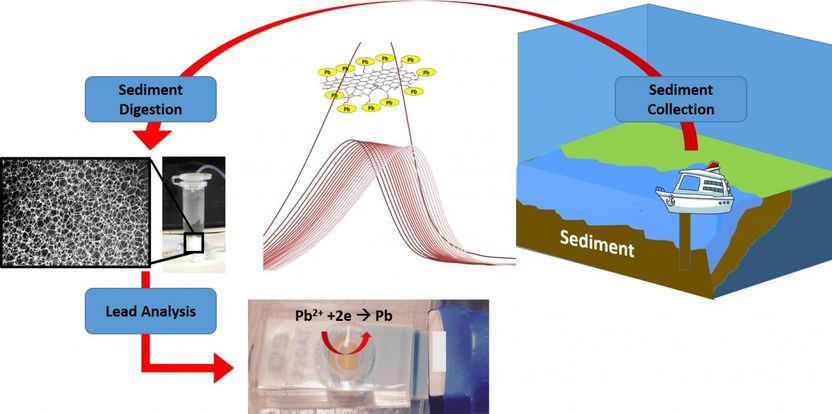
Sediments collected by a ship can be rapidly tested for toxic lead with a new portable lab-on-a-chip device. The miniature device extracts lead from a sample and purifies it, using graphene oxide as a lead detector.
Azam Gholizadeh
The affordable lab-on-a-chip device could also allow municipalities, water companies, universities, K-12 schools, daycares and homeowners to easily and swiftly test their water supplies.
"In addition to detecting lead contamination in environmental samples or water in pipes in homes or elementary schools, with a tool like this, someday you could go to a sushi bar and check whether the fish you ordered has lead or mercury in it," said senior author Mehdi Javanmard, an associate professor in the Department of Electrical and Computer Engineering in the School of Engineering at Rutgers University-New Brunswick.
"Detecting toxic metals like lead, mercury and copper normally requires collecting samples and sending them to a lab for costly analysis, with results returned in days," Javanmard said. "Our goal was to bypass this process and build a sensitive, inexpensive device that can easily be carried around and analyze samples on-site within minutes to rapidly identify hot spots of contamination."
The research focused on analyzing lead in sediment samples. Many river sediments in New Jersey and nationwide are contaminated by industrial and other waste dumped decades ago. Proper management of contaminated dredged materials from navigational channels is important to limit potential impacts on wildlife, agriculture, plants and food supplies. Quick identification of contaminated areas could enable timely and cost-effective programs to manage dredged materials.
The new device extracts lead from a sediment sample and purifies it, with a thin film of graphene oxide as a lead detector. Graphene is an atom thick layer of graphite, the writing material in pencils.
More research is needed to further validate the device's performance and increase its durability so it can become a viable commercial product, possibly in two to four years.
Original publication


Other news from the department science




















Most read news












More news from our other portals


























Last viewed contents

Prospector AI Search, now powered by chemical intelligence - Kimia's AI brings natural language search to Prospector's formulators for the first time

Two plant species invent the same chemically complex and medically interesting substance - Different building blocks: The plants use similar chemical pathways to biosynthesize these compounds, but use different starting materials and enzymes
Technique could aid mass production of biodegradable plastic

Jochen Block Award 2025 for Dr. Thomas Seidensticker - Start-up “simplyfined” wants to make the chemical industry more sustainable
BASF increases its presence in growing African markets - Sales in Africa to more than double by 2020
Eastman Opens New Specialty Fluids Testing Lab in Singapore

Plastic Particles and Climate Change as Drivers for Antimicrobial Resistance - EU-funded research project deals with plastic pollution and the spread of antimicrobial resistance in aquatic systems

Rising star in the energy world - Developing high-performance MXene electrodes for next-generation powerful battery
New synthesis method opens up new possibilities for Li-ion batteries

OQ Chemicals Rebrands as Oxea
Agilent Technologies and Scion Instruments Agree to Enable Each Other’s Instruments in Their Chromatography Data Systems
