Development of more efficient lithium-ion batteries
New impetus for electromobility
Advertisement


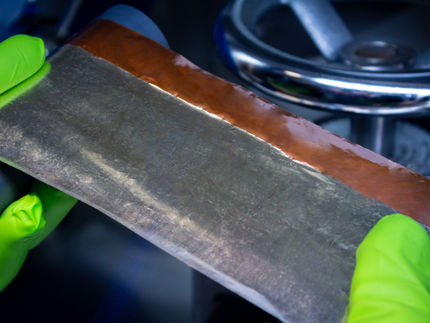
With the new project "RoSiLIB", the Fraunhofer Institute for Manufacturing Technology and Advanced Materials IFAM in Dresden is making a decisive contribution towards a CO2-neutral energy supply in mobility. To this end, new high-energy anodes for lithium-ion batteries are being developed together with partners from the Institute of Ion Beam Physics and Materials Research at the Helmholtz-Zentrum Dresden Rossendorf e. V., E-Lyte Innovations GmbH, NANOVAL GmbH & Co. KG, VON ARDENNE GmbH and Custom Cells Itzehoe GmbH.

Fraunhofer IFAM Dresden
The complete switch to electromobility demanded and promoted by the German government will only be possible with solutions that promote the switch from fossil to electrochemical energy sources. Improving lithium-ion batteries in terms of cost, raw material and energy efficiency is an important step in this process.
In order to meet the necessary improvements in battery cells for electromobility, the targeted innovative anode is being developed along the entire value chain within the project. Crucial to this is the further development of a new cost-effective manufacturing route for nanoporous silicon microparticles. These are to be used to build large-format high-energy battery cells, which cannot be produced with the previous anode materials with high energy density.
The project addresses the hitherto unsolved challenges of large-format cells at several levels: solutions are being developed for both the volume jump of the active material and the outgassing of the electrolyte.
Within "RoSiLIB", the researchers at Fraunhofer IFAM in Dresden are mainly concerned with the further development of nanoporous silicon and are further adapting the internal structure of the particles to the requirements of the battery. For this purpose, the formation of the structure during powder atomization of silicon alloys must be better understood. In this subproject, the results of atomization experiments and simulation calculations are combined for this purpose. At the same time, the chemical processing of the powders will be further developed and scaled up so that up to 500 g of nanoporous silicon can be produced per day.
Within the project, Fraunhofer IFAM Dresden can make impressive use of its extensive expertise in the areas of rapid solidification, chemical synthesis, and the development of high-performance batteries, and build up further know-how for future topics.


Other news from the department science



















These products might interest you

Most read news












More news from our other portals


























See the theme worlds for related content
Topic World Battery Technology
The topic world Battery Technology combines relevant knowledge in a unique way. Here you will find everything about suppliers and their products, webinars, white papers, catalogs and brochures.

Topic World Battery Technology
The topic world Battery Technology combines relevant knowledge in a unique way. Here you will find everything about suppliers and their products, webinars, white papers, catalogs and brochures.
Last viewed contents

Water and light 'flow' inspire ultrasensitive optical microfiber coupler sensor
Nature Conservancy study raises major questions on biofuels - More carbon lost than gained when converting land for biofuels crops
Deep brines in northern Germany could be among Europe's largest lithium resources - Project RoLiXX aims to develop extraction methods that work even under high-salinity conditions
Metso introduces an advanced lithium carbonate process to support battery materials production - At the core of the process is soda pressure leaching, which selectively extracts lithium with fewer soluble impurities in one pass
Longer-lasting and more sustainable green hydrogen production - The findings impact the ability to achieve a lasting and sustainable hydrogen-based energy economy
Merck and Mulliken Center for Theoretical Chemistry Collaborate in Machine Learning Project - The three-year collaboration will focus on the development of new tools for computational chemistry modelling as well as new molecular representations
Self-assembled superlattices create molecular machines with 'hinges' and 'gears'

On the way to sustainable chemistry? Iron makes it possible - Hydroformylation of olefins using iron catalysis and light
3M to sell pressurized polyurethane foam adhesives business
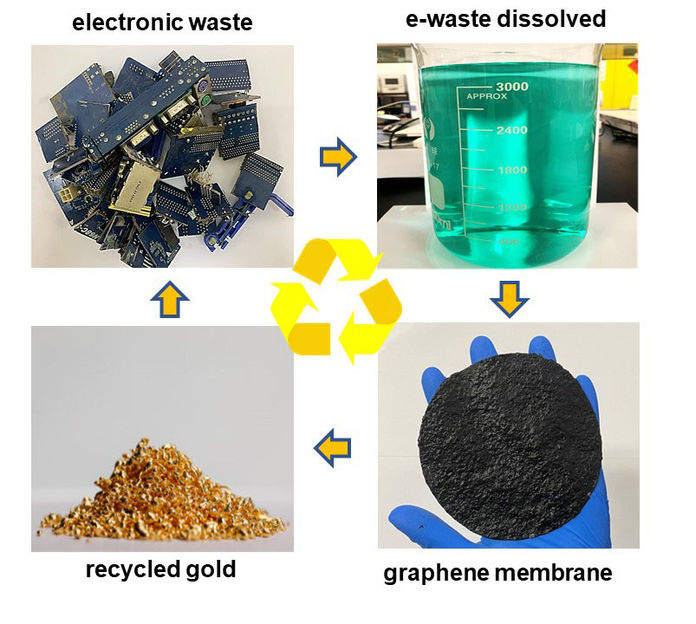
Graphene as 'the philosopher’s stone’: turning waste into gold - "This apparent magic is essentially a simple electrochemical process"
