Nature Conservancy study raises major questions on biofuels
More carbon lost than gained when converting land for biofuels crops
Advertisement


A new Nature Conservancy study finds that converting land for biofuel crops results in major carbon emissions, actually worsening the problem of global warming instead of mitigating it. The first-of-its-kind study will be published in Science.
"This research examines the conversion of land for biofuels and asks the question 'Is it worth it?' Does the carbon you lose by converting forests, grasslands, and peatlands outweigh the carbon you 'save' by using biofuels instead of fossil fuels? And surprisingly, the answer is no," said lead author Joe Fargione, a scientist for The Nature Conservancy. "These natural areas store a lot of carbon, so converting them to croplands results in tons of carbon emitted into the atmosphere."
Fargione continued, "We analyzed all the benefits of using biofuels as alternatives to oil, but we found that the benefits fall far short of the carbon losses. It's what we call 'the carbon debt.' If you're trying to mitigate global warming, it simply does not make sense to convert land for biofuels production."
According to research, the conversion of peatlands for palm oil plantations in Indonesia resulted in the greatest carbon losses, or 'debt,' followed by the production of soy in the Amazon.
"All the biofuels we use now cause habitat destruction, either directly or indirectly," Fargione noted. "Global agriculture is already producing food for 6 billion people. Producing food-based biofuel, too, will require that still more land be converted to agriculture."
These findings coincide with observations that increased demand for ethanol corn crops in the U.S. is likely contributing to conversion of the Brazilian Amazon and Cerrado (tropical savanna). American farmers traditionally rotated corn crops with soybeans, but now, they are planting corn every year to meet the ethanol demand. Instead, Brazilian farmers are planting more of the world's soybeans - and they're deforesting the Amazon to do it.
Fargione and co-authors Jason Hill, David Tilman, Stephen Polasky, and Peter Hawthorne from the University of Minnesota also found significant carbon debt in the conversion of grasslands in the U.S. and rainforests in Indonesia.
"In finding solutions to climate change, we must ensure that the cure is not worse than the disease," noted Jimmie Powell, who leads the energy team at The Nature Conservancy. "We cannot afford to ignore the consequences of converting land for biofuels. Doing so means we might unintentionally promote fuel alternatives that are worse than fossil fuels they are designed to replace. These findings should be incorporated into carbon emissions policy going forward."
Researchers did note that some biofuels do not contribute to global warming because they do not require the conversion of native habitat. These include waste from agriculture and forest lands and native grasses and woody biomass grown on marginal lands unsuitable for crop production. The researchers urge that all fuels be fully evaluated for their impacts on global warming, including impacts on habitat conversion.
"We will need to implement many approaches simultaneously to solve climate change - there is no silver bullet. But there are many silver BBs," said Fargione. "Some biofuels may be one silver BB, but only if produced without requiring additional land to be converted from native habitats to agriculture."


Other news from the department science



















These products might interest you



Most read news












More news from our other portals


























Last viewed contents

Deep brines in northern Germany could be among Europe's largest lithium resources - Project RoLiXX aims to develop extraction methods that work even under high-salinity conditions
Metso introduces an advanced lithium carbonate process to support battery materials production - At the core of the process is soda pressure leaching, which selectively extracts lithium with fewer soluble impurities in one pass
Longer-lasting and more sustainable green hydrogen production - The findings impact the ability to achieve a lasting and sustainable hydrogen-based energy economy
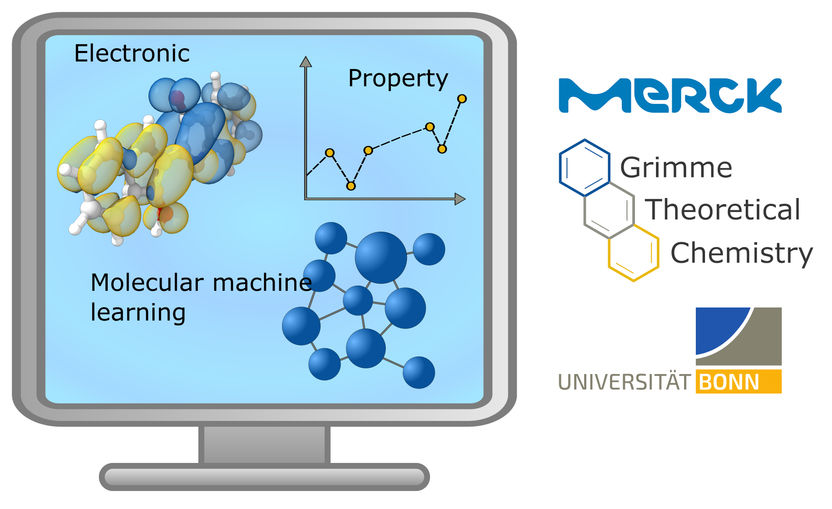
Merck and Mulliken Center for Theoretical Chemistry Collaborate in Machine Learning Project - The three-year collaboration will focus on the development of new tools for computational chemistry modelling as well as new molecular representations

Self-assembled superlattices create molecular machines with 'hinges' and 'gears'

On the way to sustainable chemistry? Iron makes it possible - Hydroformylation of olefins using iron catalysis and light
3M to sell pressurized polyurethane foam adhesives business
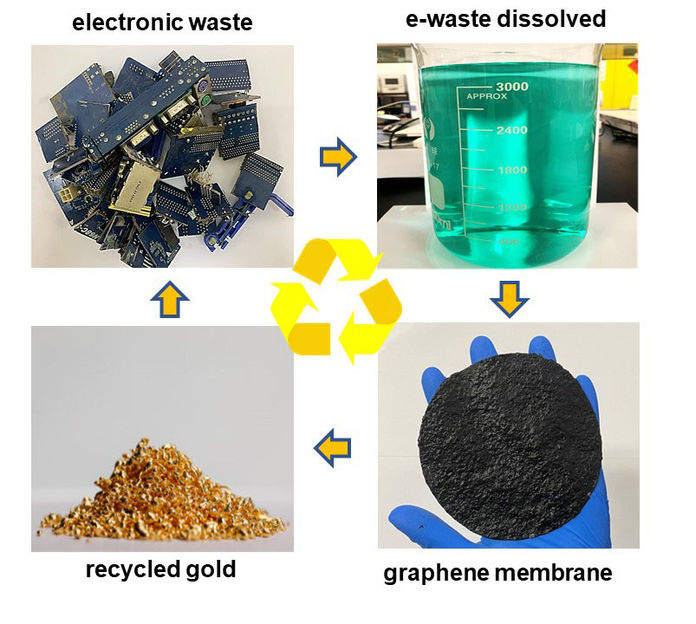
Graphene as 'the philosopher’s stone’: turning waste into gold - "This apparent magic is essentially a simple electrochemical process"

Cleaner air as a result of coronavirus lockdown - Lockdowns in early summer 2020 meant that the amount of soot in the atmosphere, which is harmful to the climate and to health, almost halved
DSM and Chemtrix sign collaboration agreement in Continuous Flow Chemistry