Spintronics: Giant Rashba semiconductors show unconventional dynamics with potential applications
Advertisement


germanium telluride is a strong candidate for use in functional spintronic devices due to its giant Rashba-effect. Now, scientists at HZB have discovered another intriguing phenomenon in GeTe by studying the electronic response to thermal excitation of the samples. To their surprise, the subsequent relaxation proceeded fundamentally different to that of conventional semimetals. By delicately controlling the fine details of the underlying electronic structure, new functionalities of this class of materials could be conceived.

Left: Electronic structure of GeTe taken with 11 eV photons at BESSY-II, showing the band dispersions of bulk (BS) and surface Rashba states (SS1, SS2) in equilibrium. Middle: Zoom-in on the region of the Rashba states measured with fs-laser 6 eV photons. Right: Corresponding out-of-equilibrium dispersions following excitation by the pump pulse.
HZB
In recent decades, the complexity and functionality of silicon-based technologies has increased exponentially, commensurate with the ever-growing demand for smaller, more capable devices. However, the silicon age is coming to an end. With increasing miniaturisation, undesirable quantum effects and thermal losses are becoming an ever-greater obstacle. Further progress requires new materials that harness quantum effects rather than avoid them. Spintronic devices, which use spins of electrons rather than their charge, promise more energy efficient devices with significantly enhanced switching times and with entirely new functionalities.
Spintronic devices are coming
Candidates for spintronic devices are semiconductor materials wherein the spins are coupled with the orbital motion of the electrons. This so-called Rashba effect occurs in a number of non-magnetic semiconductors and semi-metallic compounds and allows, among other things, to manipulate the spins in the material by an electric field.
First study in a non equilibrium state
Germanium telluride hosts one of the largest Rashba effects of all semiconducting systems. Until now, however, germanium telluride has only been studied in thermal equilibrium. Now, for the first time, a team led by HZB physicist Jaime-Sanchez-Barriga has specifically accessed a non-equilibrium state in GeTe samples at BESSY II and investigated in detail how equilibrium is restored in the material on ultrafast (<10-12 seconds) timescales. In the process, the physicists encountered a new and unexpected phenomenon.
First, the sample was excited with an infrared pulse and then measured with high time resolution using angle-resolved photoemission spectroscopy (tr-ARPES). "For the first time, we were able to observe and characterise all phases of excitation, thermalisation and relaxation on ultrashort time scales," says Sánchez-Barriga. The most important result: "The data show that the thermal equilibrium between the system of electrons and the crystal lattice is restored in a highly unconventional and counterintuitive way", explains one of the lead authors, Oliver Clark.
Equilibrium restored: the cooler, the faster
In simple metallic systems, thermal equilibrium is established primarily through the interaction between electrons with each other and between electrons and the lattice vibrations in the crystal (phonons). This process slows down steadily with lower temperatures. In germanium telluride, however, the researchers observed an opposite behaviour: The lower the lattice temperature of the sample, the faster the thermal equilibrium is established after excitation with the heat pulse. "That was very surprising," says Sánchez-Barriga. With theoretical calculations within the framework of the Boltzmann approach carried out by collaborators at Nanyang Technological University, they were able to interpret the underlying microscopic processes and distinguish three different thermalisation processes: Interactions between electrons within the same band, in different bands and electrons with phonons.
Future applications
It seems, that the interaction between electrons dominates the dynamics and becomes much faster with decreasing lattice temperature. “This can be explained by the influence of the Rashba splitting on the strength of the fundamental electronic interactions. This behaviour is applicable to all Rashba semiconductors," says Sánchez-Barriga: "The present results are important for future applications of Rashba semiconductors and their excitations in ultrafast spintronics."
Original publication


Other news from the department science




















Most read news












More news from our other portals


























Last viewed contents
Why fish don't freeze in the Arctic Ocean - Chemists unmask natural antifreeze

POWTECH 2023: Visitors from all around the world look forward to a wide-ranging programme
Artificial rocks from macroplastics threaten ocean health - German-Indonesian research team identifies new rock-like compounds from plastic waste and coral rubble for the first time
Pumping up the music of molecules - Significantly improving the "sense of smell" of molecular laser spectroscopy: Increases chances to reliably detect diseases

Wood pellets: Renewable, but not carbon neutral
Researchers discover an alternative to PEG - rPEG as a new type of Poly(ethylene glycol): random chains offer multiple advantages for medical application
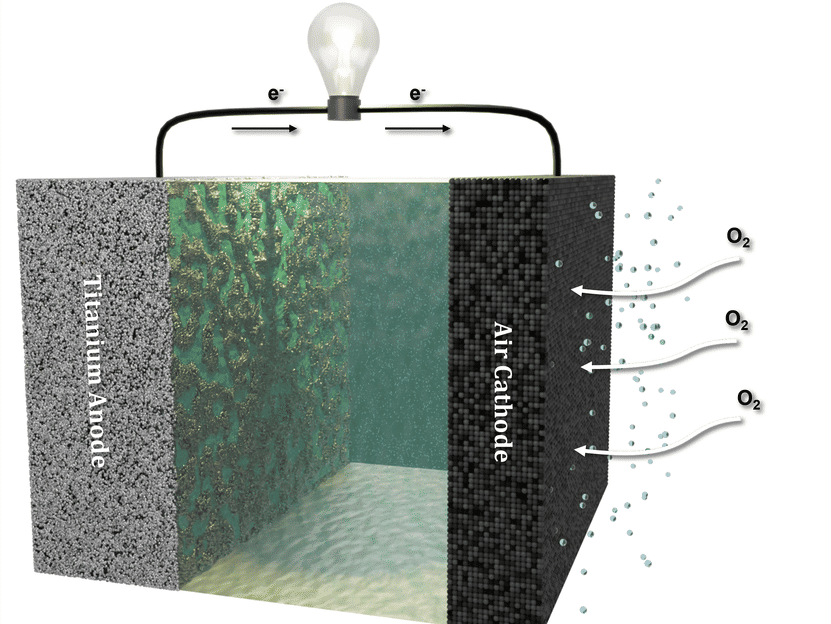
Researchers Test Novel Titanium-Air Battery - This is the first time that experimental results of such a battery have been published

MXenes for energy storage: Chemical imaging more than just surface deep
Map of 224 European biorefineries published - BIC and nova-Institute showing european bio-production landscape

Breadcrumbs replace fossil hydrogen in chemical production - A one-pot microbial formula, which uses live microbes, eliminates the need for fossil fuels in hydrogenation

Nobel Prize in Physics for foundational discoveries and inventions in machine learning - John J. Hopfield and Geoffrey E. Hinton trained artificial neural networks using physics