Researchers dive deep into bismuth complexes
Chemists publish startling results in “Science”
Advertisement


To be able to exploit the advantages of elements and their molecular compounds in a targeted manner, chemists have to develop a fundamental understanding of their properties. In the case of the element bismuth, a team from the Max Planck Institut für Kohlenforschung has now taken an important step.
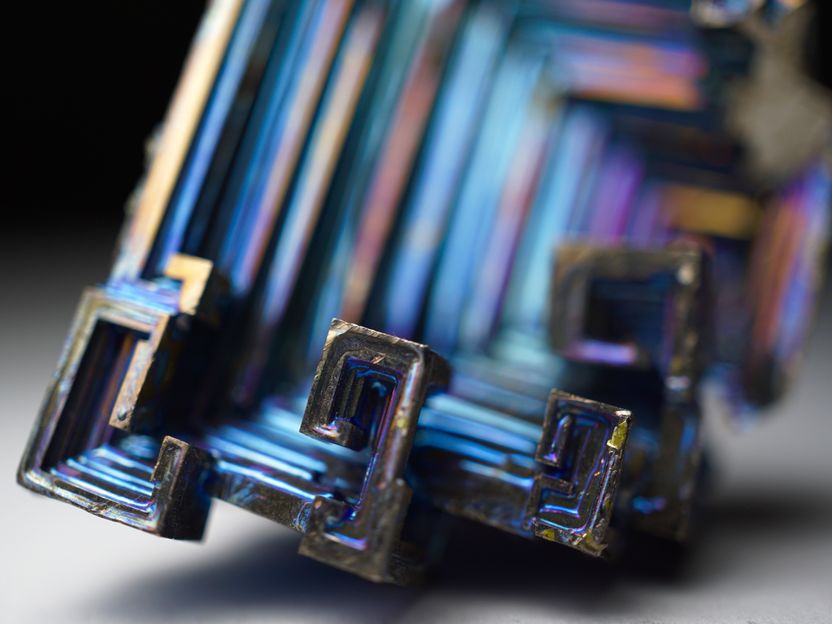
Bismuth is the heaviest of the stable elements - all subsequent elements are radioactive.
Florian Pircher/Pixabay
Chemists at the Max Planck Institut für Kohlenforschung aim at the rational design of chemical processes that lead to more efficient and sustainable chemistry for academia as well as industry. A fundamental understanding of the properties of elements such as bismuth and their molecular compounds is necessary in order to be able to take advantage of their potential for catalysis. A team led by Josep Cornellà and Frank Neese, group leader and director at the Max Planck Institut für Kohlenforschung, has now found that there are still some "white spots" in the chemical landscape that need to be tapped. The researchers have now published their work on an intriguing property of new bismuth complexes under the title Synthesis and isolation of a triplet bismuthinidene with a quenched magnetic response in the journal "Science".
Special interest in a special element
Why bismuth? Research group leader Josep Cornellà’s team has been interested in this particular metal for quite a while. "Bismuth can offer some advantages - compared to other metals. For example, it is more readily available and less toxic than other elements. In addition, special properties of bismuth that other "classical" catalysis candidates do not have could play a role in future reaction designs," Cornellà explains.
What is it that makes the Mülheim Bismuth molecule so special? Atoms consist of the atomic nucleus as well as an atomic shell formed by electrons. When molecules are synthesized from atoms or fragments, usually pairs of electrons from different atoms come together to for chemical bonds. However, chemists are often interested in situation that deviate from this situation, which is the case when the molecules have unpaired electrons. Such systems tend to be highly reactive and will readily interact with other molecules.
"Normally, molecules with unpaired electrons are always magnetic," explains Frank Neese. But now the researchers of the Kohlenforschung have developed a molecule containing bismuth that has unpaired electrons and yet, strangely enough, shows no magnetism at all. The solution to this riddle has to do, among other things, with the special position of bismuth in the periodic table of the elements. Bismuth is the heaviest of the stable elements - all subsequent elements are radioactive. Due to the particularly heavy atomic nucleus, the electrons show a special behavior, which can only be understood with the help of Einstein's theory of relativity.
Quantum Chemistry Program from Mülheim
These properties lead to the initially perplexing experimental finding. "Our molecule is not really 'non-magnetic'", the researchers explain, "but there is no magnetic field on Earth strong enough to detect magnetism in our system". The fact that the reseachers were able to calculate the fascinating properties of this molecule from first principles of physics is due to the quantum chemistry program package ORCA, developed in Mülheim and widely used throughout all chemical disciplines by tens of thousands of chemists worldwide.
With their work, the scientists from Mülheim have added an important point to the "chemical profile" of bismuth. This may be of importance in the future when designing new types of catalysts.
Original publication


Other news from the department science




















Most read news












More news from our other portals


























Last viewed contents

Magnetic nanoparticles change their magnetic structure in a magnetic field - International research team studies the effects of magnetic fields on magnetic nanoparticles
Breakthrough in capturing 'hot' CO2 from industrial exhaust - A metal-organic framework is capable of capturing CO2 at extreme temperatures
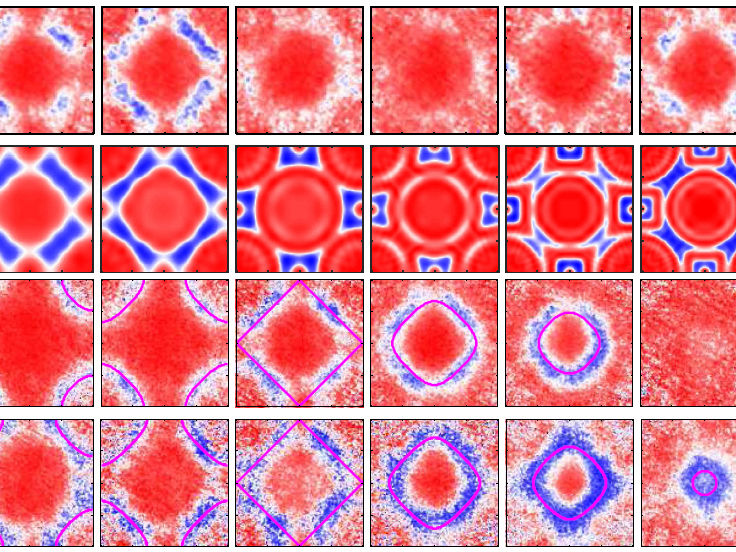
Quantum Tricks to Unveil the Secrets of Topological Materials
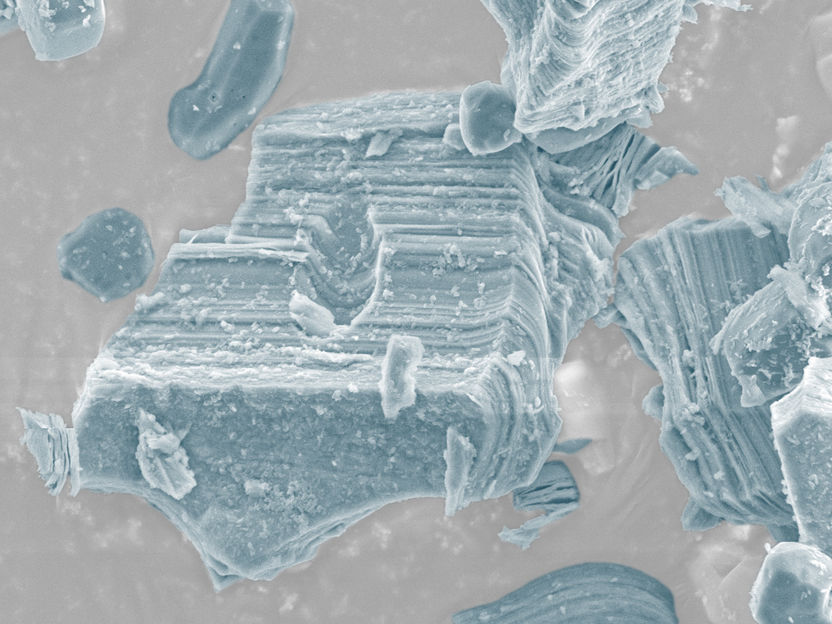
The nano-lasagna: Novel 2D materials gain momentum - Research team develops environmentally friendly MXene synthesis without hazardous hydrofluoric acid for industrial scaling

Starch Instead of Plastic: Colombian Startup Reinventing Fruit Packaging - Natupla: From ISC3 start-up of the month to a pioneer in starch-based, biodegradable plastics
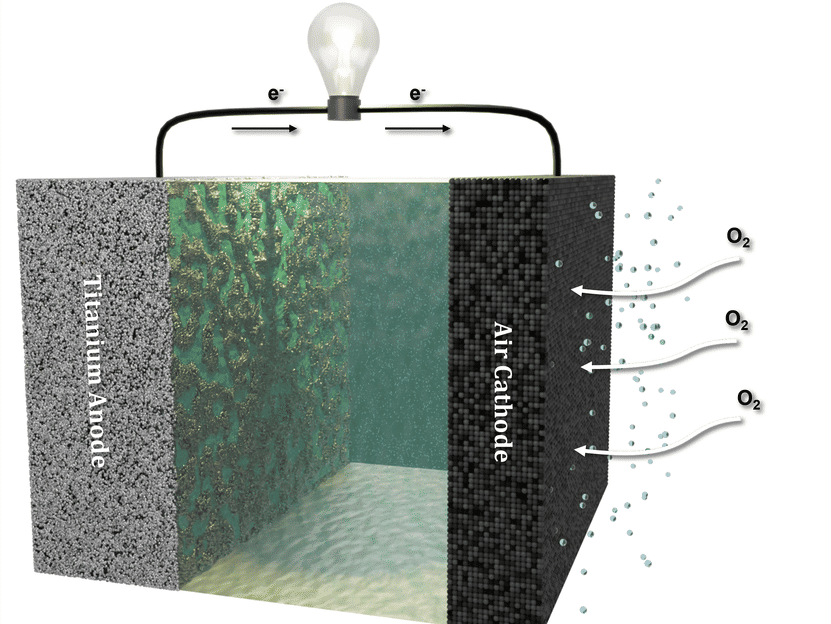
Researchers Test Novel Titanium-Air Battery - This is the first time that experimental results of such a battery have been published

Flow research on the outskirts of space - Experiments in weightlessness isolate classic diffusion phenomenon
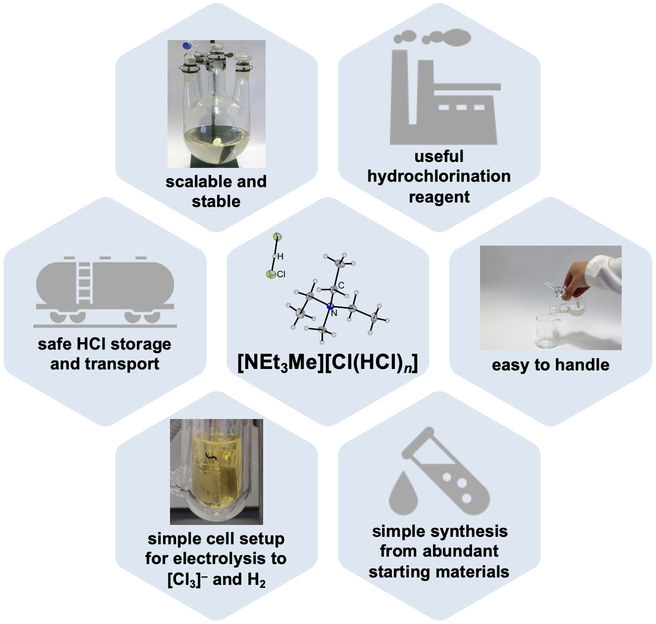
Hydrogen chloride can now be stored, processed, and electrolyzed safely thanks to breakthrough - New method paves the way for safer, more sustainable hydrogen and base chemical production
Bayer wins BDI Environmental Prize - Complexing agent helps to reduce impact on inshore waters

Do We Need to Reassess Chemicals? - Chlorinated organic substances can be converted into dioxins in the atmosphere

ASCO SAS - Lucé, France