A Breakthrough in Chiral Molecule Research Opens New Horizons for Science
Advertisement


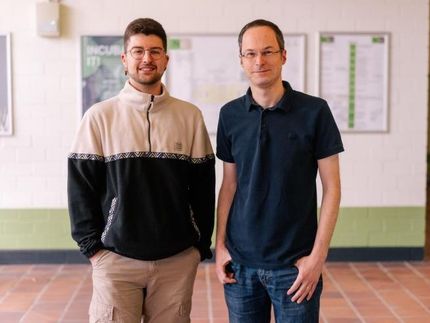
In a study titled „Near-complete chiral selection in rotational quantum states" published in Nature Communications, the Controlled Molecules Group from the molecular physics Department of the Fritz Haber Institute has made a significant leap forward in the field of chiral molecules. The team, led by Dr. Sandra Eibenberger-Arias, achieved near-complete separation in quantum states for these essential components of life.

© FHI
This discovery challenges previous assumptions about the practical limits of quantum state control of chiral molecules and paves the way for new research directions in molecular physics and beyond.
Chiral molecules, which exist as two non-superimposable mirror image versions called enantiomers, similar to our left and right hands, are fundamental to the fabric of life. The ability to control these molecules and their quantum states has profound implications, from spatial separation of enantiomers in the gas phase to testing hypotheses about the origins of life's homochirality – the preference for one mirror image over the other in biological systems.
Until now, the scientific community believed that perfect control over these molecules' quantum states was theoretically possible but practically unattainable. The team at the Fritz Haber Institute, however, has proven otherwise. By creating nearly ideal experimental conditions, they have shown that a 96% purity in the quantum state of one enantiomer (one of the two mirror images) is achievable, with only 4% of the other, moving significantly closer to the goal of 100% selectivity.
This breakthrough was made possible through the use of tailored microwave fields combined with ultraviolet radiation, allowing for unprecedented control over the molecules. In the experiment, a beam of molecules, with their rotational motions mostly suppressed (cooled to a rotational temperature of approximately 1 degree above absolute zero), traverses three interaction regions where it is exposed to resonant UV and microwave radiation. As a result, marking a significant advancement in molecular beam experiments, chosen rotational quantum states contain almost exclusively the selected enantiomer of a chiral molecule.
The new experiment opens up new possibilities for studying fundamental physics and chemistry effects involving chiral molecules. The team's method offers a new avenue for exploring parity violation in chiral molecules – a phenomenon predicted by theory but not yet observed experimentally. This could have profound implications for our understanding of the universe's fundamental (a)symmetries.
In essence, this study shows that a nearly complete, enantiomer-specific state transfer is achievable and that this method can be applied to the large majority of chiral molecules. It is expected that this discovery will open up important new opportunities in molecular physics, including new research approaches and potential applications.
Original publication


Other news from the department science




















Most read news












More news from our other portals


























Last viewed contents

Nanobubbles in nanodroplets - Researchers investigate ultrafast reaction of superfluid helium triggerd by extreme ultraviolet laser pulses
DSM and CVC finalize partnership for Polymer Intermediates and Composite Resins
Agilent Technologies and Scion Instruments Agree to Enable Each Other’s Instruments in Their Chromatography Data Systems

Jochen Block Award 2025 for Dr. Thomas Seidensticker - Start-up “simplyfined” wants to make the chemical industry more sustainable
Trapping ions in graphene - Simulating simple logic for nanofluidic computing

Let the sun work its magic: Revolutionary sunlight-powered catalyst transforms methane into valuable chemicals - This finding promoting more sustainable and efficient processes in the chemical industry
New synthesis method opens up new possibilities for Li-ion batteries
The molecular pressure cooker - New method for producing nanostructures from molecules

Analytica China 2020 concludes successfully - More than 1,000 new products point to future trends

The limits of AI in materials science - Researchers at Friedrich Schiller University Jena reveal strengths and weaknesses of language-image models in scientific tasks

Tattoo inks: How much colour gets into the body? - Evaluate possible health risks of potentially hazardous chemicals in tattoo ink more accurately in the future
